Best Electric Sub Meters for Precise Home and RV Power Monitoring
Choosing an electric sub meter helps households and RV setups track power usage, improve efficiency, and manage costs. This guide reviews five reliable sub meters and power monitors designed to read electrical load, voltage, current, and more. Each option supports different voltages, current ranges, and installation contexts—from home panels to RV pedestals. Read on to compare features, compatibility, and installation considerations to find the best match for your needs.
Summary of Selected Products
| Product | Brand | Key Use | Voltage/Current Range |
|---|---|---|---|
| Universal Electric kWh Meter – Omnimeter I v.3 | EKM Metering | General submetering for electrical loads | 120-480V, 100-5,000A, 50/60Hz |
| Digital Electric Meter for RV Pedestal, 240V 3W CL200, KWH Meter Type C1S | Generic | RV pedestal and panel usage | 240V, 30TA |
| Square D SC3042M200PS Homeline 200A | Schneider Electric | Outdoor load center with solar-ready features | 200A, 42 circuits |
| Square D SC816F200PS Homeline 200A | Schneider Electric | Outdoor solar-ready subpanel solution | 200A, 16 circuits |
| Upgraded Watt Meter Power Meter MECHEER | MECHEER | Home energy monitoring with multiple readouts | Various modes, blends with US outlets |
Universal Electric kWh Meter – Omnimeter I v.3

The Omnimeter I v.3 is designed for flexible submetering across a wide voltage and current range. It supports 120-480V and 100-5,000A with 50/60 Hz compatibility and options for single-phase or three-phase systems. Accuracy is advertised at 0.5%, and a broad selection of CTs enables precise monitoring for diverse installations. This meter is suitable for commercial or larger residential setups where detailed energy usage data over the web is beneficial for cost allocation and efficiency analysis.
Digital Electric Meter for RV Pedestal, 240V 3W CL200

This digital meter is designed for RV pedestals and electrical panels, operating on 240V three-wire systems with a Class 200 rating. It measures energy in kilowatt-hours and offers 30 test amps (TA) capability for precise usage monitoring in residential and RV contexts. The device provides a straightforward solution for RV parks or camp installations requiring reliable, field-ready energy tracking with dependable performance at 240V.
Square D SC3042M200PS Homeline 200 Amp 30-Space
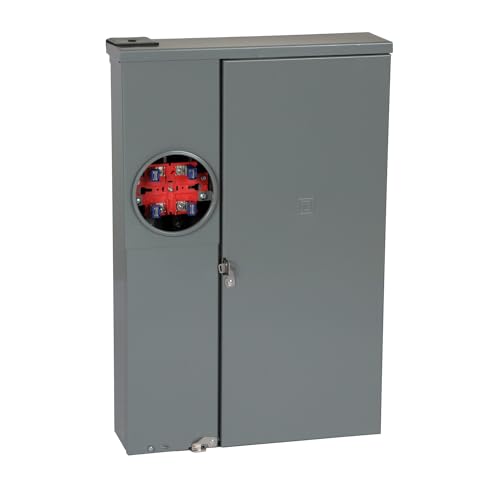
This Schneider Electric load center consolidates a fully distributed neutral bar and space for Homeline plug-on neutral breakers, with solar-ready provisions and CTs for future installations. It accepts a solar-ready sub-feed lug kit for forward-looking solar connections ahead of the main breaker, making it a robust option for solar-enabled, outdoor electrical configurations requiring organized distribution and expandability.
Square D SC816F200PS Homeline 200 Amp

The SC816F200PS is an outdoor, solar-ready Homeline load center with 16 circuits and main breaker. It includes a fully distributed neutral bar, enabling flexible circuit configurations and plug-on neutral breakers. Its solar-ready design supports continued energy independence through future CTs and a sub-feed lug kit for solar connections ahead of the main breaker, aligning with upgrades to energy management systems.
Upgraded Watt Meter Power Meter MECHEER

The MECHEER energy monitor offers multi-parameter readings including watts, kilowatt-hours, voltage, frequency, current, power factor, and estimated cost. It presents eight display modes and includes overload protection via a flashing warning when usage exceeds the default threshold. A fire-resistant ABS body and standard US outlet compatibility provide practical, safe monitoring for home environments where real-time energy tracking is valuable for efficiency improvements.
Buying Guide
Key considerations
Purpose and placement: Define whether the meter will monitor a home panel, RV pedestal, or a solar-ready subpanel. Choose models designed for appropriate voltage and current ranges to ensure accurate data and safe installation.
Voltage and current range
Look for a device that matches your system’s voltage (120V, 240V, or higher) and current rating. Wider ranges offer flexibility, but ensure the device remains accurate within your typical load.
Accuracy and CT compatibility
Meter accuracy (e.g., 0.5%) matters when allocating costs or optimizing energy use. If the system requires CTs (current transformers), confirm compatibility and available CT options that cover the expected load.
Installation context
Outdoor vs. indoor, panel-embedded vs. pedestal-mounted: Outdoor units should be weather-rated and include appropriate enclosure features. For RV setups, specialized pedestals may simplify wiring and data collection.
Display and data access
Consider how data is presented and retrieved. Some meters offer web access or local display modes, and others integrate with smart home or energy management systems. Decide whether you need real-time monitoring, historical data, or cost calculations.
Solar readiness and expansion
If planning for solar, choose units with solar-ready features or that can accommodate CTs and sub-feed lugs. This supports future expansion without replacing the submeter system.
Safety and compliance
Ensure devices meet local electrical codes and have proper safety ratings. Outdoor units should be weatherproof and designed to withstand environmental conditions.