Best Timer Light Switches for Automatic Lighting Control and Energy Savings
Timer light switches automate daily routines, improve security, and cut energy use by turning lights on and off on schedules or in response to sunrise and sunset. This guide highlights five reliable options, spanning digital in-wall timers, 7-day programs, and solar/astronomical features. Each product section includes key features, installation notes, and how it fits typical American homes. Use the Buying Guide to compare programming options, power needs, and compatibility with single-pole or 3-way wiring.
| Product | Brand | Key Benefit |
|---|---|---|
| GE SunSmart Digital In-Wall Timer | GE | Sunrise/sunset presets, weekly programs |
| BN-LINK 7 Day Programmable Timer | BN-LINK | Extensive scheduling, blue backlight |
| Honeywell Home RPLS730B1000 | Honeywell Home | 7-day programmable, versatile load support |
| Leviton VPT24-1PZ | Leviton | Astronomical clock, multi-schedule options |
| ENERLITES HET01-C-J-W | ENERLITES | No neutral required, 18 on/off settings |
GE SunSmart Digital In-Wall Timer
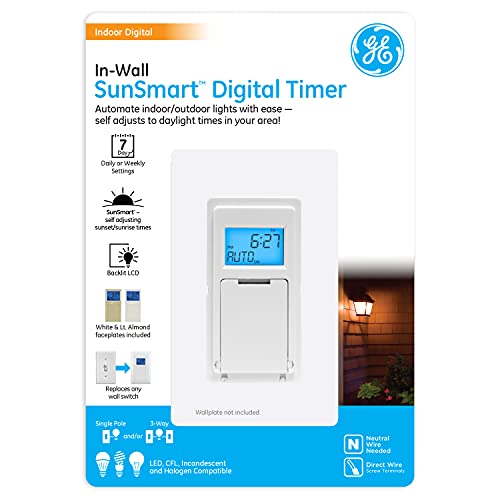
GE’s SunSmart model integrates daylight-aware programming with weekly ON/OFF options. It supports single-pole or three-way switches when a neutral is present, enabling control of lights, fans, and heaters. The sunrise/sunset presets adjust automatically to your region, while the random security feature provides a lived-in effect by shifting times up to 30 minutes. This timer is suitable where automatic daily routines and security-conscious occupancy cues are valuable.
BN-LINK 7 Day Programmable In-Wall Timer

BN-LINK offers a blue backlit display and 18 on/off programs across a full week. It supports single-pole and 3-way configurations with a neutral wire required in most installations. The timer features Daylight Saving Time automatic adjustment, auto/manual modes for quick control, and a built-in backup battery to preserve settings during outages. It’s a solid choice for living rooms, hallways, and exterior lighting where flexible scheduling and reliable operation matter.
Honeywell Home RPLS730B1000
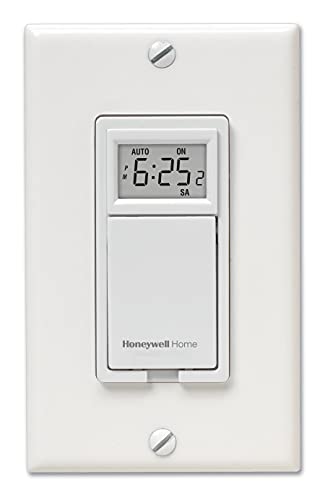
The Honeywell RPLS730B1000 provides 7-day programmable control for lights and motor loads. It supports a range of devices, including ceiling fans, bathroom fans, and pumps, up to 2400W or 1 HP on 120V. This model emphasizes energy savings and automated scheduling to reduce idle running times. It’s well-suited for homes with multi-room lighting or shared spaces where consistent schedules reduce waste and improve convenience.
Leviton VPT24-1PZ Decora Timer
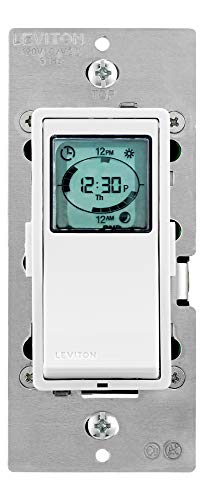
Leviton’s VPT24-1PZ combines a programmable and astronomical clock. It supports single-pole or 3-way wiring with neutral provided. The device can automatically adjust for sunrise/sunset and daylight saving changes, while offering up to 49 ON/OFF events. The feature set makes it a top pick for entryways, kitchens, and outdoor lighting where precise control and energy savings deliver tangible benefits.
ENERLITES No Neutral HET01-C-J-W

The ENERGYLITES HET01-C-J-W timer is a no-neutral programmable option with 7-day scheduling and 18 ON/OFF settings. It’s designed for installations where a neutral wire is unavailable, offering practical compatibility in older homes. The timer supports automatic on/off and manual override, helping reduce energy waste in daily lighting and small motor loads while maintaining straightforward installation.
Buying Guide: Key Purchase Considerations
- Wiring and Neutral Availability: Some timers require a neutral conductor; others are designed for no-neutral installations. Verify your wall box wiring before choosing a model.
- Programming Capacity: Consider how many daily or weekly events you need. If your routine varies, a timer with 7-day scheduling and multiple on/off events offers more flexibility.
- Astronomical vs. Fixed Timers: Astronomical clocks adjust to local sunrise/sunset times automatically, ideal for outdoor lighting or seasonal changes. Fixed timers are simpler and adequate for consistent schedules.
- Power Handling: Check ratings for lights, fans, or motors. Ensure the timer can handle the load (watts, amps, or HP) you intend to control.
- Security Features: Some models include randomization to mimic occupancy while away. This can deter intruders and enhance home security.
- Compatibility: If you have existing smart-home setups, ensure the timer’s compatibility (single-pole vs. 3-way, neutral requirements) aligns with your wiring.
- Installation Simplicity: Look for shallow wall designs, easy screw-in mounting, and clear labeling to simplify replacement of existing switches.
- Durability and Brand Support: Reputable brands with good customer support and durable components tend to offer better long-term reliability.
When selecting a timer switch, map your typical lighting patterns, whether you need 7-day schedules or astronomical timing, and whether your walls require a neutral wire. The right timer can improve comfort, boost security, and reduce energy use across living spaces and entryways.