Best WiFi Thermostats That Work Without a C Wire for Modern Homes
Choosing a smart thermostat that doesn’t require a C-wire can simplify installation and keep your home energy-efficient. The following 5 models are commonly recommended for homes where a common wire isn’t available for every system. Each option supports remote control, scheduling, and compatibility with popular voice assistants, while offering energy-saving features and easy DIY setup. Read on to compare top picks and find the best fit for your HVAC setup.
Summary of Selected Products
| Product | Brand | Key Benefit | Compatibility Note |
|---|---|---|---|
| Sensi Lite Smart Thermostat | Emerson | Easy DIY, Energy Star, broad system support | No C-wire required on most systems |
| ecobee Smart Thermostat Essential | ecobee | Energy savings, Matter support | Check compatibility online |
| Google Nest Thermostat | Smart features, energy saving, widely compatible | Most homes work without C-wire | |
| Amazon Smart Thermostat | Amazon | Alexa integration, simple setup | C-wire required |
| EMERSON Sensi Touch (ST75W) | Emerson | Touchscreen, energy savings, reliable | C-wire required |
Sensi Lite Smart Thermostat (No C-Wire Required on Most Systems)

The Sensi Lite Smart Thermostat is designed for quick, do-it-yourself installation. It includes a built-in level and step-by-step instructions to simplify setup, and it is suitable for many home HVAC configurations. Energy Star certification highlights potential energy savings, with features such as flexible scheduling, geofencing, and remote access. While designed to work with most systems without a C-wire, some heat pump and heat/cool-only configurations may still require it. This model emphasizes ease of use and strong compatibility across common residential setups.
ecobee Smart Thermostat Essential

ecobee’s Smart Thermostat Essential blends energy efficiency with a modern interface and wide compatibility. It supports Siri, Alexa, and Google Assistant, and is Energy Star certified for ongoing savings. It adapts to your schedule to reduce energy use when you’re away and optimize comfort when you’re home. The color touchscreen is intuitive for quick temperature changes, while free software updates extend the device’s useful life. Compatibility is strong for many HVAC systems, though a quick online checker is recommended to confirm specifics for your home.
Google Nest Thermostat
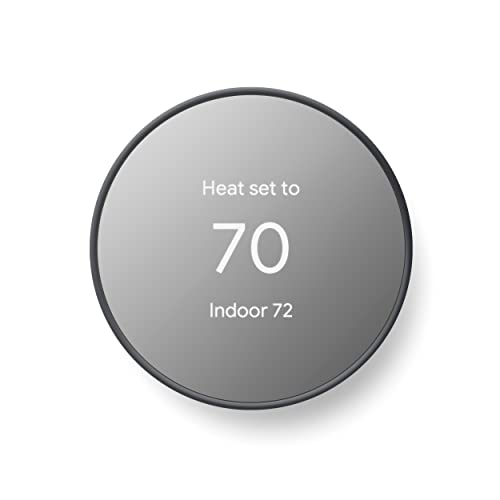
The Google Nest Thermostat is designed to save energy by learning your routines and adjusting temperatures accordingly. It performs well without a C-wire in many homes, though some systems—such as cooling-only or heat-pump configurations—may still benefit from a C-wire or compatible power accessory. It supports multiple Wi-Fi bands and works with Google Assistant, with additional compatibility checks available through Google’s Nest support resources. The Nest platform emphasizes automatic energy savings and intuitive control via the Nest app.
Amazon Smart Thermostat

Amazon’s Smart Thermostat focuses on a straightforward setup and seamless Alexa integration. It offers features such as automatic adjustments based on temperature readings and presence detection with select Echo devices or compatible monitors. While it emphasizes ease of use and energy-conscious operation, it requires a C-wire for most installations. The device is positioned as an accessible upgrade path for households already using Amazon’s ecosystem and seeking quick energy management gains.
EMERSON Sensi Touch Wi-Fi Smart Thermostat

The Sensi Touch expands on the basic Sensi Lite with a color touchscreen and a broader feature set. It emphasizes ongoing energy savings through flexible scheduling, geofencing, and remote access. Sensi has a long-standing HVAC heritage and offers compatibility with major smart home ecosystems including Alexa, Apple HomeKit, Google Assistant, and Samsung SmartThings. It is designed for simpler installation, and it includes maintenance-related alerts to help monitor system health. Some installations may require a C-wire depending on the system configuration.
Honeywell Home RTH9600WF Smart Color Thermostat
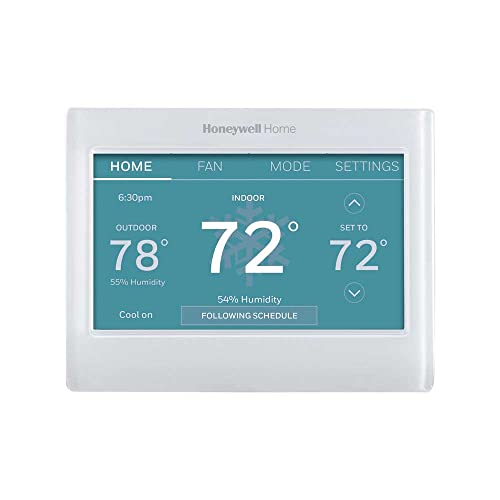
The Honeywell RTH9600WF offers a color touchscreen, Wi-Fi connectivity, and ENERGY STAR certification. It emphasizes flexible scheduling, remote access, and compatibility with popular smart home assistants. It is a strong option for users who want robust energy management and a wide range of programming features. For compatibility, check whether your HVAC system requires a C-wire, as some configurations may benefit from a common wire or an adapter, depending on the heating and cooling setup.
Buying Guide: Key Considerations For No-C-Wire Smart Thermostats
When selecting a WiFi thermostat that can operate without a C-wire, consider the following factors to ensure optimal performance and energy savings.
- System compatibility: Not all HVAC systems are the same. Heat pump, cooling-only, or heat/cool configurations may behave differently with a no-C-wire setup. Use each product’s compatibility checker or installation guide to confirm that your system is supported.
- Power options: Some models rely on alternative power methods, such as energy harvesting from the existing wires, which can influence reliability on certain systems. If the unit seems marginal, a C-wire add-on or adapter may be necessary.
- ENERGY STAR and efficiency features: Look for models that offer energy reporting, geofencing, programmable schedules, and remote access to maximize savings over time.
- Smart home ecosystem: Choose a thermostat that integrates with your preferred voice assistants (Alexa, Google Assistant, Siri) and any existing hubs or platforms to avoid compatibility gaps.
- Installation complexity: DIY-friendly designs with level features and clear step-by-step guidance reduce install time and wall patching work. Modern units often fit standard wall plates for a clean look.
- Future-proofing: Some models support Matter, cloud updates, and ongoing software improvements, extending the usable life of the device amid evolving smart-home standards.
- Support and reliability: Brands with long HVAC heritage tend to provide more reliable diagnostics, maintenance alerts, and responsive support if issues arise during installation or operation.
Additional Perspectives: Choosing Between No-C-Wire Convenience and Full-C Compatibility
- No-C-Wire Advantage: For homes with limited or non-standard wiring, no-C-wire models simplify installation and deliver many smart features without needing to rewire. This is ideal for older homes or renters seeking quick upgrades.
- When C-Wire Helps: If you have a complex HVAC system or a heat pump with auxiliary heating, having a C-wire can improve stability and performance, reducing the risk of power dropouts and ensuring consistent operation.
- Energy Savings vs Cost: While many no-C-wire thermostats offer substantial energy-saving features, there can be differences in price and optional accessories. Weigh initial cost against potential long-term energy savings.
- Voice Assistant Ecosystems: If your smart home already relies on a specific ecosystem (Alexa, Google, or Apple), prioritize thermostats with strong native integrations to minimize latency and ensure smooth routines.
- Software Updates: Devices that receive regular firmware updates can adapt to new energy-saving techniques and compatibility standards, making them more future-proof.