Best Electric Baseboard Heaters for Efficient Home Heating
Electric baseboard heaters provide steady, localized warmth with simple installation and low upfront costs. This guide highlights five strong options that balance power, safety, and versatility for American homes. Each product features reliable construction, straightforward wiring, and practical safety features to help you pick the right model for small rooms, bedrooms, or home offices.
| Product | Brand | Voltage | Watt | BTU |
|---|---|---|---|---|
| Cadet F Series 48″ Electric Baseboard Heater | Cadet | 240/208 | 1000/750 | 3415/2560 |
| Cadet F Series 72″ Electric Baseboard Heater (6F1500W) | Cadet | 240/208 | 1500/1125 | 5120/3840 |
| Cadet F Series 72″ Electric Baseboard Heater (6F1500-1W) | Cadet | 120 | 1500 | 2560 |
| Cadet F Series 36″ Electric Baseboard Heater (3F750-1W) | Cadet | 120 | 750 | 2560 |
| Comfort Zone Electric Baseboard Space Heater (CZ600) | Comfort Zone | 120 | 1500 | — |
Below are detailed sections for each option to help you compare fit, installation, and safety features side by side.
Cadet F Series 48 Inch Electric Baseboard Heater
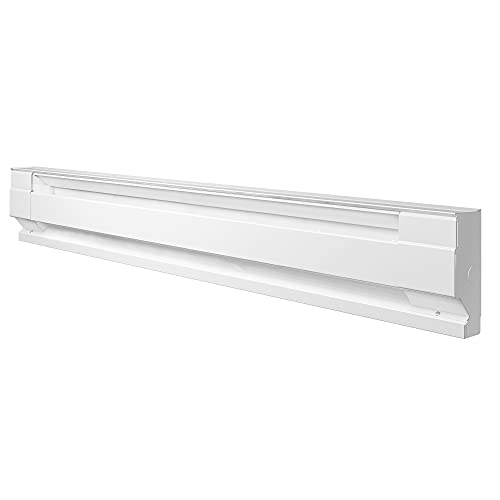
The Cadet F Series 48″ baseboard heater delivers 1000/750 watts at 240/208 volts, making it suitable for small to medium rooms. Its universal wiring and pre-punched knockouts at 1-inch intervals support flexible floor or wall mounting with cost-effective installation. A high-temperature safety shutoff helps protect households, while the all-metal construction and durable finish ensure long service life in residential spaces.
Cadet F Series 72″ Electric Baseboard Heater (6F1500W)

With a long 72-inch footprint, this Cadet model provides robust heat output at 1500/1125 watts and 240/208-volt operation. The heater features durable 25-gauge steel construction, a 20-gauge junction box with ground, and a powder-coated finish. It is designed for reliable, consistent heat in larger spaces where a linear heat source is preferred. Thermostat compatibility should be verified to customize temperature control.
Cadet F Series 72 in. Electric Baseboard Heater (6F1500-1W)

This 72-inch Cadet heater operates at 120 volts and delivers 1500 watts of heating power, suitable for rooms requiring steady, low-voltage warmth. Features include a straightforward construction meant for easy mounting, with the assumption of compatible thermostat integration. The unit is built for reliable heat distribution and consistent operation in residential settings.
Cadet F Series 36″ Electric Baseboard Heater (3F750-1W)
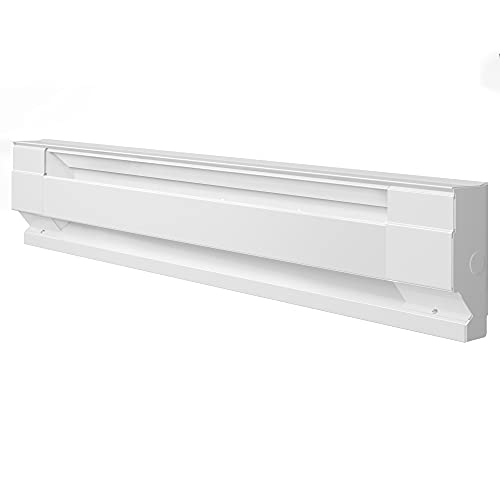
At 36 inches, this Cadet unit provides 750 watts of heat at 120 volts. It calls for a thermostat and incorporates Cadet’s all-metal, powder-coated construction with standard mounting provisions. This size is well-suited for smaller rooms or zones within a larger space where discreet, consistent heat is desired.
Comfort Zone CZ600 Electric Baseboard Heater

The Comfort Zone CZ600 offers 1,500 watts of heating power for medium-sized rooms, with two heat settings and an adjustable thermostat for flexible comfort control. Safety features include a tip-over switch, stay-cool body, and overheat protection. The unit is designed for quiet operation, reducing room noise while providing consistent warmth. This model provides a balance between robust performance and safety-oriented design for home or small office use.
Buying Guide: Key Purchase Considerations
- Room size and heat output: Match BTU and wattage to the room’s square footage. Larger spaces benefit from higher wattage or longer heaters to distribute heat evenly.
- Voltage compatibility: Ensure the unit’s voltage aligns with your home wiring. Some models operate at 120V, others at 240/208V; plan for thermostat and wiring compatibility.
- Installation and mounting: Look for universal wiring options, pre-punched knockouts, and durable mounting hardware. Wall or floor mounting can affect heat distribution and aesthetics.
- Safety features: Prioritize high-temperature shutoff, tip-over protection, stay-cool surfaces, and overheat sensors to maintain household safety.
- Thermostat and controls: Consider built-in adjustable thermostats and compatibility with external thermostats for precise temperature management.
- Construction and durability: Powder-coated finishes and corrosion-resistant steel improve longevity in varied indoor environments.
- Noise and comfort: Baseboard heaters should operate quietly; look for models marketed as whisper-quiet for bedrooms or study areas.
- Maintenance: Choose units with straightforward access for cleaning and minimal moving parts to reduce maintenance needs.
- Cost of ownership: While prices vary, consider energy efficiency and expected runtime to estimate long-term costs.
- Aesthetics: Slim profiles and neutral finishes help baseboard heaters blend with most decors in bedrooms, living rooms, and offices.
When selecting a baseboard heater, evaluate how frequently spaces are occupied, typical usage patterns, and whether you prefer wall-mounted or floor-mounted configurations. For homes with multiple zones, consider a combination of models to balance heat output and energy efficiency while maintaining safety and ease of installation.