Best Rubber Tiles for Gym: Durable Interlocking Mats for Home Workouts
Choosing the right gym flooring can protect your surfaces, reduce noise, and support heavy equipment. The following interlocking tiles blend rubber reliability with EVA foam layers for comfort and resilience. Each option balances grip, shock absorption, and ease of setup for a home gym or garage space.
The table below highlights five notable rubber-top or hybrid mats that suit most home gyms. All are designed to be interlocking, durable, and easy to clean.
| Product | Top Material | Thickness | Size / Coverage | Notable Benefit |
|---|---|---|---|---|
| ProsourceFit Puzzle Exercise Mat | High-density EVA foam | ½ in | 24 in x 24 in per tile; 144 sq ft | |
| SUPERJARE 0.56 in 24 Pcs | EVA foam base with rubber top | 0.56 in | 24 tiles; 96 sq ft | |
| AIRHOP 0.56 in 12 tiles | Rubber top with EVA foam base | 0.56 in | 12 tiles; 48 sq ft | |
| VEVOR 0.56 in 25 Tiles | Rubber top with EVA foam | 0.56 in | 25 tiles; 100 sq ft | |
| SUPERJARE 0.79 in Extra-Thick | EVA foam base with EPDM rubber top | 0.79 in | 12 tiles; 48 sq ft |
ProsourceFit Puzzle Exercise Mat
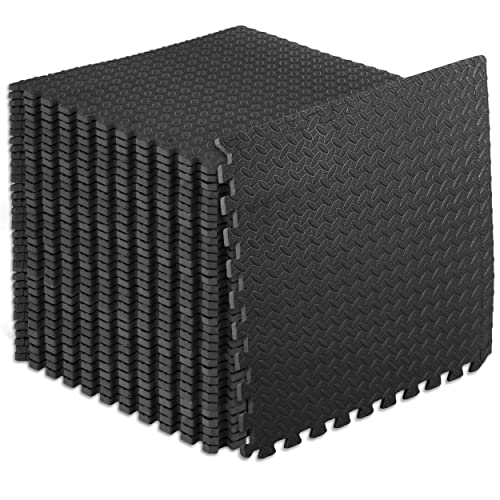
ProsourceFit provides a protective gym floor mat set made from high-density EVA foam. The tiles interlock for a customizable layout and cushion floor surfaces during workouts. The design emphasizes non-skid properties, easy cleaning, and versatility for indoor use such as home gyms, garages, or play spaces. Color variations may occur by batch, and it is a viable alternative to rubber mats for light to moderate equipment and activities.
SUPERJARE 0.56" Thick 24 Pcs

This dual-layer mat combines a high-density EVA foam base with a robust EPDM rubber top. It is designed to support heavy equipment and resist wear from vigorous movements. The upgraded surface offers strong traction for safer performance, while the foam layer helps dampen noise and absorb impact, making it suitable for shared living spaces where minimizing disturbance matters.
AIRHOP 0.56in 12 Tiles

AirHOP’s 0.56-inch thick tiles feature a dual-layer build: a rubber top for grip and an EVA foam bottom for shock absorption. The interlocking tiles are designed for quick assembly and secure fit, reducing shifts during exercise. They also emphasize durability and surface protection against scuffs from weights and gym equipment.
AIRHOP 0.79in Thick 48 Sq Ft

This thicker 0.79-inch mats offer enhanced durability for heavy weights and machines. The dual-layer structure includes a rubber top with a dense EVA foam base, delivering robust load-bearing capacity, reduced noise, and reliable interlocking security for a stable workout surface in busy home gyms.
SUPERJARE 0.79" Extra-Thick Mats

This extra-thick 0.79-inch tile set uses a durable EVA foam base topped with EPDM rubber. It focuses on superior traction, shock absorption, and quiet operation, making it well suited for high-intensity workouts with heavy equipment and frequent dynamic movements.
Buying Guide
Key purchase considerations help you choose mats that fit your space, equipment, and noise tolerance:
- Thickness and load capacity: Thicker tiles (0.56–0.79 inches) offer more cushioning and better protection for heavy weights but may be heavier to move. Consider the intensity of your routines and the weight of equipment.
- Top surface material: Rubber tops provide superior non-slip traction and durability, while pure EVA foam offers high cushion and lighter weight but less long-term wear resistance.
- Interlocking design: Ensure the tiles have reliable locking mechanisms to prevent gaps during workouts and shifting tiles that can disrupt training.
- Room environment: For shared living spaces, prioritize mats with noise reduction and minimal odor. Look for low-VOC materials and recycled content if sustainability matters.
- Cleaning and maintenance: Waterproof and easy-to-wipe surfaces simplify upkeep, especially in humid or sweaty environments.
- Coverage and layout: Calculate floor area to decide how many tiles you need. Some options ship in larger sets, reducing assembly time.
- Durability versus price: Rubber-top hybrids generally balance durability and price, whereas all-foam options are lighter and easier to relocate but may wear faster.