Best Spray Foam for Rodents to Block Entry Points
Home sealing with spray foam is a common method to deter rodent intrusions by blocking gaps and cracks. This guide highlights five top products that combine fire-tested foam sealants with rodent-control features, helping you seal entry points effectively and reduce pest activity. Each option offers varying densities, adhesion, and ease of application so you can choose the right fit for home repairs, garages, and crawl spaces.
Summary of chosen products
| Product | Brand | Key Benefit | Approx. Size |
|---|---|---|---|
| Tomcat Rodent Block Expanding Foam Barrier | Tomcat | Pesticide-free barrier filling gaps | 12 oz |
| [Upgraded] Rodent Barrier Kit (2Pcs Steel Wool) | PAMAZY | Steel wool + foam sealant for robust barrier | 3.2″x7.5’ rodent fill fabric |
| [Upgraded] Rodent Barrier Kit (3Pcs Steel Wool) | PAMAZY | Stronger multi-pack barrier for larger gaps | 3.2″x7.5’ fabric |
| Loctite Tite Foam Big Gaps | Loctite | High-density sealant for large gaps | 12 fl oz |
| Pest Block Spray Foam | SPRAYMAN | Odor-free, quick-expansion foam for holes | 1×12 oz |
Tomcat Rodent Block Expanding Foam Barrier
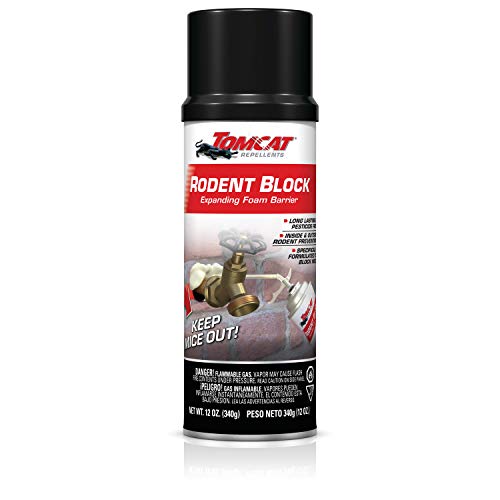
Tomcat Rodent Block Expanding Foam Barrier fills gaps and cracks to block mice from entering the home. The product is a pesticide-free option designed to create a rodent barrier with long-lasting, airtight, and water-resistant bonds to most building materials. This makes it suitable for sealing around foundations, pipes, and drafty penetrations where mice or other pests may attempt entry.
[Upgraded] Rodent Barrier Kit (2Pcs Steel Wool)

This kit combines premium steel wool with a powerful PU spray foam to form a durable, reliable barrier against rodents. The high-quality steel wool fibers are thick, fluffy, and flexible for shaping to gaps, while the spray foam expands to fill large holes and seal entry points. The combination provides a long-lasting solution against mice and other intruders.
Rodent Barrier Kit (3Pcs Steel Wool)
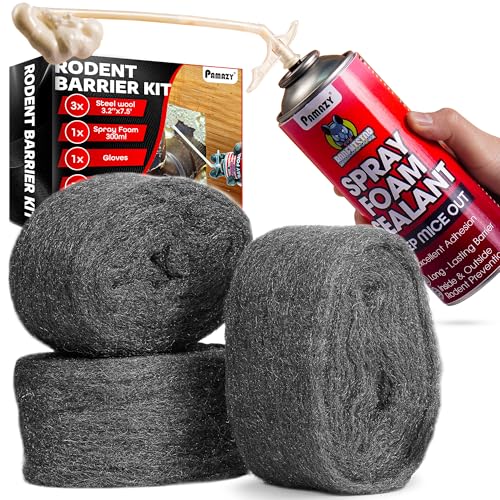
This PAMAZY kit expands the barrier with three packs of steel wool paired with PU foam to address larger entry points. The steel wool is designed to resist chewing, and the foam sealant offers adhesion and insulation that helps keep holes sealed year-round. It is especially useful for vent gaps, pipes, or crawl space penetrations.
Loctite Tite Foam Big Gaps

Loctite Tite Foam Big Gaps expands to fill, seal, and insulate gaps up to three inches. It provides high-density foam with a uniform cell structure for durability and resilience against building movement. This option is well-suited for larger drywall, siding, or foundation gaps where rodents may attempt entry.
Pest Block Spray Foam

Pest Block Spray Foam offers an odor-free expanding formula designed for gaps and cracks around walls and windows. It hardens into a weather-resistant seal, suitable for DIY insulation projects while helping deter rodent entry. The nozzle is designed for precision application with reduced clogs, making it a practical choice for careful sealing tasks.
[Upgraded] Rodent Barrier Kit (3Pcs Steel Wool)

An expanded, upgraded PAMAZY kit combining multiple steel wool sections with PU spray foam to form a resilient barrier for medium to large gaps. The tri-pack supports layered protection, making it suitable for garages, crawl spaces, and potential entry routes where rodents are likely to attack first.
Buying Guide
Key considerations when choosing spray foam for rodent control:
- Sealant Type and Odor: Odor-free formulas reduce indoor air concerns and are better for occupied spaces. Consider polyurethane spray foams with low VOC emissions for longevity and ease of use.
- Barrier Strength: Foams that expand significantly and bond well to common building materials offer stronger inviolable seals. Pairing with steel wool can help deter gnawing on larger gaps.
- Gap Size and Accessibility: Large gaps may require high-density foams with deeper expansion. For small cracks, precision nozzles help ensure controlled application without mess.
- Chew-Resistant Barriers: Some kits combine steel wool with foam to provide a dual barrier that’s harder for rodents to bypass.
- Moisture and Temperature Tolerance: Water-resistant bonds and materials that withstand temperature fluctuations help maintain the seal over time in basements, crawl spaces, and exterior walls.
- Ease of Application: Look for clog-resistant nozzles and user-friendly packaging, especially for DIY projects or limited access areas.
- Safety and Cleanup: Ensure products are safe for indoor use where people and pets spend time, and that cleanup is straightforward in case of spills or over-application.
- Compatibility with Surfaces: Check adhesion to wood, concrete, drywall, and metal. Some products excel on concrete and masonry, others on wood framing.
- Long-Term Maintenance: Consider products that allow re-access if future pests or moisture issues arise; modular kits with steel wool can be easier to rework than single-component foams.
- Regulatory Considerations: Some areas prefer pesticide-free or low-odor options for indoor use; verify local guidelines before application.
In practice, combining a robust foam sealant with a secondary barrier like steel wool provides layered defense against rodents. For larger entry points, use high-density foams to fill gaps followed by steel wool for chewing resistance. In tight spaces, precision nozzles and odor-free formulas improve safety and efficiency. Regular inspection of known entry points, especially near foundations and utility penetrations, can help maintain an effective barrier.