Best Fiberglass Insulation for Attic: Top Picks for Energy Efficiency
Choosing the right fiberglass insulation for your attic can help reduce energy bills and improve comfort. The following selections emphasize attic applications, ease of installation, and reliable R-values. Each product is evaluated for efficiency, compatibility with common 2×12 and 2×6 framing, and moisture considerations.
| Product | Type | Approx. Coverage | Notes |
|---|---|---|---|
| Owens Corning 512 SQFT R-38 Unfaced | Unfaced Batt | 512 sq ft | Good for attics with vented air space; no paper backing |
| Owens Corning 320 SQFT R-49 Kraft Faced | Kraft Faced Batts | 320 sq ft | 2×12 attic fit; moisture barrier with kraft facing |
| Owens Corning RU41 Fiberglass Insulation | Unfaced Batt | — | Pink fiberglass; soft, easy to cut |
| Owens Corning R-19 Faced 23×48 | Faced Batt | 1280 sq ft total (10 bags) | Moisture barrier; suitable for exterior surfaces |
| Owens Corning 427 SQFT R-30 Unfaced | Unfaced Batt | 427 sq ft | Fits 2×10 floor-ceiling; no moisture barrier |
Owens Corning 512 SQFT R-38 Unfaced Attic Batt
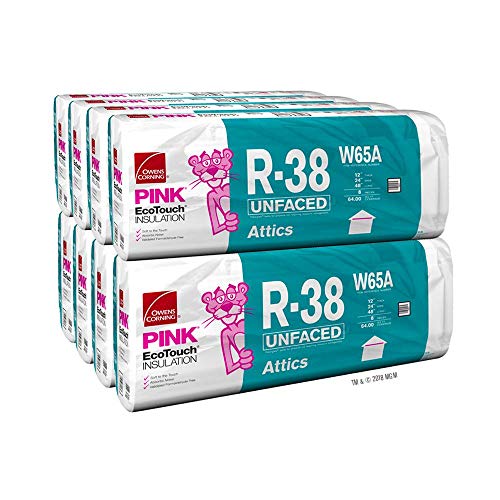
This unfaced fiberglass batt is sized for attic applications between trusses. With 512 total square feet and eight batts per bag across eight bags, it provides substantial coverage for larger attic spaces. The product contains no paper backing, reducing fire risk concerns and allowing for vented air spaces to prevent moisture buildup when properly installed.
TWCUSEP Reflective FRK Duct Wrap (2.2″ Thick) 4 ft x 25 ft

Note: This item is included for context on attic insulation systems that also manage duct insulation in attics. It features a reflective FRK facing laminated to fiberglass, designed to meet energy codes and help prevent duct condensation. It is flexible, easy to install, and intended to complement fiberglass insulation in attic spaces.
Owens Corning R-13 Kraft Faced Fiberglass Roll

This kraft-faced roll provides straightforward installation for 2×4 exterior or interior walls. While primarily used for walls, its thermal and sound-control properties can inform attic projects where space constraints require thinner insulation layers or retrofits that pair with existing attic insulation.
DGSL Attic Stairway Insulation Cover

This option focuses on reducing heat transfer at attic access doors. It uses foil bubble insulation with two aluminum layers and a zipper seal, delivering an R-value around 14.5 and helping maintain attic comfort year-round. It complements fiberglass insulation by limiting air leakage from the attic to living spaces.
Owens Corning RU41 Fiberglass Insulation

RU41 is a fiberglass insulation option described as soft to the touch and easy to cut. It is unfaced, which can be advantageous for certain attic configurations where a vapor barrier is not required or when moisture management is planned separately. It supports solid thermal control and installation flexibility.
Buying Guide
Key purchase considerations
- R-Value requirements: Attics typically benefit from higher R-values; check local code and climate recommendations. Unfaced insulation often requires a air space for ventilation to prevent moisture buildup.
- Facing vs. unfaced: Kraft-faced products add a moisture barrier and can simplify vapor management in certain walls or attics. Unfaced options offer flexibility where a separate vapor barrier is used.
- Fit for framing: Consider batt size (e.g., 16 in. or 24 in. widths) and attic joist spacing. Ensure the product length and thickness align with your attic layout and truss spacing.
- Moisture control: In attic spaces, moisture control is critical. Favor products with appropriate moisture considerations or plan for proper ventilation to avoid condensation and mold.
- Ventilation and air spaces: Some attic installations require a minimum 2-inch vented air space to prevent moisture entrapment; ensure you follow installation guidelines for best performance.
- Fire safety and code compliance: Choose products meeting NFPA and local mechanical energy codes where applicable. Fire-retardant properties are important in attic environments.
Comparison of options
- High coverage vs. flexibility: Large-volume products (e.g., 512 sq ft) suit bigger attics, reducing seams and installation time, while rolls and unfaced batts allow targeted retrofits.
- Unfaced vs. kraft faced: Unfaced minimizes installation constraints in attics with existing vapor barriers or high ventilation, whereas kraft-faced simplifies moisture management in areas needing a barrier.
- Compatibility with attic stairs: Specialized accessories like attic stair insulation covers can complement standard batts by reducing air exchange at access points.
- Cost vs. coverage: Bulk packs offer lower cost per square foot, but consider installation labor and the exact attic dimensions to maximize value.
Installation basics
- Prepare the attic: Ensure the area is clean, dry, and properly ventilated. Seal gaps where appropriate to minimize air leakage into living spaces.
- Measure and cut: Use a utility knife to cut batts to fit between joists or trusses, leaving a slight compression-free fit for best performance.
- Placement: Install insulation perpendicular to joists and avoid compressing material, which reduces R-value. For faced products, ensure the facing is positioned toward the living space if moisture control is a concern.
- Ventilation: Maintain the required air space around insulation in ventilated attics. Ensure attic vents and soffits are clear to promote airflow.