Best Insulation Boards for Walls: Top Picks for Energy-Efficient Homes
Choosing the right insulation board can improve comfort, reduce energy bills, and support fire safety in walls. The following selections focus on a mix of ceramic fiber, reflective foil foam cores, and multi-application boards suitable for residential and light commercial walls. Each option includes a quick look at why it’s effective, typical installation notes, and key performance characteristics. The list emphasizes boards with high-temperature resistance, versatile installation, and clear safety benefits to help homeowners and contractors compare quickly.
| Product | Brand | Highlight |
|---|---|---|
| BXI Ceramic Fiber Board | BXI | High-temperature ceramic fiber with Class A1 fire resistance |
| Halero Reflective Foam Core | Halero | Double-sided foil with 95% radiant reflectivity |
| Houseables Reflective Roll | Houseables | 3mm thick, 95% reflective, Class A fire rating |
| SmartSHIELD Foam Roll | INSULATION MARKETPLACE | R15 equivalent, radiant, vapor, and sound barrier |
| SIMOND STORE Ceramic Fiber Board | SIMOND STORE | 2300°F rated ceramic fiber board, rigid and lightweight |
In the following sections, each product is explored with a concise overview, key features, and installation considerations to help you compare options side by side. The aim is to present objective information that supports decision making for wall insulation projects.
BXI Ceramic Fiber Board For High Temperature Walls
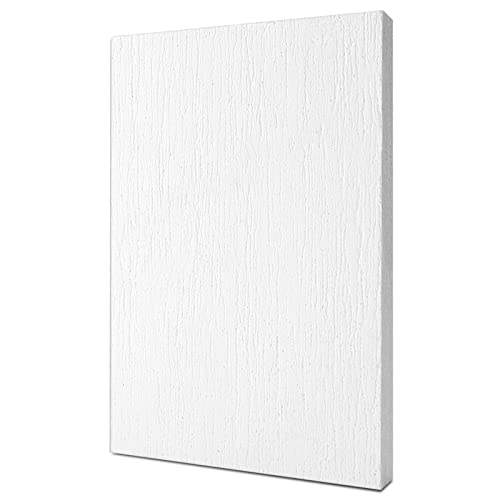
The BXI Ceramic Fiber Thermal Insulation Board is a compact panel designed for high-temperature applications. Its 12″ x 8″ x 0.4″ size and 0.68-pound weight make it adaptable for layered wall assemblies in industrial kitchens, kilns, or stoves where heat resistance is critical. With a maximum use temperature around 2732°F (1500°C) and a Class A1 fire rating, this board offers robust fire safety without excessive weight. Its inorganic composition provides rigidity and reduced smoke generation compared to organic ceramic fibers, which can be advantageous for indoor installations. The board’s thermal conductivity is 0.082 W/(m·K) and an R-value of 0.12 m²·K/W, giving a modest insulating performance suitable for supplementary wall layers. Installation typically requires cutting to fit and securing with mechanical fasteners or high-temperature adhesive, depending on the wall substrate.
Key considerations:
– Temperature tolerance supports extreme environments, but for typical residential walls, it may be overkill unless used in proximity to heat sources.
– R-value is modest; combine with other insulation layers for higher overall performance.
– Inorganic composition reduces smoke and odor during heating, improving indoor air quality in heated spaces.
Halero Reflective Foam Core Insulation Board

Halero’s 5mm Reflective Insulation Foam Core provides a lightweight, double-sided foil solution ideal for walls, ceilings, and other surfaces where quick installation matters. The board’s aluminum foil on both sides creates a Class A fire radiation barrier and reflects up to 95% of radiant energy, helping to keep indoor spaces warmer in winter and cooler in summer. Its vapor barrier capability helps limit moisture transfer, while the foam core adds lightness and ease of handling. Installation typically involves trimming to fit and securing with staples, screws, or compatible adhesives. The product is suitable for DIY projects as well as professional installations.
Key considerations:
– High reflectivity offers substantial radiant heat reduction, particularly in sunny, well-insulated spaces.
– The product is versatile for indoor use, with moisture control benefits.
– Weight and thickness are favorable for retrofit projects where bulk is a concern.
Houseables White Foam Reflective Roll

The Houseables Insulation Roll uses a white reflective foam core designed for walls, ceilings, attics, and other surfaces requiring a quick, wide-area shield against radiant heat. At 3mm thick, it provides a balance between ease of handling and thermal performance. The roll is a practical option for large surface coverage where rigid panels aren’t necessary or practical. Its Class 1/Class A fire rating adds a layer of safety, and the reflective surface contributes to energy efficiency by reflecting radiant heat away from living spaces. Installation is straightforward: unroll, cut to fit, and secure with staples or adhesives. It is especially convenient for retrofits and DIY projects.
Key considerations:
– Ideal for large-area retrofits due to its roll form and coverage potential.
– The 3mm thickness offers flexibility but moderate insulation R-value; pair with other insulation as needed.
– Fire rating supports safe use in walls and ceilings when installed per manufacturer guidance.
SmartSHIELD Foam Roll Insulation

SmartSHIELD combines insulation, radiant barrier, vapor barrier, and sound barrier into a single foam core roll. This all-in-one product is designed to provide substantial energy savings with an R-value up to 15.67 per one-layer configuration, reflecting 95% of radiant energy. The white, press-ready surface requires minimal finishing, contributing to clean aesthetics in interior applications. It’s positioned for walls and ceilings where a streamlined installation improves efficiency and reduces labor time. The product’s packaging highlights a comprehensive approach to thermal, humidity, and acoustic control in one package.
Key considerations:
– All-in-one solution reduces the need for multiple layers, potentially saving time and labor.
– High radiant barrier performance supports energy efficiency in various climates.
– Compatibility with typical wall assemblies requires proper edge sealing and vapor management per guidelines.
SIMOND STORE Ceramic Fiber Board

The SIMOND STORE Ceramic Fiber Insulation Board is rated up to 2300°F, making it suitable for heat-intensive environments such as wood stoves, pizza ovens, kilns, and furnaces. The board is composed of aluminosilicate ceramic fiber with a compact 0.47″ thickness and 12″ x 24″ dimensions, providing a rigid, lightweight option for fireproofing, linings, or firebox components. With a density typical of refractory boards, it offers robust compressive strength and low thermal mass, helping to minimize heat transfer. This board is commonly cut with standard tools and can be drilled or machined for custom installations.
Key considerations:
– Excellent high-temperature performance supports specialized applications in walls adjacent to heat sources or equipment.
– Moderate thickness means it is best used in targeted areas rather than as a sole wall insulation layer.
– Rigid boards can offer strong structural support in niche installations like baffles or linings.
Buying Guide: Key Purchase Considerations For Wall Insulation Boards
- Temperature rating and fire safety: For walls near heat sources, prioritize boards with high maximum use temperatures and a Class A or Class A1 fire rating. Ceramic fiber boards provide excellent heat resistance, while reflective foam cores help reduce radiant heat transfer.
- Material type and performance: Ceramic fiber boards are rigid and durable with low smoke when heated. Foil-faced foam cores offer lightweight installation and strong radiant barriers but may have different vapor management implications. Fiberglass and multi-layer rolls provide high reflectivity and ease of installation in larger areas.
- R-value versus space constraints: R-values for boards vary by material. Some options deliver modest R-values but excel at radiant heat reflection, while others provide higher thermal resistance per inch. Consider layering strategies to meet required insulation performance without sacrificing wall thickness.
- Installation considerations: Rigid boards require cutting and fastening, while rolls are easier to install in large areas but may need sealing at edges. Check compatibility with existing wall assemblies, vapor barriers, and moisture risk in your climate zone.
- Moisture and air barriers: Some products act as vapor or moisture barriers. In damp climates, ensure proper vapor diffusion management to avoid mold or condensation. For interior walls, pairing reflective or airtight options with a proper air barrier is advisable.
- Application scope: Choose boards based on whether the goal is radiant heat reduction, high-temperature resistance, acoustic improvement, or a combination. Some products excel in multi-function roles (e.g., insulation plus sound barrier), while others target extreme heat exposure.
- Ease of handling and cut tolerance: Roll formats simplify large-area coverage, whereas rigid boards provide precise fit in tight spaces. Consider the installation crew’s experience and available tools when selecting a product.
- Environmental and safety considerations: Look for low smoke generation, non-toxic components, and compliance with local building codes. Inorganic boards may offer cleaner performance during heating compared to organic alternatives.