Best Insulation Blocks for Building: Top Picks for Efficient Temperature Control
The following article highlights the best insulation blocks and related materials suited for improving energy efficiency in metal buildings, crawlspaces, warehouses, and other structures. Each option emphasizes radiant heat reflection, vapor barriers, and easy installation. We compare performance features, installation considerations, and suitability for different applications to help builders, contractors, and DIY enthusiasts choose the right solution.
| Product | Brand | Key Benefit |
|---|---|---|
| BlueTex Roll Up Garage Door Insulation Kit | BlueTex Insulation | Radiant barrier for roll-up doors; easy DIY install |
| Houseables Insulation Roll | Houseables | High reflectivity; versatile interior/exterior use |
| BlueTex 3″ Wide Foam Tape | BlueTex Insulation | Seals and secures insulation seams efficiently |
| AES 4×100 White Reflective Foam | AES | White reflective barrier with condensation prevention |
| INSULATION MARKETPLACE SmartSHIELD | INSULATION MARKETPLACE | 3mm foam core with dual-sided foil; strong vapor barrier |
These selections cover a spectrum from radiant barrier rolls and vapor barrier foams to sealing tapes, addressing both new installations and retrofits. They are designed to help maintain comfortable indoor environments, reduce energy costs, and protect structures from moisture and heat transfer. The following sections present five product-focused evaluations to assist in a practical decision.
BlueTex Roll Up Garage Door Insulation Kit

- Designed for roll-up garage doors on commercial-style metal buildings; creates a radiant barrier to reduce heat gain.
- DIY-friendly installation with included double-sided tape, seam tape, optional screws, and a utility knife.
- Foil surface made from 100% pure aluminum reflects up to 97% of radiant heat when airspace exists, offering strong temperature control.
Houseables Insulation Roll

- High 95% reflective capability provides effective radiant heat reflection and energy efficiency.
- Fire-rated Class 1/Class A and non-toxic, enhancing safety for various applications.
- 3mm foam core balances insulation performance with ease of handling for walls, ceilings, floors, and more.
BlueTex 3″ Wide Vapor Barrier Seam Tape

- Three inches wide by 180 feet long; designed for reliable adhesion across climates.
- Made in the USA; seals and repairs insulation seams on metal buildings and other surfaces.
- Suitable for improving airtightness and reducing air leakage around insulation installations.
AES 400sf White Reflective Foam Insulation

- 1/8 inch thick non-perforated white foam helps minimize condensation on metal surfaces.
- Good for warehouse and large-area applications where moisture control is essential.
- Simple installation with broad coverage for quick retrofits or new builds.
INSULATION MARKETPLACE SmartSHIELD
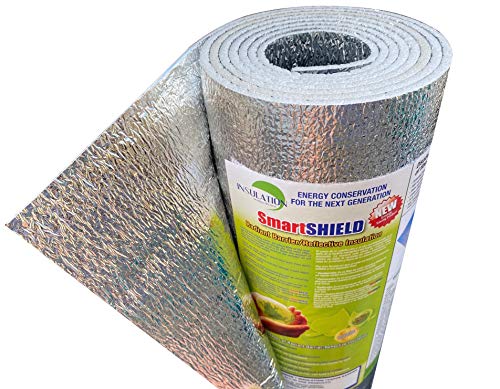
- 3mm closed-cell polyethylene foam sandwiched between dual-sided reflective foil; strong radiator barrier.
- Vapor barrier properties reduce moisture concerns and maintain indoor humidity control.
- Lightweight, easy to cut and install; designed for durable performance in varying environments.
Buying Guide: Key Considerations For Insulation Blocks And Barriers
- Radiant heat reflection vs. insulation value: Materials with high reflectivity reduce heat transfer from sunlight and radiant sources, while foam cores provide bulk insulation. For metal buildings, reflectivity often yields noticeable cooling benefits when air gaps exist behind the barrier.
- Vapor barriers and condensation prevention: In humid or cold environments, vapor barriers help prevent moisture accumulation that can cause corrosion or mold. Look for products labeled as vapor barriers or moisture-resistant.
- Material thickness and rigidity: Thicker foams provide higher R-values but may be harder to handle in tight installations. Assess space constraints and ease of handling during the project.
- Sealing and attachment methods: Tapes, screws, and seam tapes impact installation time and long-term durability. Choose products with compatible fasteners and weatherproof adhesives for the chosen substrate.
- Fire safety: Fire-rated options (Class A) add a safety margin for interior installations. Verify local codes and fire ratings for the specific application area.
- Environmental exposure: Outdoor or semi-outdoor installations require UV resistance and weatherproofing. Indoor projects may prioritize odor, off-gassing, and toxicity.
- Compatibility with existing structures: Some products are ideal for doors, walls, ceilings, or floors. Consider whether you need a radiant barrier, a complete vapor barrier, or a combination.
- Ease of installation: DIY-friendly products with comprehensive installation kits save time and reduce labor costs. For large warehouses, consider professional installation for uniform coverage.
- Cost efficiency: Compare initial material costs against long-term energy savings and potential maintenance reduction. Cheaper barriers may require more frequent replacement.
- Code compliance: Ensure selected products meet local building and insulation codes, especially in climate-specific regions or commercial projects.
When evaluating insulation blocks and reflective barriers for building projects, consider the balance between radiant heat reduction, moisture control, ease of installation, and safety ratings. The highlighted items provide practical, ready-to-use options for both retrofit and new construction scenarios, with a focus on metal buildings, warehouses, and other large spaces.