Best Check Valve for Well Pump: Top Picks for Reliable Water Flow Control
Choosing the right check valve is essential for protecting your well pump system from backflow, pressure surges, and water hammer. The following selections are practical, widely compatible, and designed to handle common well and irrigation setups in American homes and properties. Each option emphasizes durable materials, secure seals, and straightforward installation to maintain consistent water pressure and system integrity.
Summary of Selected Products
| Product | Brand | Key Benefit | Inlet/Outlet |
|---|---|---|---|
| Wassermann 1-1/4″ Brass Check Valve | Wassermann | Reliable backflow prevention for submersible wells | 1.25″ NPT x 1.25″ FNPT |
| Merrill MFG CVNL100 1″ No-Lead Brass Check Valve | Merrill | No-lead brass, IAPMO certified for safe drinking water | 1″ x 1″ NPT |
| Check Valve with Backflow Prevention, Universal 1-1/4″ | Bzcovac | Versatile, lead-free brass with spring-loaded poppet | 1.25″ FNPT x 1.25″ FNPT |
| Boltigen 2PCS 1″ NPT Female Thread Spring Check Valve | Boltigen | Durable brass with stainless steel spring; two-pack | 1″ NPT |
| 1 American Granby No Lead Check Valve CVNL100BS | American Granby | No-lead brass with Buna-N seal; high pressure tolerance | 1″ x 1″ NPT |
Wassermann 1-1/4″ Brass Check Valve
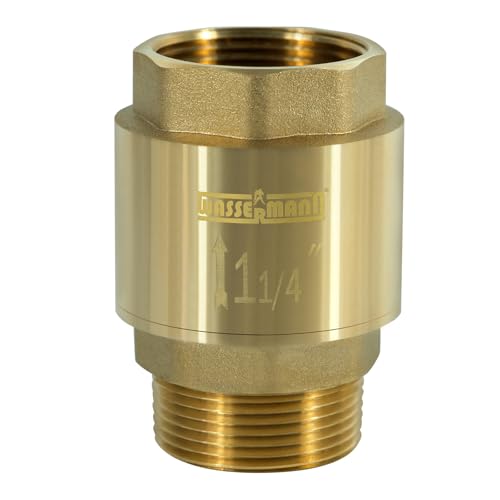
The Wassermann valve provides automatic backflow prevention when fluid moves in the intended direction and rapidly seals to stop reverse flow when direction reverses. This action minimizes water hammer and protects connected equipment. It is compatible with 1-1/4″ submersible well pumps, irrigation systems, and typical water supply lines, featuring 1.25″ NPT inlet and 1.25″ FNPT outlet. Applications include wells and outdoor water systems requiring a reliable, durable inline check valve.
Key features: automatic opening in the forward direction, rapid shutoff on reverse flow, gravity/spring/pressure-assisted sealing, and broad compatibility with well pumps and irrigation networks.
Merrill MFG CVNL100 1″ No-Lead Brass Check Valve

This 1″ no-lead brass check valve is designed for drinking water and well systems, emphasizing durability and reliability. It carries no-lead brass construction and is IAPMO certified, ensuring code-compliant performance in residential water installations. The valve resists reverse flow to maintain steady forward flow and protect pumps and piping from backpressure damage. It’s a solid choice for homeowners seeking long-term dependability in water supply lines.
Key features: no-lead brass body, IAPMO certification, and effective backflow prevention to preserve pump efficiency and water quality.
Check Valve With Backflow Prevention, Universal 1-1/4″

Designed for universal use, this 1-1/4″ lead-free brass check valve supports both horizontal and vertical installations. It includes a stainless steel spring and Buna-N O-ring to ensure a positive seal and reduce water hammer. The durable body and poppet construction help resist corrosion in typical well and irrigation environments, making it suitable for continuous operation in demanding conditions.
Key features: lead-free brass, versatile installation orientation, stainless steel spring, Buna-N seal, and reliable shutoff to prevent backflow.
Boltigen 2PCS 1″ NPT Female Thread Spring Check Valve

This two-pack offers a 1″ NPT brass check valve with a stainless steel spring and spring-loaded design. It supports both vertical and horizontal installations and provides durable performance under typical well and pump system pressures. The valve’s Buna-N O-ring creates a reliable seal to prevent reverse flow and minimize leakage, while the no-lead brass construction adds safety for potable water systems.
Key features: brass body, stainless steel spring, two-pack value, vertical/horizontal installation, Buna-N seal, and suitability for well pumps and tanks.
1 American Granby No Lead Check Valve CVNL100BS

American Granby’s 1″ no-lead brass check valve combines Buna-N sealing with a Delrin poppet stem guide for smooth operation. It is designed to handle up to 200 psi WOG and supports a robust hang weight of up to 300 lbs, making it suitable for high-pressure water systems and well pump setups. No-lead brass construction aligns with safety standards for potable water.
Key features: no-lead brass, Buna-N seal, Delrin stem guide, high-pressure tolerance, and strong physical durability.
Buying Guide: Key Purchase Considerations
- Material safety and compatibility: For drinking water and potable applications, choose lead-free brass and valves with appropriate certifications (IAPMO, etc.).
- Pressure rating and flow direction: Look for valves rated for your system pressure and check that installation orientation (horizontal vs vertical) is supported.
- Seal technology: Buna-N or NBR seals offer good chemical resistance; ensure a reliable seal to prevent backflow and leakage.
- Installation size: Match valve NPT sizes (1″ or 1-1/4″ commonly used in residential wells) to your piping to avoid adapters or leaks.
- Durability: Brass bodies with stainless springs and corrosion resistance extend valve life in well and irrigation environments.
- Backflow prevention vs simple check: Some models emphasize backflow prevention with stronger seals, while others prioritize compact inline design; choose based on plumbing layout and water quality concerns.
- Lead-free compliance: For potable water lines, prefer valves explicitly labeled as lead-free to comply with health and safety standards.
- Maintenance and service life: Consider valves with replaceable seals and accessible components for long-term maintenance.
- Installation flexibility: If space or orientation is constrained, prioritize valves that support both vertical and horizontal mounting.
Choosing the right check valve involves balancing material quality, certification, pressure tolerance, and installation constraints. For well pumps, prioritize lead-free brass or certified options, and verify that the valve’s inlet/outlet sizes align with your existing piping. In larger systems or irrigation networks, a universal 1-1/4″ valve may provide better compatibility, while 1″ valves are common for domestic well systems. Always follow local codes and manufacturer guidelines during installation.