Best Rubber Roof Coatings for Lasting Waterproof Protection
The right coating protects rubber roofs from leaks, UV damage, and temperature swings while extending roof life. This guide highlights top coatings that perform well on EPDM, TPO, metal, and flat roof surfaces. Each option balances flexibility, durability, and ease of application to suit DIY and professional projects alike.
| Product | Brand | Typical Use | Key Benefit |
|---|---|---|---|
| Liquid Rubber Waterproof Sealant – 1 Gallon | Liquid Rubber | Flat/low-slope roofs, foundations, gutters | High elongation and flexible membrane |
| Liquid Rubber Waterproof Sealant – 5 Gallon | Liquid Rubber | Flat/low-slope roofs, large areas | Economical coverage with strong durability |
| RubberTop Roof Coating | Rubbertop USA | General roof coatings on various substrates | Easy application and heat resistance |
| Liquid Rubber Silicone Roof Coating – White | Liquid Rubber | Flat, sloped, metal, wood, EPDM, TPO | High elongation with UV stability |
| AMES RESEARCH MSS1 Maximum Stretch Roof Coating – White | AMES | Low-slope roofs and RV applications | 650% elongation with reflective white finish |
Note: All products are formulated for rubber and other common roof materials. When selecting a coating, consider substrate type, expected temperatures, sun exposure, and whether a primer is recommended for EPDM or TPO surfaces. The following sections provide a snapshot of each product’s features and typical usage.
Liquid Rubber Waterproof Sealant – 1 Gallon

Product overview: This industrial-strength bitumen formula creates a seamless waterproof membrane suitable for flat roofs, metal roofs, low-slope surfaces, foundations, and gutters. It offers superior flexibility and durability with elongation over 950%, maintaining adhesion amid building movement and temperature changes. The coating resists cracking, peeling, and UV damage, delivering a long-lasting protective layer. Application options include brush, roll, or spray. Coverage estimates: about 15 sq ft per gallon for flat/low-slope surfaces with 3–4 heavy coats; 30 sq ft per gallon for vertical surfaces like foundations with 2–3 coats.
Key considerations: Ideal for preventative maintenance and patching, this product is a strong choice when a flexible, durable membrane is required. It performs well on non-porous and some porous substrates, but surface preparation improves adhesion. Suitability for standing water regions is supported by field-tested performance, though multiple coats are usually needed for the desired thickness.
Liquid Rubber Waterproof Sealant – 5 Gallon

Product overview: This larger-volume option mirrors the 1-gallon formula with an industrial-strength bitumen base, designed for extensive roof areas and heavy-duty applications. It creates a flexible rubberized membrane that resists water infiltration, UV damage, and environmental stress. For flat/low-slope roofs and standing water surfaces, the coverage typically mirrors the 1-gallon guidance, but the larger quantity reduces frequent restocking for bigger projects.
Key considerations: The 5-gallon variant is suited for contractors or homeowners tackling larger roof sections. Ensure proper ventilation during application and follow cure-time guidelines for desired membrane thickness. The product remains compatible with common roofing materials and can be used in combination with compatible primers if surface conditions require enhanced bonding.
RubberTop Roof Coating

Product overview: A waterproof acrylic and siliconized elastomeric coating designed to seal and protect rubber and other roof types. It helps lower interior temperatures by reflecting some solar radiation and remains flexible in varying weather conditions. It supports spray, roller, or brush applications and is formulated to resist heat and cold extremes while maintaining bond with the substrate.
Key considerations: This option is convenient for projects where UV resistance and temperature regulation are priorities. Its interface with different substrates makes it a versatile choice for mixed-roof installations. For best results, follow manufacturer directions on surface preparation and application thickness, and consider a two-coat approach in hotter climates for enhanced reflectivity and durability.
Liquid Rubber Silicone Roof Coating – White

Product overview: A silicone-based roof coating suitable for flat, sloped, metal, wood, concrete, EPDM, and TPO roofs. It provides UV stability and high elongation (over 237%), reducing the risk of cracking due to thermal expansion and adhesion failure. Coverage varies by substrate; a common guideline is about 1 gallon per 50 sq ft with 1–2 coats recommended for most projects.
Key considerations: Silicone coatings offer excellent long-term UV resistance and weatherproofing. They can be more slippery when wet and may require careful surface prep. The one-coat or two-coat approach should align with substrate type and desired thickness for durable performance and leak prevention.
AMES RESEARCH MSS1 Maximum Stretch Roof Coating – White
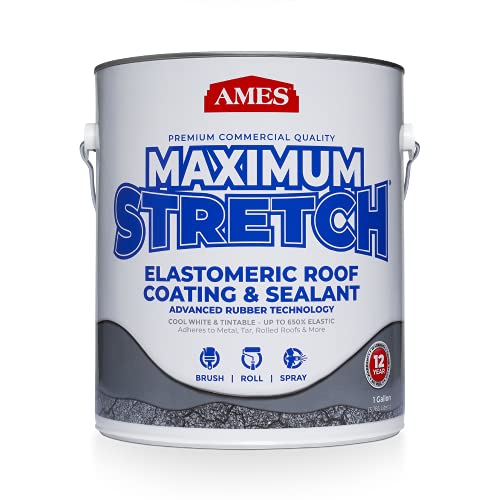
Product overview: This white elastomeric, acrylic roof coating offers 650% elongation to resist cracking and peeling. It features high reflectivity (about 88%), which helps lower surface temperatures and potentially reduce cooling costs. It adheres to metal roofing, tar, and rolled roofs and is suitable for low-slope roof maintenance, including RV applications.
Key considerations: The high elongation makes this a robust option for roofs with movement or temperature shifts. The light-reflective finish adds energy-saving potential. For best results, apply with brush, roller, or spray according to the product guidelines and ensure compatible primer when needed for specific substrates.
HENG’S Industries Rubber Roof Coating – 1 Gallon
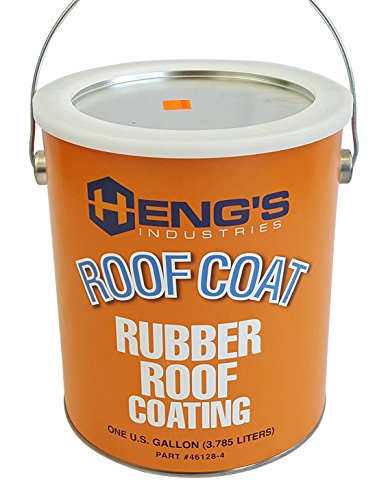
Product overview: Designed for RV roofs and similar applications, this coating seals seams and tears while sealing vents and air conditioners. It is UV resistant, expands and contracts with roof movement, and resists cracking and impact. It is non-polluting and non-toxic, suitable for DIY roof repairs on rubber surfaces.
Key considerations: UV resistance and flexibility are strong points for RV-related projects or mixed-roof setups. Check compatibility with EPDM, TPO, or other rubber substrates, and follow application guidance for proper sealant thickness and curing times.
Buying Guide: Rubber Roof Coatings — Key Purchase Considerations
- Surface compatibility: Confirm substrate compatibility (EPDM, TPO, metal, concrete, wood) and whether primers are recommended for adhesives on specific materials.
- Flexibility and elongation: Higher elongation helps accommodate roof movement and temperature changes. Consider products with 200%–1000% elongation depending on climate and roof type.
- UV resistance and color: Light-colored or white coatings reflect more solar energy, reducing heat buildup and potential cooling costs. Dark coatings may offer quicker initial cure but absorb more heat.
- Application method: Choose a product that fits your preferred application method (brush, roller, spray). Ensure proper surface prep to optimize adhesion.
- Coverage and thickness: Review typical coverage per gallon and recommended membrane thickness (mils). Multiply by roof area to estimate quantity, accounting for multiple coats.
- Durability and maintenance: Look for UV stability, weather resistance, and long-term waterproofing performance. Some formulas offer superior crack resistance and self-healing properties.
- Environmental and safety considerations: Check VOC content and any safety precautions. Some products are non-toxic or low-odor, which can be important for occupied spaces.
- Warranty and suitability for RVs or flat roofs: If the project involves RV roofs or high-heat environments, prioritize products with high elongation, UV stability, and reflective finishes specific to those conditions.