Best Pressure Tank for Water Pump: Top Picks for Reliable Home Water Pressure
Finding the right pressure tank is crucial for maintaining steady water pressure and protecting your well pump. This guide reviews five well-regarded options, focusing on durability, NSF certifications, and compatibility with common well pump systems. Whether you need a vertical or horizontal tank, pre-charged designs, or resilient inner diaphragms, the selections below cover varied needs and installation setups for American households.
| Product | Brand | Capacity | Connection |
|---|---|---|---|
| Red Lion RL34A 34-Gallon Vertical Pre-Charged | Red Lion | 34 gallons | 1-Inch FNPT |
| Red Lion RL20A 20-Gallon Vertical Pre-Charged | Red Lion | 20 gallons | 1-Inch FNPT Elbow |
| Amtrol WX-202 Well Pressure Tank | Amtrol | 20 gallons | Standard |
| Red Lion RL6AH 6-Gallon Horizontal Pre-Charged | Red Lion | 6 gallons | 3/4-Inch MNPT |
| WaterWorker HT-30B Vertical Pressure Tank | Water Worker | 30 gallons capacity | NSF listed |
Red Lion RL34A 34-Gallon Vertical Pressure Tank

The RL34A is a vertical, pre-charged tank designed for well pump systems to maintain pressure when the pump isn’t running. It carries NSF/ANSI/CAN 61 and 372 approvals for safe, drinking water. The heavy-duty 20-gauge steel shell and 304 stainless steel water connection with leak-safe technology provide durability, while a high-performance butyl rubber diaphragm supports reliable operation. Pre-charged to 20 PSI for transport, it requires topping off with a bicycle pump to two PSI below the pressure switch cut-in setting during setup.
Red Lion RL20A – 20-Gallon Vertical Tank

Designed for well pump systems, the RL20A maintains water pressure when the pump is off. It uses a 20-gauge steel tank with a 304 stainless steel water connection and a patented leak-safe technology diaphragm. NSF/ANSI/CAN 61 and 372 certifications add safety credentials for drinking water. Like other pre-charged models, it ships pre-charged to 20 PSI and requires topping off to two PSI below the switch cut-in setting.
Amtrol WX-202 Well Pressure Tank
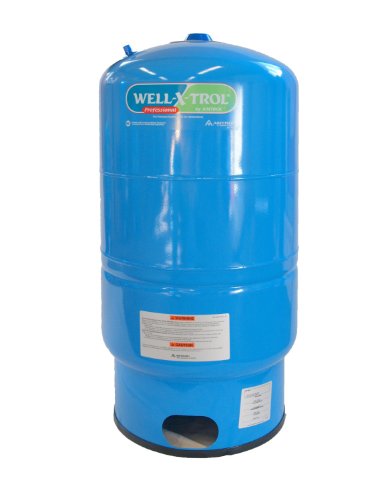
The WX-202 emphasizes robust construction with a high-strength steel shell and a virgin polypropylene inner liner that resists cracking, chipping, flaking, or peeling. A unique positive hoop ring seal secures the diaphragm and liner for added strength. This design supports reliable long-term performance in standard well pump installations while maintaining water pressure and protecting the pump from cycling issues.
Red Lion RL6AH – 6-Gallon Horizontal Tank

The RL6AH is a compact horizontal, pre-charged tank with a pump mounting bracket and thermoplastic stand, ideal for spaces with limited vertical clearance. It maintains water pressure when the pump is idle and uses NSF/ANSI/CAN 61 and 372 approvals. Its 20-gauge steel body and stainless water connection with a leak-safe diaphragm mirror the durability of larger Red Lion tanks in a smaller footprint.
WaterWorker HT-30B Vertical Tank, 30-Gallon

The HT-30B is a vertical pressure tank with a 30-gallon capacity, designed to meet NSF standards under ANSI/NSF Std 61. The butyl diaphragm has a seamless construction, reducing the risk of flexing issues and ensuring longevity, while the polypropylene liner resists degradation and maintains water quality by avoiding taste and odor transfer.
Buying Guide: Key Considerations For Your Purchase
- Tank orientation and footprint: Vertical tanks save floor space, while horizontal tanks can fit under benches or against walls. Measure installation space to choose accordingly.
- Capacity needs: Larger homes or multiple fixtures require bigger tanks (20–34 gallons) to reduce pump cycling. Smaller spaces may suffice with 6–20 gallon options for modest systems.
- Pre-charged vs. non pre-charged: Pre-charged tanks come ready to install and require only a PSI topping, but may need adjustment to match your pump’s cut-in pressure. Non pre-charged models can be tailored to specific pressure settings.
- Diaphragm vs. bladder design: Diaphragm tanks tend to be more durable in well-drawdown scenarios, with better long-term storage of water under pressure. Bladder tanks are common but may require monitoring for wear over time.
- Certifications: NSF/ANSI/CAN 61 and 372 approvals indicate safety for drinking water. If you’re using water supply for consumption, look for these certifications.
- Materials and durability: Stainless steel connections and heavy-gauge steel shells contribute to longer service life, especially in rural or chlorinated-water environments.
- System compatibility: Check the connection size (1-Inch FNPT, 3/4-Inch MNPT) and ensure compatibility with your existing pump and fittings.
- Maintenance considerations: Diaphragm integrity, potential for leaks, and ease of replacement parts affect long-term costs and downtime.
- Warranty and support: A solid warranty and accessible customer support can reduce total cost of ownership and expedite repairs.
In selecting a pressure tank, consider your household size, well pump configuration, available installation space, and desired pressure range. The options listed provide a spectrum from compact horizontal models to larger vertical tanks, all with compatibility for standard well pump setups and safety certifications to support reliable, continuous water pressure in American homes.