Best Expansion Tanks for Wells: Top Picks for Reliable Water Pressure
Finding the right expansion tank for a well system helps prevent water hammer, stabilize pressure, and extend pump life. The following select models are designed to meet NSF standards or have robust internal construction for long-term use. The list emphasizes vertical tanks suited to residential wells and includes options for different capacities and configurations. Read each product’s features to compare materials, diaphragms, and pre-charge values to match your system’s needs.
| Product | Brand | Capacity | Type |
|---|---|---|---|
| WaterWorker 25009 20Gal Vertical Well Tank | Water Worker | 20 Gallon | Vertical Well Tank |
| WaterWorker HT-30B Vertical Pressure Well Tank | Water Worker | 30 Gallon (26 Gallon capacity) | Vertical Pressure Tank |
| Amtrol WX-203 Well-X-Trol | Amtrol | 20 Gallon | Steel Shell, Inner Polypropylene |
| Amtrol WX-202 Well-X-Trol | Amtrol | 20 Gallon | Steel Shell, Inner Polypropylene |
| Watts ETX-90 15-Gallon | Watts | 15 Gallon | Non-Potable Expansion Tank |
WaterWorker 25009 20Gal Vertical Well Tank
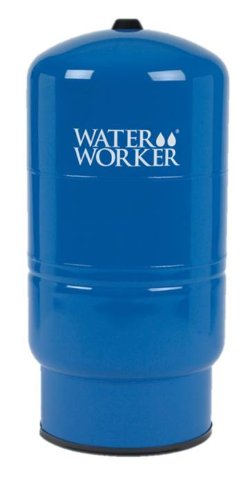
The WaterWorker 25009 is a 20-gallon vertical well tank designed to NSF standards under ANSI/NSF Std 61. Its butyl diaphragm provides a seamless, flexing action that resists stretching and creasing like bladder tanks, improving durability. The polypropylene liner in the water reservoir helps prevent flaking, chipping, or odor transfer to water, maintaining water quality. This model is suitable for standard residential well systems seeking reliable, long-term performance with a compact footprint.
WaterWorker HT-30B Vertical Pressure Well Tank

The HT-30B model offers a 30-gallon vertical tank with a 26-gallon usable capacity for moderate well systems. Like other Water Worker tanks, it uses a butyl diaphragm and a polypropylene liner to ensure water purity and durability. NSF listing reinforces safety for household use. This tank is a solid choice when a larger footprint is needed to keep pressure steady during higher drawdowns or multi-story homes.
Amtrol WX-203 Well-X-Trol

The WX-203 Well-X-Trol features a high-strength steel shell with a virgin polypropylene inner liner that resists cracking, chipping, or peeling, and it withstands aggressive groundwater conditions. This design improves longevity and reliability under fluctuating well pressures. The combination of a reinforced shell and a durable liner helps maintain system integrity in typical residential installations and offers robust performance for long-term use.
Amtrol WX-202 Well-X-Trol

This 20-gallon Well-X-Trol model emphasizes a high-strength steel shell and a virgin polypropylene inner liner that resists cracking or flaking. Its diaphragm and liner design provide added security against leaks and corrosion in typical well systems. A positive hoop ring seal contributes to durability and reliability, delivering consistent performance through cycles of pumping and pressure changes.
Watts ETX-90 15-Gallon Non-Potable Expansion Tank

The Watts ETX-90 is a 15-gallon non-potable expansion tank designed for closed-loop systems in hydronic heating and domestic hot water applications. It uses a carbon steel tank with an epoxy finish and a 12 psi pre-charge, with a 3/4 inch MNPT system connection. This model is appropriate for spaces where potable-water compatibility is not required, offering a compact option for smaller or retrofitted installations and ensuring proper expansion control in heating circuits.
Buying Guide: Key Considerations And Comparisons
Choosing the right expansion tank depends on system size, water chemistry, and installation context. Consider these perspectives to find the best match:
- Capacity vs. demand: Match tank volume to well pump size, daily draw, and number of fixtures. Larger homes with higher flow require tanks with more storage to smooth pressure swings.
- Diaphragm vs. bladder: Diaphragm tanks (butyl) tend to be more durable and less likely to fail due to creasing, while bladder designs can be more common in compact units. Look for a seamless diaphragm and compatible liner materials.
- Pre-charge pressure: Ensure the tank is pre-charged to about 2 psi below the well pump cut-in pressure. Incorrect pre-charge reduces efficiency and can cause short cycling.
- Material durability: Steel shells with polypropylene liners resist corrosion and mineral buildup. For potable systems, NSF/ANSI 61 compliance indicates safer drinking water compatibility.
- Installation context: Vertical tanks save space in tight basements; horizontal or compact options may be needed for crawl spaces or utility closets. Ensure proper mounting and connection sizing (NPT) for compatibility with existing piping.
- Maintenance and warranty: Check for warranties that cover diaphragms and liners, and consider models with readily available replacement parts to extend system life.
Comparative notes: Water Worker tanks offer NSF-listed, diaphragm-based durability with food-grade liners, suitable for residential wells. Amtrol WX series emphasizes a steel shell with a virgin polypropylene liner and strong seals for long life under variable pressures. Watts ETX-90 provides a lower-capacity, robust option for non-potable or heating-focused closed-loop systems, useful where potable-water considerations are absent. For a typical household, a 20–30 gallon vertical tank from a reputable brand often balances space, cost, and performance, while larger homes or higher water demand may benefit from the higher capacity of the HT-30B or Well-X-Trol lines.