Best Pipe Sealer for Plumbing: Top Picks for Leak-Free Connections
Finding a reliable pipe sealer is essential for durable plumbing work, from new installations to repairs. The following selections focus on sealants and tapes that perform well under vibration, thermal expansion, and varying pressures. Each product here is chosen for compatibility with metal threads, ease of use, and long‑lasting performance in household and commercial settings.
Summary of chosen products:
| Product | Brand | Format | Key Benefit |
|---|---|---|---|
| RectorSeal Tru-Blu 31631 | Rectorseal Store | 1/4 Pint | PTFE-enriched, fast-dry, vibration resistant |
| Teflon Plumbers Tape (4 rolls) | VOTMELL Store | 1/2″ x 520″ per roll | Strong leak barrier, broad compatibility |
| Pipe Thread Sealant (Anaerobic) | Professional Soma Fix Store | 1.7 fl oz | Removable, high‑pressure and oil resistant |
| RectorSeal T Plus 2 | Rectorseal Store | 1 3/4 oz | Non-hardening, PTFE enriched |
| RectorSeal No. 5 | Rectorseal Store | 1.75 oz | Soft setting, easy breakout, metal‑free |
RectorSeal Tru-Blu 31631 Pipe Thread Sealant

RectorSeal Tru-Blu 31631 is a fast-drying, PTFE-enriched pipe thread sealant designed for high‑vibration environments and frequent thermal expansion and contraction. It offers reliable sealing on metal threads and is manufactured in the United States. The formula emphasizes ease of use with quick cure times and robust resistance to leaks, making it suitable for plumbing systems that experience frequent movement or temperature shifts. This product is particularly valuable where reliable, long‑term performance is critical in both residential and commercial installations.
4 Rolls Teflon Plumbers Tape

This set provides 1/2 inch wide, 520 inches long PTFE tape per roll, totaling multiple applications per roll. Teflon tape is a fundamental barrier against water and gas leaks on threaded connections, improving seal integrity with minimal effort. The product is well suited for both residential and office plumbing tasks, including shower heads and supply lines, and is a practical, economical choice for general pipe sealing needs where thread lubrication and gentle tightening are required to prevent over‑torquing.
Pipe Thread Sealant – Anaerobic
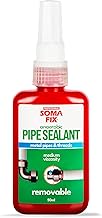
This anaerobic sealant cures in the absence of air when confined between metal surfaces, creating a strong, vibration‑resistant seal for metal pipes, fittings, and joints. It is designed for high‑pressure applications and is removable, which supports maintenance and adjustments without damaging threads. The product is suitable for industrial plumbing systems and repair work where dependable, long‑lasting seals are required, and it helps maintain system integrity under dynamic stresses.
RectorSeal T Plus 2

RectorSeal T Plus 2 is a non‑hardening, PTFE‑enriched sealant known for its dependable lubrication and sealing of threaded pipe connections. The product contains no other metals and is designed to hold intact under vibration and pressure while remaining easy to break out when needed. Its synthetic fiber content helps provide a stable suspension for application, and the slow to moderate drying characteristic supports controlled work and resealing if necessary.
RectorSeal No. 5

RectorSeal No. 5 is a soft‑setting, slow‑drying thread sealant that lubricates and protects pipe threads while preventing galling and cross‑threading. It is metal‑free, which reduces corrosion risk and simplifies disassembly. The formulation supports easy breakout without thread damage and is suitable for potable water lines and other standard plumbing connections where a flexible, long‑lasting seal is needed.
Buying Guide: Key Considerations for Choosing a Pipe Sealer
- Sealant type: Choose between thread sealants (anaerobic or PTFE‑based) and thread tapes based on application needs. PTFE products are generally easier to apply and remove, while anaerobic sealants excel in high‑pressure, vibration‑prone systems.
- Material compatibility: Ensure the product is compatible with metal pipes and fittings used in your system. Some formulas avoid metals and are designed to prevent galvanic reactions.
- Drying time and cure: Fast‑dry formulas save time, but slower cures can offer better gap filling and adjustment windows for complex joints.
- Removability: If future disassembly is likely, select products described as removable or easy breakout to minimize damage to threads.
- Vibration and thermal expansion resistance: In hot water or radiator systems, look for sealants formulated for high vibration and thermal cycling.
- Potable water suitability: For any sealant used on drinking water lines, verify potable water compatibility and certifications to avoid contamination risks.
- Application method: Tapes and solutions differ in application steps. Tapes require wrapping technique and proper tension, while sealants often need coating or brushing on threads.
- Storage and shelf life: Some products retain performance better when kept sealed and free from air exposure; check container design and storage guidance.
For typical residential projects, combining PTFE tape with a compatible sealant can offer layered protection against leaks and disassembly challenges. In more demanding installations—such as appliances with frequent vibration, outdoor lines, or high‑pressure systems—select anaerobic sealants that cure in the absence of air and form robust, vibration‑resistant bonds. When handling potable water lines, prioritize products explicitly labeled for potable use to ensure safety and compliance.