Best Water Storage Containers for Emergency Preparedness and Home Safety
When emergencies strike, having reliable water storage is essential. This guide highlights top water storage containers designed for emergency use, including durable options for home kits, camping, and disaster preparedness. Each pick focuses on durability, portability, and safe, BPA-free materials to ensure clean drinking water when mains supply is interrupted. Below you’ll find a quick product summary, followed by in-depth sections for each recommended option and a buying guide to help you compare features and capabilities.
| Product | Brand | Capacity | Key Use |
|---|---|---|---|
| Saratoga Farms 5-Gallon Stackable Water Containers (4 Pack) | Saratoga Farms | 20 gallons total (4 × 5 gal) | Disaster prep, camping, stacking for space efficiency |
| WaterBOB Bathtub Storage (100 Gallon) | waterBOB | 100 gallons | Bath-tub based emergency water storage |
| WaterStorageCube 5.3 Gal (2-Pack) | WaterStorageCube | 10.6 gallons | Foldable, portable water canteen for outdoors |
| Reliance Aqua Tainer 7 Gallon (4 Pack) | Reliance | 28 gallons total | Rigid, stackable, on-demand dispensing |
| Water Brick 3.5 Gallon (4-Pack) | WaterBrick | 14 gallons | Stackable, space-efficient long-term storage |
Saratoga Farms 5-Gallon Stackable Water Containers

Durability meets space efficiency. These 5-gallon containers are designed with flat bottoms and tops that nestle together for tight stacking, which helps maximize storage in preparedness kits, basements, or utility closets. Built-in twist breathing ports aid pouring and reduce air lock, a common issue that can affect flow and pourability during an emergency. The kit includes four individual containers with lids for immediate setup. Made from BPA-free HDPE, they offer a food-grade option suitable for water and other liquids, with an approximate weight of 40 lbs when full for each 5-gallon container. The design emphasizes portability and reuse, making it a practical base for a family’s emergency water strategy.
Key considerations: If you’re prioritizing compact storage and easy handling, this set is a reliable starter for a family’s emergency water supply. The 40-day estimate provided by some guidelines is contingent on per-person water needs and usage. For households with more members or higher daily usage (cooking, hygiene), you may prefer larger containers or additional packs. Cleaning and sanitization should follow safe practices, and replacement every few years helps ensure material integrity.
WaterBOB Bathtub Storage Emergency Drinking Water Container

The waterBOB system leverages a standard bathtub to provide substantial emergency drinking water storage—up to 100 gallons. This approach eliminates the need for bulky rigid containers or external tanks. The kit includes a hand pump for dispensing, helping manage water usage during a crisis. It’s designed to keep water clean for up to several weeks by protecting it from contamination, debris, and exposure when stored in a bathtub. This option is especially attractive for homes with limited extra storage space, as it uses existing bathroom infrastructure to expand water reserves quickly and affordably.
Key considerations: This approach relies on an unused or underutilized bathtub, so if your bathroom space is small or has limited tub access, you’ll need to plan accordingly. While convenient for rapid deployment, it’s less suitable for long-term storage away from a bathroom. The system is best paired with a broader mix of rigid containers or collapsible options to cover multiple storage scenarios and durations.
WaterStorageCube Collapsible Water Container (2-Pack)
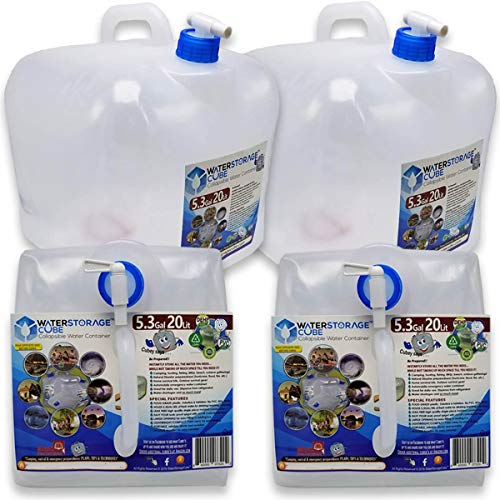
These 5.3-gallon collapsible containers strike a balance between portability and capacity. Made from food-grade, BPA-free materials, they resist odors and maintain water taste, with a thick lid designed to withstand pressure and a leak-proof spigot for controlled dispensing. The soft, flexible design makes storage easy in tight spaces, RVs, or camping packs. A single pack can be expanded by adding more units as your household needs evolve, and the one-piece design reduces seams that could leak over time. They are well-suited for outdoor activities and emergency scenarios where space and weight matter.
Key considerations: Collapsibles are ideal when you foresee the need to store water temporarily and transport it during travel. They may require more careful cleaning and inspection for punctures over time than rigid containers. If your storage space is abundant and you want long-term rigidity, consider pairing collapsibles with rigid options for a diversified approach to contingency planning.
Reliance Aqua Tainer 7 Gallon (4 Pack)

Built as a rigid, stackable solution with a molded contour grip, the Aqua Tainer is designed for easy handling and space-saving storage when empty. It includes a new vent design and a hideaway spigot for on-demand dispensing, offering a clean, straightforward water retrieval experience during emergencies. Each 7-gallon container provides a reliable daily supply for families and is compatible with common storage shelving and cabinets. The four-pack layout supports broader household readiness with ready-to-use reserves.
Key considerations: Rigid containers are durable and easy to clean, but they occupy more space when full. For households with tight storage rooms, plan for stacking height and access. Additionally, ensure you have a plan for regular rotation to keep water fresh and within safe storage windows. Consider supplementing with collapsible options for portability and optional water production methods (like filtration or purification) as part of a broader preparedness strategy.
Water Brick 3.5 Gallon Pack

WaterBricks are designed with a modular brick-like structure that makes them highly stackable and space-efficient. Each brick holds 3.5 gallons and can be arranged in various configurations to fit odd storage spaces and shelves. They are made from food-grade HDPE and are BPA-free, with a wide opening and a durable brick design that supports long-term storage and easy transport. The compact footprint encourages creative storage solutions in basement closets, pantries, or emergency kits, enabling up to 14 gallons in a compact unit set when using four bricks.
Key considerations: The cross-stackability is advantageous for limited spaces, but the smaller capacity per unit means you’ll need more containers to reach higher totals. For a long-term plan, include brackets or shelving that accommodate varied brick sizes and ensure easy access during a crisis. Regular checks for seal integrity and lid condition will help maintain water quality over time.
AquaBrick 3 Gallon Stackable Containers

Designed for long-term water storage, AquaBrick containers offer a 3-gallon capacity with a focus on leak-proof performance and easy stacking. These blue containers are specifically marketed for emergency storage and can be configured to fit diverse storage areas. The stackable design supports efficient use of space in closets, basements, or utility rooms, and the wide-mouth opening facilitates easy filling and dispensing. The product emphasizes durability and modularity for expanding a household’s water reserve over time.
Key considerations: For long-term storage, consider mixing container types to balance ease of use with volume. Regular inspection, rotation, and sanitation of containers help ensure water safety. If you anticipate frequent access, prioritize containers with integrated dispensing options or compatible spigots to streamline distribution during a crisis.
Buying Guide: Key Purchase Considerations And Comparisons
- Storage space and portability: Collapsible containers save space and are ideal for limited storage rooms or vehicles, while rigid containers offer long-term durability and easier dispensing.
- Capacity and rotation: Estimate your daily per-person water needs and multiply by days you want to cover. A mix of container sizes can balance portability with total storage.
- Material safety: Choose BPA-free, food-grade HDPE or PET materials to ensure safe contact with drinking water. Inspect for seams, lids, and venting integrity to prevent leaks and contamination.
- Dispensing options: Built-in spigots, venting, and large openings reduce waste and improve usability in emergencies. Consider whether you need on-demand dispensing or bulk transfer capabilities.
- Durability and weather resilience: For outdoor use or camping, sturdier containers withstand rough handling. Consider UV resistance, temperature tolerance, and impact resistance for all-weather readiness.
- Maintenance and rotation: Water should be rotated regularly to maintain quality. Establish a schedule to inspect containers, clean them, and replace aging plastics as needed.
- System integration: A diversified approach—mixing collapsibles, rigid containers, and tub-based options—can cover scenarios from quick response to long-term storage, maximizing resilience.
- Cost and scalability: Start with a core kit and gradually expand. Modular packs (like 4-pack or 2-pack options) enable scalable growth without overwhelming initial budgets.
In summary, choosing the right water storage containers for emergencies involves balancing storage efficiency, ease of use, and water safety. Whether you’re building a home emergency kit, prepping for a natural disaster, or stocking for camping trips, these containers offer dependable options to ensure access to clean water when it matters most. Combine multiple container types to tailor a solution that fits your home, vehicle, and storage space—then maintain your system with regular checks and rotation to stay prepared for whatever comes next.