Best Window Units for Sliding Windows: Top Picks for Easy Cooling
Looking for window air conditioners that fit sliding windows and deliver reliable cooling? This guide highlights the best options for sliding and casement windows, with clear reasons for each pick. Each product is evaluated for installation ease, comfort features, and suitability for room size. Ideal buyers include apartment dwellers with wide sliding sills, homeowners upgrading one room, or renters seeking simple, non-technical setups. A quick summary table below compares key aspects to help you decide faster.
| Product | Best For | Room Size | Window Type Fit |
|---|---|---|---|
| Keystone 8,000 BTU Slider Window AC | Medium rooms | Up to 350 sq ft | Sliding/Casement |
| Keystone 10,000 BTU Slider Window AC | Larger spaces | Up to 450 sq ft | Sliding/Casement |
| Perfect Aire 10,000 BTU Casement Window AC | Versatile window styles | Up to 450 sq ft | Sliding/Crank-Out |
| GE 5,000 BTU Window AC | Small rooms | Up to 150 sq ft | Sliding |
| Midea 12,000 BTU Inverter Window AC | Large rooms with heat option | Up to 550 sq ft | Sliding/Horizontal |
Note: Each product section includes a direct link to the Amazon listing, a quick image reference, and practical guidance on who benefits most. When a feature is particularly strong for a certain use case, it’s called out clearly to help you compare quickly.
Keystone 8,000 BTU Slider Window AC
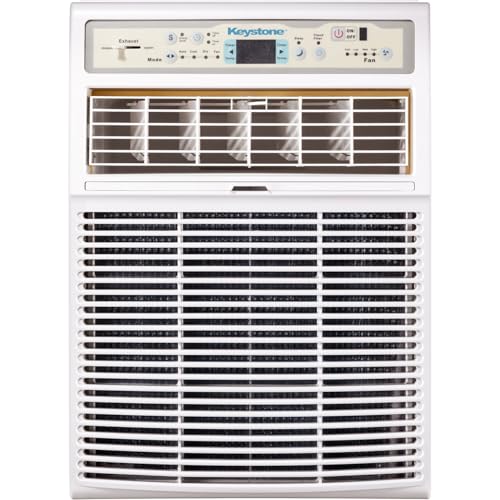
Best for medium rooms up to 350 sq ft. This Keystone unit fits standard sliding and casement windows and offers three cooling modes, three fan speeds, and four-way air direction control. The built-in dehumidifier removes about 0.9 liters of moisture per hour, helping maintain comfort in humid spaces. The 4-way air louvers let you direct airflow precisely where it’s needed. Caution: Do not exceed the window’s weight rating and ensure proper sill support to avoid misalignment.
Keystone 10,000 BTU Slider Window AC

Best for larger living spaces up to 450 sq ft. With 10,000 BTUs, this unit supports three cooling modes, three fan speeds, and a four-way adjustable air louvers system. It also features a built-in dehumidification function that removes moisture at about 0.9 pints per hour. The timer helps customize cooling cycles. Choose this if your room approaches the upper limit of the Keystone 8,000 BTU unit’s area. Limitation: Heavier weight can make installation more challenging without additional mounting support.
Perfect Aire 10,000 BTU Casement Window AC

Best for sliding or crank-out windows with a flexible installation kit. This 10,000 BTU unit cools spaces up to 450 sq ft, making it suitable for living rooms or larger bedrooms. It includes an expandable mounting kit that accommodates various window widths and heights, plus adjustable thermostat settings, multiple cooling speeds, and a 24-hour timer. This model is a strong option when you need a precise fit for non-standard casement or sliding windows. Caution: Ensure the mounting kit matches your window dimensions to avoid gaps.
GE Window AC Unit 5,000 BTU

Best for very small spaces up to 150 sq ft. GE’s unit offers two cooling modes and simple mechanical controls, providing straightforward operation without Wi-Fi or apps. It’s a reliable pick for a bedroom or small office where minimal setup and quiet operation are priorities. Limitation: Lower BTU capacity means it won’t efficiently cool larger rooms or spaces with high heat load.
Midea 12,000 BTU Inverter Window AC With Heat

Best for large rooms up to 550 sq ft and year-round comfort, thanks to heat and cooling functions. This inverter model supports smart control, a digital display, multiple modes, and a 24-hour timer. It can be controlled via app or voice assistants, offering convenience and energy efficiency with its inverter technology. Note: The heat function may be limited by outdoor temperatures; verify operating temperature range for your climate.
Buying Guide
What size window unit do I need for sliding windows?
Choose BTU based on room size: up to 150 sq ft (5,000 BTU), 150–350 sq ft (8,000 BTU), 350–450 sq ft (10,000 BTU), and up to 550 sq ft (12,000 BTU with heat). Consider insulation, sun exposure, and occupant load when estimating need. For sliding windows, ensure the vertical height and sill width fit the unit or kit included with the product.
Are there installation challenges specific to sliding windows?
Sliding-window AC units often require a secure sill and side support. Some products include adjustable mounting kits to accommodate various window widths and heights. Look for four-way air direction control features to improve room airflow without repositioning the unit. For casement windows, confirm compatibility with crank-out mechanisms or alternative mounting options.
What features improve comfort and efficiency?
Key features include dehumidification, multiple cooling/fan speeds, programmable timers, and inverter technology for energy efficiency. Four-way air direction control helps target airflow, while smart controls enable remote adjustment. For rooms with humidity, a unit with built-in dehumidification provides added comfort.
Which options are best for renters?
Renters typically benefit from units with simple installation, lightweight design, and non-permanent mounting solutions. Look for tools-free kits, slide-fit designs, and compact form factors. Avoid heavy, complex installations that require permanent changes to windows or walls.
How do I choose between sliding and casement compatibility?
Sliding units generally fit standard horizontal windows, while casement units accommodate crank-out styles. Check each model’s window compatibility note and whether an expandable mounting kit is included. If your window type is mixed, select a model known to perform well with both window styles.
FAQ
- What size window should I choose for a 400 sq ft room? A 10,000 BTU unit is typically recommended for up to about 450 sq ft, depending on climate and insulation.
- Can I install these in a casement window? Yes, several models offer compatibility with casement or sliding windows, often via expandable mounting kits.
- Do these units dehumidify? Most listed models include a dehumidification function, aiding comfort in humid spaces.
- Are inverter units worth the extra cost? Inverter technology generally provides better energy efficiency and steady cooling, which can save money over time.
- Is professional installation ever required? Most sliding-window units are designed for DIY installation with provided kits. Heavy installations or improper sealing may require assistance.
- What should I avoid? Avoid units that exceed the window sill’s weight or require permanent modifications to the window frame.