Best Primer for Mold Stains: Top Picks for Effective Mold Killing and Stain Blocking
When dealing with mold stains, selecting the right primer can stop new mold growth and prevent stains from bleeding through the final coat. This guide highlights five top primers that are widely used for mold resistance, stain blocking, and odor control. It’s best for homeowners tackling basement mildew, bathrooms, laundry rooms, and other moisture-prone areas. Each option varies in application surfaces, odor, and drying time—use the comparison notes to pick the right match for your project.
Summary table of selected products:
- Product: Qt Zinsser 276087 White Mold Killing Primer
- Best for: Kill mold on interior surfaces with minimal prep
- Key strength: Water-based fungicidal coating that covers fungal stains
- Limitations: Requires compatible topcoat; odor may linger briefly
- Product: 1 Quart Bulls Eye 1-2-3 Primer Sealer Stain Killer
- Best for: Surfaces with tough gloss or hard-to-stick areas
- Key strength: Bonds to glossy surfaces without extensive sanding
- Limitations: Exterior and interior; ensure weather conditions for outdoor use
- Product: Zinsser 276049-2PK Mold Killing Primer, Gallon, White
- Best for: Quick single-coat projects with two-pack value
- Key strength: EPA registered and low odor
- Limitations: Large 1-gallon quantity may be more than needed for small jobs
- Product: RMR Brands DIY Mold & Stain Remover Bundle
- Best for: Instant stain removal and long-term prevention
- Key strength: Two fast-acting formulas to kill mold and lift stains
- Limitations: Bundle includes cleaners rather than only primer; plan use accordingly
- Product: Zinsser 3608 Cover Stain Oil Base Primer Spray
- Best for: Sealing stains and tannin bleed on challenging surfaces
- Key strength: No sanding required; great adhesion
- Limitations: Oil-based; longer cleanup and odor considerations
Qt Zinsser 276087 White Mold Killing Primer
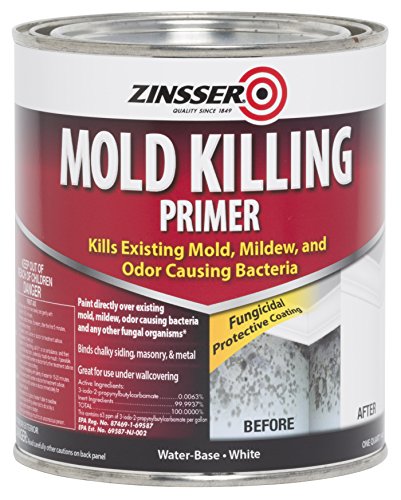
Best for: Interior surfaces with visible mold or musty odors. This water-based fungicidal primer targets existing mold, mildew, and odor-causing bacteria. It can be top-coated with various finishes and is designed to cover fungal stains. EPA registered and formulated to reduce surface contamination before painting.
Why chosen: It provides a protective layer that stops mold progress and makes subsequent coatings easier to apply. It’s particularly suitable for bedrooms, basements, and garages where humidity promotes mold growth.
Who it’s for: Homeowners needing an EPA-registered solution that works under other paints and helps seal fungal stains without extensive pre-cleaning.
Caution: Proper ventilation is advised during application due to odor from mold-killing agents, and ensure the area is dry before applying topcoats.
1 Quart Bulls Eye 1-2-3 Primer Sealer Stain Killer

Best for: Surfaces that require adhesion on glossy finishes or previously painted substrates. This primer sealer bonds to difficult surfaces without scuff sanding and performs well in cooler application conditions.
Why chosen: Its sealing capability helps prevent bleed-through of dark colors and stains while providing a solid base for topcoats. It is useful for kitchens, bathrooms, and woodwork prone to moisture exposure.
Who it’s for: DIYers who need a reliable, user-friendly primer that sticks well to glossy or sealed surfaces and speeds up prep work.
Caution: Not a dedicated mold-killing formula; pair with a mold remediation plan if mold is a persistent issue.
Zinsser 276049-2PK Mold Killing Primer, Gallon

Best for: Quick project lines where large areas need mold-blocking coverage. This EPA-registered primer kills mold, mildew, and odor-causing bacteria on non-porous surfaces.
Why chosen: The gallon size offers coverage up to 160 square feet and dries quickly, enabling faster completion of small-to-medium projects, such as laundry rooms or basements with visible fungal stains.
Who it’s for: Homeowners seeking a low-odor, easy-cleanup solution that can be recoated in about an hour.
Caution: Best used on non-porous substrates; porous materials may require an additional sealing step or alternative preparation.
RMR Brands DIY Mold & Stain Remover Bundle

Best for: Projects requiring both immediate mold and stain removal and long-term prevention. The bundle includes two fast-acting formulas for different stages of remediation.
Why chosen: The combination of RMR-141 and RMR-86 addresses both mold in the moment and stain lifting, offering a practical, all-in-one approach for kitchens, bathrooms, and basements with persistent staining.
Who it’s for: Homeowners seeking a comprehensive mold remediation kit that tackles both active growth and stubborn staining, with simple application steps.
Caution: These products are cleaners and disinfectants; follow safety and ventilation guidelines during use. Use as part of a broader mold control plan.
Zinsser 3608 Cover Stain Oil Base Primer Spray

Best for: Sealing in stains and tannin bleed on challenging surfaces where sanding is limited. The oil-based formula provides strong adhesion and blocking power.
Why chosen: It reduces the appearance of dark stains and provides a solid base for topcoats, often used on wood and painted surfaces in high-traffic areas.
Who it’s for: Professionals or DIYers who need robust stain blocking and quick adhesion on problematic substrate edges and corners.
Caution: Oil-based primers require ventilation and longer cleanup; avoid use in poorly ventilated spaces without proper precautions.
Buying Guide: Mold Stain Primer Essentials
What type of mold stain primer should I choose? Consider surface type (porous vs non-porous), location (bathroom, basement, exterior), and whether you need mold-killing properties or just stain blocking. EPA-registered products offer an extra safety margin for mold control on non-porous surfaces.
Do I need two-step remediation? In many cases, a mold-killing primer is followed by a water- or oil-based topcoat. For persistent mold, address moisture sources first to prevent regrowth.
How important is odor and dry time? Water-based primers typically have lower odor and faster dry times, aiding fast project completion. Oil-based options offer stronger stain blocking but require longer cure times and ventilation.
What surface preparation is required? While many primers claim no extensive cleaning, removing loose material and ensuring a dry, clean surface improves adhesion and final appearance.
How do I choose for interior vs exterior? Exterior surfaces may require primers with stronger UV resistance and moisture tolerance. Select a product labeled for the intended substrate and exposure conditions.
Frequently Asked Questions
- What is the difference between mold-killing primers and stain-blocking primers?
- Can I use any primer for mold stains?
- Is ventilation important when applying mold primers?
- How long should I wait before applying the topcoat?
- What maintenance steps reduce mold recurrence after priming?
Mold-killing primers actively kill existing mold and mildew, while stain-blocking primers seal the surface to prevent staining from coming through the topcoat. Some products combine both features; read labels for specifics.
Not all primers are designed to treat mold; choose EPA-registered options for mold control on non-porous surfaces and ensure the primer suits your substrate.
Yes. Many mold-killing and oil-based primers release fumes. Use ventilation and protective equipment as recommended on the product label.
Dry times vary by product; many primers are ready for topcoating within 1 hour, but always confirm on the label and consider room temperature and humidity.
Control moisture sources, fix leaks, improve airflow, and regularly clean areas prone to dampness. A well-timed vapor barrier and dehumidification help prevent regrowth.
By selecting the right primer for mold stains, you can control moisture-driven staining and create a stable base for your finish coats. Use the product notes to balance mold-killing action, odor, dry times, and surface compatibility to match your project needs.