Best Narrow Walkers for Small Spaces: Compact Mobility Aids
Finding the right narrow walker means balancing stability, maneuverability, and fit for tight spaces. This guide highlights five top options designed for small doorways, tight hallways, and cozy apartments. Each pick targets a different user need—lightweight portability, adjustable width, or added features—so buyers can choose the best match for daily home use, travel, or frequent in-and-out mobility. The sections explain who each walker is best for, the key benefits, and any limitations to consider.
Summary Table of Selected Products
| Product | Best For | Key Benefit | Limitations |
|---|---|---|---|
| Agrish Narrow Walkers | Elderly users in small spaces | Adjustable width 18″–24″, high weight capacity | Higher price tier |
| Delog Narrow Walkers | Users needing easy one-handed operation | Click releasing sides, independent sides | Weight around 6 lbs |
| HOMENURSE Narrow Walker | Compact homes and travel | 8 height levels, 17.7″–25.8″ width | May be taller when adjusted |
| VOCIC Narrow Rollator | Apartments with tight doorways | 22″ max width, quick-fold | Load capacity lower than some peers |
| Vive Mobility Rollator | Travel and small spaces | Ultra-compact, 23.5″ width | Limited color options |
Agrish Narrow Walkers for Seniors

The Agrish model offers an adjustable width of 18″ to 24″ and supports up to 350 pounds. This makes it well suited for seniors who live in apartments or small homes and need a walker that can squeeze through narrow doorways yet remain sturdy for daily use. Best for: seniors who require frequent navigation through compact rooms and doorways. Limitation: higher-end build may translate to a higher upfront cost compared with some light-duty options.
Delog Narrow Walkers for Seniors

The Delog walker emphasizes ease of use in tight spaces with a click-releasing feature and independent sides. It supports up to 350 lbs and weighs around 6 lbs, offering a good balance of portability and stability. Best for: users needing straightforward one-handed adjustments or frequent disassembly through narrow passages. Limitation: the one-handed operation may feel less intuitive for first-time users until familiarized.
HOMENURSE Narrow Walkers

The HOMENURSE model features adjustable width from 17.7″ to 25.8″ by changing wheel positions and offers eight height levels. This makes it especially suitable for taller users or households with users of varying heights. Best for: households needing a foldable, travel-friendly walker with flexible sizing. Limitation: slightly more complex setup when adjusting width for the first use.
Narrow Rollator Walkers for Small Spaces (VOCIC)

The VOCIC Z32 rollator focuses on apartment living with a maximum width of 22 inches and a compact folded size. It uses quiet, durable tires and a 242 lb weight capacity, making it a practical pick for tight hallways and small kitchens. Best for: apartments and small homes where space is at a premium. Limitation: lower maximum load compared with some heavy-duty models.
CareCrew Narrow Walker for Seniors
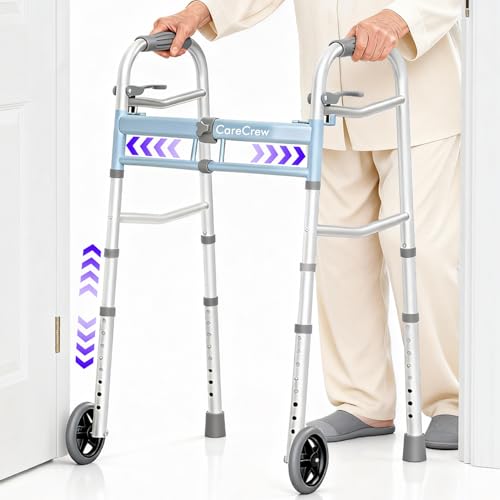
The CareCrew walker is designed for tight spaces with adjustable width and height, featuring 5″ front wheels adjusted inward to fit narrower frames. It is best for seniors needing reliable support in bedrooms, hallways, and bathrooms. Best for: users who frequently maneuver through narrow doorways. Limitation: door width requirements should be verified before purchase to avoid fitting issues.
Vive Mobility Rollator Walker

The Vive Mobility model is ultra-compact and foldable, with a 23.5″ frame width and a lightweight 19-pound design. It includes adjustable height and under-seat storage, making it particularly suitable for travel and small apartments. Best for: travelers and users needing easy transport. Limitation: selection may require checking color options and accessories, as availability can vary.
Buying Guide: Narrow Walkers For Small Spaces
What matters most when choosing a narrow walker?
Consider width at the narrowest setting, weight capacity, and overall weight. A walker that fits through common doorways and is easy to fold will reduce daily frictions for home use and travel.
Adjustability and fit
Look for adjustable width, height, and wheel placement. Some models offer independent sides or adjustable wheel positions to pass through tight passages safely.
Weight and portability
For travel or frequent storage, prioritize light-weight frames (typically under 15 pounds) with quick-fold mechanisms and compact folded dimensions.
Durability and safety features
Aluminum frames offer good strength-to-weight. Check wheel tread, brakes, and stability features. Some walkers support up to 350 pounds, while others may be lower.
Who should consider a narrow walker?
Residents of small apartments, homes with narrow doorways, or hallways; individuals who travel frequently; users needing frequent in-and-out mobility through tight spaces.
FAQ
- What width should I look for in a narrow walker? Aim for a width under 24 inches in its narrow setting, with a folded profile small enough to fit in storage or a car trunk.
- Are adjustable-walker models worth it for tight spaces? Yes. Adjustable width and height improve fit across rooms and reduce strain during use.
- Can a narrow walker support heavy users? Many models support up to 350 pounds, but always verify the weight rating in the product specs.
- Is a rollator better than a standard walker for small spaces? Rollators offer wheels and easier mobility indoors, which helps in tight layouts, but may be wider than non-wheeled walkers in certain settings.
- How do I determine if a walker fits through my doorway? Measure door width and compare to the walker’s minimum width setting; add a small clearance for smooth passage.
- Do these walkers require assembly? Many foldable options come with simple assembly; check product details for any required setup steps.