Best Epoxy for PVC Pipe: Durable Fixes and Quick Repairs
For PVC pipe repairs, the best epoxy products provide fast curing, water resistance, and a strong bond to plastics. This guide highlights top choices that are NSF certified for potable water, suited for plumbing, and easy to apply in tight spaces. The products below target common needs: sealing leaks, rebuilding damaged sections, and creating durable joints. Ideal buyers include homeowners tackling DIY plumbing, boaters needing underwater repairs, and hobbyists repairing PVC components in wet environments.
| Product | Best For | |
|---|---|---|
| WaterWeld Epoxy Putty Stick (2 oz) | Underwater repairs, plumbing leaks | Set in 25 min; potable water safe |
| Plasticweld Epoxy Putty | PVC and plastic repairs | Non-shrinking; 3-hour cure |
| WaterWeld Epoxy Putty Stick (1 Hour Cure, 2 Pack) | Water-exposed repairs; larger leaks | Two-pack convenience; NSF certified |
| KwikWeld Epoxy | Fast-setting repairs | 6-minute set; 4–6 hour cure |
| Heavy-Duty Metal Glue (Vicpricme) | Metal-to-metal or rigid repairs | 30-minute working window; drillable and paintable |
WaterWeld Epoxy Putty Stick — 2 oz

Best for underwater plumbing repairs and potable-water fixtures. WaterWeld is a hand-mixable two-part epoxy putty that cures underwater and adheres to a variety of surfaces, including PVC. It offers a lap shear strength around 1300 PSI and remains stable at high temperatures (continuous up to 300°F, intermittent up to 350°F). NSF-certified for contact with potable water. Use when you need an immediate, watertight seal in wet conditions or on damp pipe joints. Limitations include longer cure time in some environments and potential stiffness after cure that may affect flexible PVC joints.
WaterWeld 1 Hour Cure Epoxy Putty Stick — 2 Pack

This two-pack WaterWeld variant is ideal for larger leaks or multiple repairs on water-containing systems. It shares NSF certification and same 25-minute initial set with a full cure in about an hour. Best for homeowners repairing porous joints or pinhole leaks in PVC plumbing where a quick, potable-water-safe solvent-free repair is required. Choose this if you anticipate needing more material on the same project or future maintenance in wet areas. Caution: exact curing times may vary with water flow and depth.
MarineWeld Syringe Epoxy (25 ml)
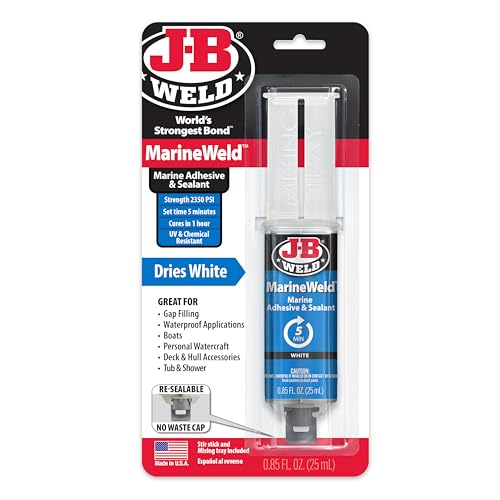
Best for water-exposed PVC areas where a flexible, waterproof seal is needed. MarineWeld is a two-part adhesive and sealant delivered in a syringe for an easy 1:1 mix. It provides a strong, flexible bond and offers resistance to water and chemicals. Best for marine or high-humidity environments where PVC pipes encounter moisture. May be more suitable for sealing joints rather than high-pressure structural repairs. Availability depends on the syringe package, and it is especially useful for precision repairs on smaller PVC connections.
KwikWeld Epoxy — 6 Minute Set

Best for fast-turnaround PVC repairs where a quick set is essential. KwikWeld provides a 6-minute set time and 4–6 hours to cure, with a strong 3127 PSI tensile strength. The syringe format enables a clean 1:1 mix and reduces waste. Choose this if you need a rapid repair in a dry environment or for small PVC joints where speed matters. Limitation: not ideal for large, structural PVC repairs or extended submersion in water during cure.
Heavy-Duty Metal Glue Epoxy

Best for metal-to-metal or rigid repairs in environments where PVC may be involved via metal fittings or clamps. This epoxy weld acts as a durable, drillable and paintable option with a 30-minute working window. It suits projects where a metal repair is needed adjacent to PVC piping or where a rigid joint is required. Caution: not optimized specifically for PVC plastic surfaces; surface preparation is crucial to improve adhesion on plastics.
Buying Guide: Key Considerations for PVC Pipe Epoxy Repairs
What type of epoxy is best for PVC pipes?
- Look for formulations that are NSF-certified for potable water if the repaired pipe carries drinking water.
- Choose underwater-capable or water-resistant putties for wet environments and pipe openings that cannot be drained easily.
How do you apply epoxy to PVC pipes?
- Prepare surfaces: clean, dry, and roughen the PVC surface for better adhesion.
- Follow the exact mix ratio and curing times stated by the product. Use a reusable mixing surface when possible to prevent contamination.
When should you avoid epoxy repairs?
- Avoid epoxy for high-pressure joints that require long-term, dynamic movement or where a dedicated PVC cementing method is recommended by codes.
- Avoid using metal-focused epoxies on thin-walled PVC without a mechanical reinforcing method; consider clamps or sleeves for added strength.
How to choose between fast-set vs. longer-cure options?
- Fast-set epoxies are useful for quick fixes in dry conditions or where downtime is limited. Longer-cure products may provide higher strength and better chemical resistance in demanding environments.
- Consider the temperature range the repair will experience; some epoxies lose strength at high heat or extreme cold.
Frequently Asked Questions
- Are epoxy putties safe for potable water? Yes, select NSF-certified products that explicitly state suitability for contact with potable water.
- Can I use epoxy on PVC pipes underwater? Some WaterWeld variants cure underwater and provide a watertight seal during repair.
- How long does epoxy take to cure on PVC? Cure times vary by product; typical ranges are 1 hour for full cure, with shorter initial set times for handling.
- Is epoxy stronger than PVC solvent cement? Epoxy repairs are versatile and can seal leaks or rebuild damaged areas, but for joints that require long-term plumbing integrity, solvent cement or mechanical fittings may be preferred according to local codes.
- Can epoxy be drilled or painted after curing? Many epoxies cure to a rigid, drillable, and paintable surface, but verify with product data to ensure compatibility.
- Should I use one epoxy or multiple products? For complex leaks or multiple joints, a combination (putty for sealing and a syringe epoxy for bonding) can be effective, provided each product is compatible with PVC.