Best Transition Trim for Flooring: Easy, Durable Threshold Strips for Any Space
Answering the common question “Which transition trim is best for flooring?” this guide highlights durable, easy-to-install options that bridge different floor types safely. These products are ideal for homes with multiple surfaces—wood, tile, laminate, carpet—and are best for DIY remodelers, busy households, and spaces where smooth, trip-free transitions matter most.
Overview table of selected products:
- Art3d 4 FT Self Adhesive Vinyl Floor Transition Strip — Brown
- Maxiroc Floor Transition Strip Self Adhesive — Gray Forest (40 inches)
- uxcell T-Molding Transition Strips — Gray Wood Grain
- Art3d Self Adhesive Vinyl Floor Transition Strip — Gray (4 FT)
- Greymond Floor Transition Strip — Grey Wood (4 ft)
| Product | Best For | Why It Stands Out |
|---|---|---|
| Art3d 4 FT Self Adhesive Vinyl Floor Transition Strip (Brown) | Bedrooms, living rooms with tile-to-hardwood transitions | Strong self-adhesive, easy cut, versatile gap coverage |
| Maxiroc Floor Transition Strip (40 inches, Gray Forest) | Transitions between different flooring types | Excellent adhesion and professional finish |
| uxcell T-Molding Transition Strips (Gray Wood Grain) | Diverse surface pairings and doorway gaps | Simple roll-and-adhere installation, flexible size |
| Art3d Self Adhesive Vinyl Floor Transition Strip (Gray, 4 FT) | Living areas with tile or laminate gaps | Scratch and dirt resistance, easy maintenance |
| Greymond Floor Transition Strip (Grey Wood, 4 ft) | High-traffic areas with tile, hardwood, or carpet | Trip-free profile, versatile width options, easy cut |
Art3d 4 FT Self Adhesive Vinyl Floor Transition Strip

What it is: A self-adhesive vinyl floor transition strip designed to join gaps between flat floor surfaces. Material is PVC, with scratch, abrasion, and dirt resistance. Easy cleaning with a damp cloth. Includes scissors-ready cutting for custom fit. Best for: spaces needing a clean, flat divider between tile, laminate, or carpet edges. Why chosen: strong adhesive and simple peel-and-stick installation help reduce installation time.
Who it’s for: DIY homeowners, renters, and contractors seeking a budget-friendly, low-profile transition. Limitation: may require a clean, dry surface to achieve the strongest bond; not ideal for highly uneven floors without prep.
Maxiroc Floor Transition Strip Self Adhesive (Gray Forest) — 40 Inches

What it is: A self-adhesive edge trim that bridges gaps between different flooring types, offering a seamless transition. Features an industry-leading adhesive for durable bonding across surfaces. Best for: longer, straight transitions in hallways or open-plan rooms. Why chosen: creates a professional finish with strong adhesion and a simple DIY install.
Who it’s for: Homeowners seeking a robust, long-lasting bridge between tile, wood, and laminate. Limitation: designed for even-to-mimicked-height gaps; check floor height variations before installing.
Maxiroc Floor Transition Strip (Gray Forest) — 120 Inches
What it is: Extended-length self-adhesive transition strip for long runs. Best for: large open areas that need a continuous strip without breaks. Why chosen: extra length reduces seams and allows a uniform look. Limitation: longer pieces may require precise measurement to avoid awkward cuts.
Who it’s for: Remodelers covering long corridors or combined living spaces. Avoid if you have frequent height mismatches or uneven subfloors that need leveling first.
uxcell T-Molding Transition Strips (Gray Wood Grain)

What it is: A T-molding style transition strip designed to join floors of equal height while covering expansion gaps. Material is PVC with wood-grain finish for a natural look. Best for: doorways and high-traffic transitions between rooms with different flooring. Why chosen: flexible sizing and straightforward installation—just cut and stick after surface prep. Limitation: not ideal where floor heights vary significantly.
Who it’s for: Homeowners who want a clean, minimalistic transition with a wood aesthetic. Choose this if you need a discreet edge that blends with gray wood floors. Avoid if you require a full-height ramp to accommodate uneven surfaces.
Greymond Floor Transition Strip — Grey Wood (4 ft)
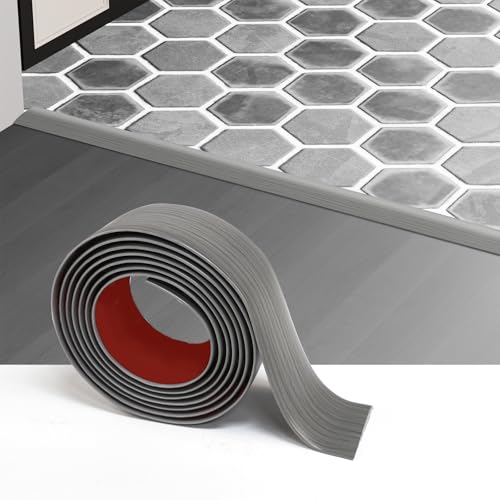
What it is: A self-adhesive PVC transition strip designed for carpet-to-floor and tile-to-floor transitions. It features a low-profile, trip-free design with multiple width options. Best for: high-traffic living areas that require a durable, easy-to-clean edge between different flooring types. Why chosen: slim height minimizes trip risk while still offering a secure seal. Limitation: some users may prefer a seam-free look with more substantial edge profiles.
Who it’s for: Families, pet owners, and busy households needing quick upgrades with reliable adhesion. Choose this if you want a simple, universal transition that works with carpet, vinyl, and tile surfaces. Avoid if your space needs a taller threshold or a more decorative edge.
Buying Guide: Key Purchase Considerations
- Material and finish: Most options use PVC for durability and water resistance. Choose a finish that best matches your flooring color and texture (gray wood, brown, or neutral tones).
- Height and lip: Look for a low-profile, trip-free design if you have foot traffic or pets. Typical heights range from 0.14 inches upward; higher profiles may create a visible step.
- Adhesion method: Self-adhesive strips provide quick DIY installs. Ensure the adhesive is compatible with your floor material and pre-clean the surface for best results.
- Length and width: Plan the total run and consider longer pieces to minimize seams. Width options affect how much gap coverage you get and how visible the seam will be.
- Surface compatibility: Some strips are best for carpet-to-hardwood, others for tile-to-laminate. Verify your specific floor pairing before purchasing.
- Ease of cutting and shaping: Scissors or a utility knife should handle most pieces. Pre-measure and cut off-target lengths to avoid waste.
Frequently Asked Questions
- What is a transition strip, and where should I use it? A transition strip bridges gaps between two floor surfaces, helping prevent trips and covering seams. Use it where different flooring materials meet, such as carpet to tile or wood to laminate.
- Can I install these without tools? Yes, most listed options are peel-and-stick. Clean the surface, cut the strip to size, and press firmly for adhesion.
- Will these work on uneven floors? They improve transitions on even surfaces. Extremely uneven subfloors may require floor leveling prior to installation.
- Are there color options to match my floors? Yes, many are available in gray wood, brown, or neutral tones to blend with various decors.
- How long does adhesion last? Proper surface prep and correct installation typically yield durable adhesion, though outcomes can vary with traffic and cleaning habits.
- Can I reuse strips if I remodel again? Peel-off removal can be feasible, but reapplication depends on adhesive residue and floor condition post-removal.