Best End Molding for Laminate Flooring: Top 5 Transitions for Seamless Floors
Answer: End molding for laminate flooring helps create a clean, safe finish where laminate meets other surfaces. This guide highlights five well-suited options for different installation needs, from DIY-friendly self-adhesive strips to durable aluminum T-moldings. Best for: homeowners seeking gap-free, low-profile transitions; renters needing easy installs; and renovations requiring durable edging. Below, a quick table summarizes the five selected products and their ideal use cases.
| Product | Best For | Key Benefit | Consideration |
|---|---|---|---|
| 3.3-32.8FT T Molding Trim & Floor Transition Strips (Walnut) | General Laminate To Tile/Thresholds | Flexible, waterproof PVC; easy to trim | Made of PVC; may feel less premium than metal |
| Stair Nosing End Cap Wood – 48” Long | LVP/laminate with stair edges | Edge protection; ready to stain/finish | Designed for stairs; requires alignment with stair tread |
| Art3d 4 FT Self Adhesive Vinyl Floor Transition Strip | Doorways and room dividers | Self-adhesive; easy install | Short length; best for flat interior spaces |
| ZEYUE Flexible PVC T-Molding Transition Strips (10ft, Black) | Tile/wood/laminate/lvp transitions | Flexible, self-adhesive for larger gaps | Black finish; may not match all decors |
| Maxiroc Floor Transition Strip Self Adhesive Carpet Wood Tile Vinyl | Uneven heights up to 5 mm | Strong adhesive; seamless look | Designed for uneven floors; adhesive performance varies by substrate |
3.3-32.8FT T Molding Trim & Floor Transition Strips

Features: Widely used PVC floor transition strip that covers gaps between floors of equal height, suitable for tile, wood, laminate; waterproof, non-slip, and wear-resistant; flexible to fit uneven seams; can be trimmed to fit any length. Best for: DIYers seeking a budget-friendly, versatile edge between laminate and other floor types. Caution: PVC-based products may show wear over high-traffic periods; trim carefully to ensure a smooth, flat surface.
Stair Nosing End Cap Wood – 48” Long

Features: Edge finish and protection designed for LVP, laminate, and vinyl; easy install; clean transition between surfaces; protects stair edges; ready to stain or finish. Best for: areas with stair transitions where a durable, stain-ready edge is desired. Caution: Not a floor-to-floor transition strip; primarily intended for stair edge protection and trim at stair boundaries.
Art3d 4 FT Self Adhesive Vinyl Floor Transition Strip

Features: High-quality PVC strips that resist scratches, abrasion, and dirt; easy peel-and-stick installation; suitable for covering gaps between floor surfaces in bedrooms, living rooms, kitchens, and showers; also works as a divider in transitions. Best for: quick, tool-free installations in flat interior spaces. Caution: Adhesive performance may vary on dusty or uneven substrates; press firmly and clean surfaces before applying.
ZEYUE Flexible PVC T-Molding Transition Strips (Black)
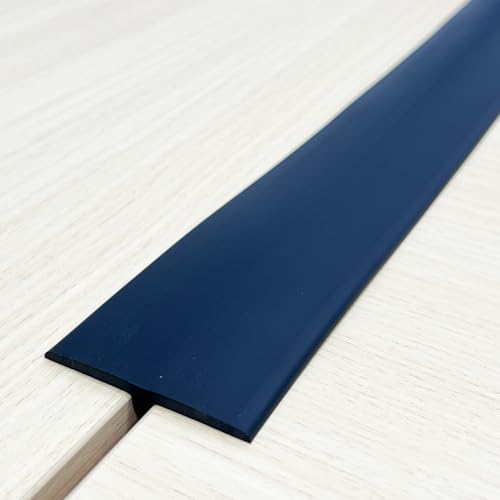
Features: 10 ft long T-molding, self-adhesive, suitable for sealing and covering gaps with heights greater than 4 mm; works between tile, wood, laminate, vinyl, and LVP; flexible PVC material. Best for: projects needing a flexible, self-adhesive transition with a bold black finish. Caution: Black finish may show dust more readily and require frequent cleaning in high-traffic areas.
ZEYUE Flexible PVC T-Molding Transition Strips (Wood Grain B)

Features: T-molding transition strip, 10 ft long, self-adhesive; ideal for gap coverage and flooring trim transitions between tile, wood, laminate, vinyl, and bamboo floors; flexible PVC material. Best for: projects requiring a wood-grain look with flexible installation. Caution: As with other self-adhesive strips, surface preparation impacts adhesion; clean and dry surfaces before applying.
Buying Guide: End Molding For Laminate Flooring
- Material choice: PVC vs aluminum vs wood composites. PVC is affordable and DIY-friendly; aluminum offers premium durability and a slimmer profile; wood finishes blend with natural tones but may require maintenance.
- Installation type: Self-adhesive strips simplify installation but may not hold on all substrates; nail or glue-based methods provide stronger, long-term adhesion but require tools and more effort.
- Height and gap compatibility: Measure floor height differences; choose T-moldings or reducers designed for gaps up to several millimeters. Underscore the importance of a flush surface to avoid tripping.
- Aesthetic considerations: Finishes ( Walnut, Black, Wood Grain) should complement surrounding floors. Matte finishes often appear subtler in modern spaces; brighter finishes may contrast more.
- Durability and foot traffic: High-traffic areas benefit from rigid edge protection or metal options; consider edge protection for stairs or entryways to minimize wear.
- Maintenance: PVC strips are easy to wipe; aluminum and metal options resist moisture and wear but may require periodic cleaning to preserve finish.
- Edge alignment: Ensure consistent height across the transition to prevent gaps or tripping hazards; some products are flexible to accommodate uneven subfloors.
Frequently Asked Questions
- What is end molding for laminate flooring? End molding, or transition strips, connects laminate to other floor surfaces or thresholds, providing a smooth, slip-resistant edge.
- Which material is best for doorways? Self-adhesive PVC strips are often easiest for doorways; metal or aluminum options offer durability in high-traffic threshold areas.
- Can I install without tools? Yes, many self-adhesive options require no tools; for long-term reliability, consider nails or heavy-duty adhesive where appropriate.
- Will color match matter? Yes; choose a finish that complements your laminate and surrounding decor for a cohesive look.
- How do I measure for the right product? Measure the gap height, width, and whether there is a step-down; select a strip with compatible height and flexible or adjustable length.
- Are there limitations with curved edges? Flexible PVC strips are best for curved or irregular edges; rigid metal or wood trims are less adaptable to curves.