Best Soundproof Box for Recording: Portable Vocal Booths for Home Studios
Looking for a soundproof box for recording? This guide highlights five portable vocal booths that reduce room echo and ambient noise, helping you achieve dry, clear recordings at home. Ideal for podcasters, voice actors, singers, and hobbyists who need a compact, transportable solution.
| Product | Best For | Key Benefit | Notes |
|---|---|---|---|
| TroyStudio Large Foldable Vocal Booth | Home studios on the go | 2″ dense foam; high portability | Foldable, fits in suitcase |
| TONOR Personal Vocal Booth | Standing or seated recording | Adjustable height; strong stability | Includes heavy-duty stand |
| TroyStudio Enclosed Vocal Booth | Compact home use | 360° isolation; robust structure | Includes panels and foams |
| XTUGA Recording Microphone Isolation Shield | Flexible, adjustable setups | Multi-panel, foldable | Emphasizes noise reduction |
| Pushglossy Desktop Soundproof Cover | Desktop or compact spaces | Two-layer insulation; easy setup | Great for desks or tables |
TroyStudio Large Foldable Vocal Booth

Best for moving between locations and small to medium recording setups. Inside space measures 8” (L) x 10” (W) x 12” (H) with exterior 12” x 12” x 16”. It uses 2-inch dense egg-crate foam to reduce room reverb and echoes, delivering a dry, clear sound. The structure includes a reinforced back panel and elastic bands to secure foam for compact storage.
Who it’s best for: mobile voiceover artists and creators who need a light, compact booth that fits into a suitcase. Why selected: excellent portability with solid acoustic treatment for a budget-friendly option. Limitation: smaller interior may limit larger microphone setups or larger accessories.
TONOR Personal Vocal Booth
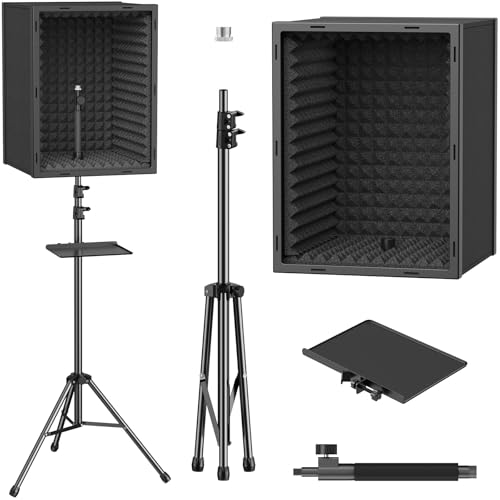
Best for flexible studio setups with tall, adjustable height. It employs five high-density foam panels plus sound-absorbing boards, reducing indoor reverb by up to 96%. The frame is reinforced for stability, and a heavy-duty tripod stand elevates the entire unit to 51.2”–74.8” tall, supporting standing or seated use.
Who it’s best for: podcasters, singers, and voice actors who need a tall, stable shield that can adapt to different recording positions. Why selected: strong stability and easy assembly. Limitation: slightly heavier and larger footprint than ultra-compact options.
TroyStudio Enclosed Vocal Booth

Best for compact, studio-like isolation in small spaces. Internal dimensions are 8” (L) × 8” (W) × 12” (H) with a robust exterior of 12” × 12” × 16”. Includes four 2-inch foam panels and two high-density panels to deliver 360° noise isolation and reduce room reverberation by about 95%. The design supports laptop placement on top and a sturdy overall feel.
Who it’s best for: travelers or hobbyists needing a compact, all-in-one booth with reliable isolation. Why selected: strong 360° isolation and durable build. Limitation: limited internal space may constrain larger vocal setups.
XTUGA Recording Microphone Isolation Shield

Best for flexible, multi-panel setups with adjustable angles. The XTUGA shield features a three-layer noise reduction design and a foldable top. It supports both three-panel and five-panel configurations, enabling angle adjustments to tailor sound isolation to various mic placements. This model emphasizes reducing background noise and interference for clearer recordings.
Who it’s best for: solo creators who want a customizable, portable booth that can be adapted to different desks or room layouts. Why selected: high flexibility and strong noise cancellation. Limitation: may require a separate mic stand or boom arm depending on setup.
Pushglossy Desktop Soundproof Cover
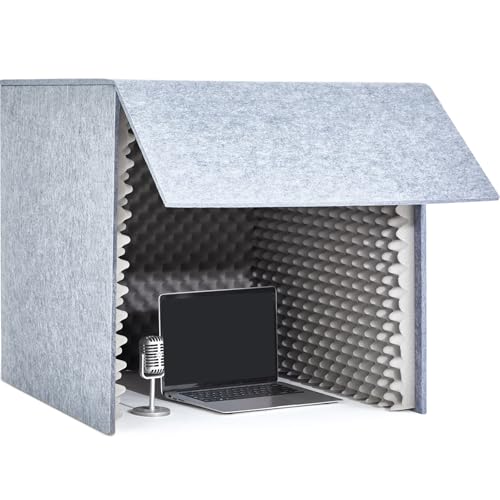
Best for desks and small home studios needing quick setup. It features a two-layer insulation design with a 12 mm board and 50 mm thick cushioning to reduce reverb and external noise. Easy to install and portable, it is suitable for voiceovers, podcasts, and music recording in tight spaces. Intermittent use cautions users about leaving a computer inside for extended periods due to heat buildup.
Who it’s best for: content creators who want a budget-friendly, desk-based solution for focused recordings. Why selected: strong insulation for a compact footprint. Limitation: not ideal for very long recording sessions without ventilation checks.
Buying Guide
What to consider when choosing a soundproof box for recording:
- Size and interior space: Ensure the booth fits your microphone, stand, and any accessories without feeling cramped.
- Sound isolation performance: Look for multi-layer foam or panels and reported reductions in room reverb or ambient noise.
- Portability vs. stability: Portable units are great for travel; heavier framed options offer more stability for standing use.
- Adjustability and setup time: Height-adjustable or foldable designs save setup time and adapt to different recording styles.
- Cable management and compatibility: Check for cable holes or ports that accommodate mic stands and clips.
- Material safety and durability: Durable frames and non-toxic foam improve long-term usability and safety in small spaces.
Frequently Asked Questions
- What is the main benefit of a soundproof box for recording?
It reduces room echoes and ambient noise, producing a drier, clearer vocal or instrument track. - Are portable vocal booths suitable for professional use?
They can be suitable for home studios, voiceovers, and podcasting, but may not replace a full professional studio for every setup. - Does size impact recording quality?
Yes. Larger interior space can accommodate bigger equipment, but proper acoustic treatment inside the box is crucial for consistent results. - How easy is setup?
Many models are designed to fold or telescope into place; review assembly steps for your chosen model before use. - Can these boxes be used with desktop computers or laptops?
Yes, most models include cable routing options and flat surfaces for devices, but observe ventilation needs during extended use. - What maintenance helps sustain performance?
Regularly check foam integrity, re-seat panels if sagging, and clean dust from foam surfaces to preserve acoustic properties.