Best Solar Panel Kit for Garage Power Projects: Easy Off-Grid DIY Solutions
Planning a garage solar setup? This guide highlights five practical solar panel kits that fit typical garage use, from lightweight RV-ready configurations to larger home-backup systems. These kits are chosen for ease of installation, clear expansion paths, and solid value. The best options suit DIY enthusiasts, weekend-warmer projects, and homeowners seeking dependable off-grid or backup power. Below, you’ll find each kit’s best-use scenario, what makes it stand out, and a quick buying table to compare capabilities at a glance.
Summary table of chosen products:
- Renogy 400W Premium Kit – Best for steady daily generation and scalable home backup
- ECO-WORTHY 200W Complete Solar Panel Starter Kit – Best for quick RV/off-grid setups
- ECO-WORTHY 9.36KWH 2340W Kit – Best for larger off-grid homes or cabins
- ECO-WORTHY 200 Watt 12V Complete Solar Panel Starter Kit – Best value, beginner-friendly
- SOLPERK 100W MPPT Kit – Best for compact garages and trickle/maintainer charging
Renogy 400W Premium Solar Kit

This 400W kit combines four 100W panels with a 40A MPPT charge controller and Bluetooth module plus mounting hardware. It delivers high-quality EL-tested grade A+ cells and a robust frame designed for wind and snow loads. The MPPT controller’s efficiency typically surpasses PWM by optimizing voltage for battery charging. It is best for garage-to-home back-up projects where steady daily energy and easier installation are priorities. A potential limitation is the reliance on a compatible battery system to realize full daily output.
Who it’s best for: Homeowners or DIYers aiming for a scalable, efficient system with clear upgrade paths.
Why selected: Combines high-efficiency modules, robust hardware, and a versatile controller for reliable day-to-day power.
ECO-WORTHY 200 Watts 12V Kit
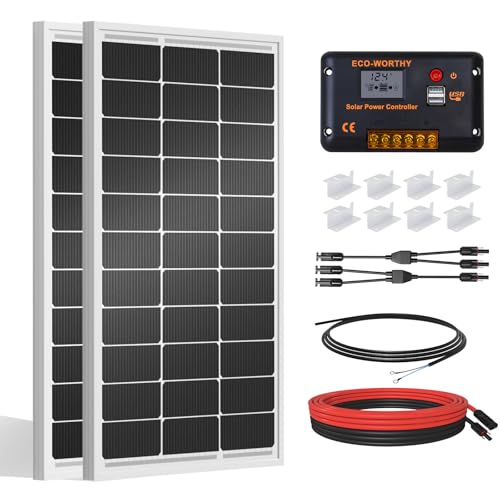
This 200W starter kit includes two 100W panels with a 30A PWM charge controller, suited for RVs, campers, or small off-grid garages. It emphasizes a straightforward setup, making it a practical entry point for novices. The system targets daily outputs around 800Wh in good sun and supports long-term durability with a corrosion-resistant frame. A caveat is the PWM controller’s efficiency when battery state or long cable runs are a concern, compared with MPPT options.
Who it’s best for: Beginners or renters needing a compact, easy-to-install solar solution.
Why selected: Clear 2-panel configuration, simple wiring, and suitability for low-to-mid power tasks.
ECO-WORTHY 9.36KWH Off-Grid System

This larger complete kit targets substantial home or cabin backups with 12 panels (195W each) and a 10kW inverter, plus a 48V battery stack. It’s designed for extended outages or off-grid lifestyle setups, offering real-time monitoring via an app and robust safety certifications. The system’s scale means installation complexity can rise, and professional help may be prudent for electrical integration and grounding. It’s best for garages that double as workshops or small living spaces needing reliable AC power during outages.
Who it’s best for: Homeowners seeking a high-capacity, all-in-one off-grid solution.
Why selected: High daily output, integrated monitoring, and a wide array of safety certifications for long-term use.
ECO-WORTHY 9.36KWH 2340W 48V System Kit
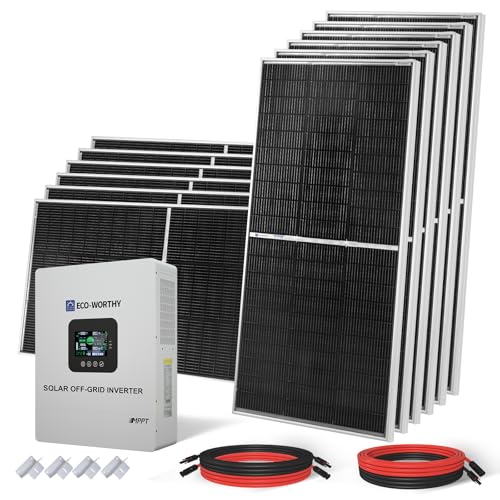
This kit pairs 12 cells of 195W monocrystalline panels with a 5000W 48V all-in-one inverter and a 12V lithium-based battery bank. The design emphasizes high conversion efficiency (up to 25%) and a three-stage charging system for batteries, enabling substantial daily energy generation and robust power for 110V devices. A notable consideration is the system’s size and weight, which may require a solid garage mounting space and careful wiring planning.
Who it’s best for: Garages or workshops needing dependable, large-scale energy storage and AC supply.
Why selected: High power output, efficient panels, and a well-rounded all-in-one inverter solution.
ECO-WORTHY 200W Complete Solar Starter Kit
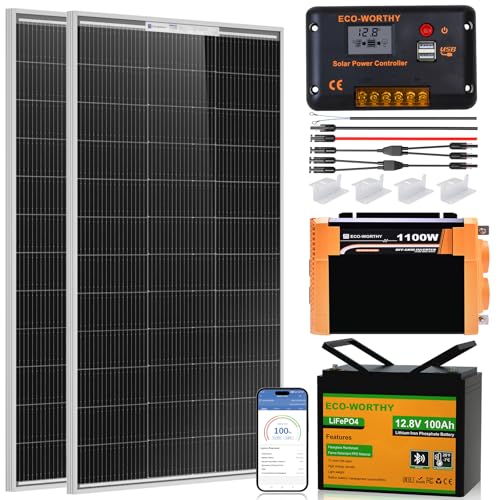
This all-in-one RV-oriented kit offers two 100W panels, a 100Ah lithium battery, an 1100W inverter, and a PWM controller. It emphasizes convenience and a four-step, beginner-friendly installation process, minimizing the DIY barrier for garage users who want a turnkey solution. The trade-off can be limited scalability compared with larger, modular systems, especially if higher daily energy needs arise.
Who it’s best for: RV owners or garage spaces needing a compact, ready-to-run power package.
Why selected: True “one-stop” setup with essential components included, simplifying the install for novices.
Ultra ECO-WORTHY 1200W 24V Off-Grid System
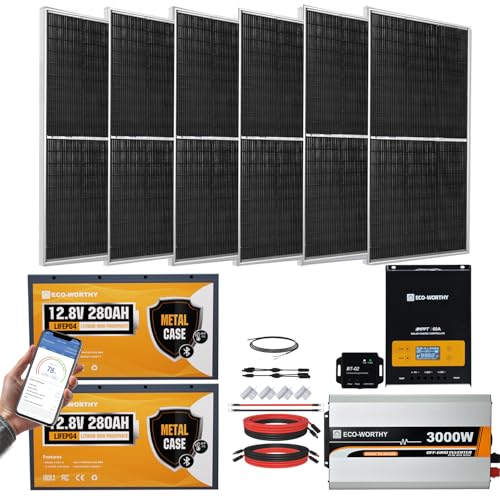
This kit uses six 195W panels, a 60A MPPT controller, and a 3000W pure sine wave inverter, designed for off-grid garages needing substantial 110V supply. It includes dual-axis tracking to raise efficiency and a sizable lithium battery bank. The system targets large daily energy needs and advanced control through Wi-Fi compatibility. Installation complexity and space requirements are higher, so it suits more serious garage power projects rather than casual use.
Who it’s best for: Garages or workshops requiring higher power, multiple devices, and advanced monitoring.
Why selected: High capacity, tracker-enabled efficiency, and a modern lithium storage solution.
Buying Guide: Key Considerations For Garage Solar Kits
- Power needs: Estimate daily watt-hours and peak loads to choose between compact (200W) and high-capacity (900W+) kits.
- Controller type: MPPT controllers maximize efficiency, especially in variable weather; PWM is simpler and affordable but less efficient.
- Battery compatibility: Lithium batteries offer longer life and deeper cycles but may require more monitoring; lead-acid is cheaper upfront but heavier and limited.
- Expandability: If future upgrades are likely, pick modular kits with extra inverters, controllers, and mounting options.
- Installation space: Larger kits require more roof or ground mounting area and robust mounting hardware.
- Weather resilience: Look for corrosion-resistant frames, IP-rated enclosures, and secure wiring to withstand garage environments.
- Monitoring: Real-time monitoring helps manage battery health and energy usage, especially for off-grid or backup systems.
- Certification and safety: Ensure the kit complies with local electrical codes and safety standards.
Frequently Asked Questions
What is the best kit for a small garage workspace?
The ECO-WORTHY 200W Complete Starter Kit is a practical, beginner-friendly option with essential components and straightforward installation.
Should I choose MPPT or PWM for garage use?
MPPT typically provides higher efficiency, especially in varied sunlight, making it a better long-term choice for garages with fluctuating exposure.
Can I expand a garage solar kit later?
Yes, many kits are modular. Start with a manageable size and plan for additional panels or a larger inverter/charge controller if power needs grow.
Is lithium storage worth the extra cost?
Lithium offers longer life, lighter weight, and deeper discharge tolerance, which is beneficial for frequent cycling in off-grid garage setups.
What maintenance does a garage solar system require?
Regular inspection of connections, wiring, and mounting; keep panels clean; monitor battery health and inverter performance.
Will garage solar power run heavy appliances?
High-capacity kits with robust inverters (5kW+ or more) are needed to reliably run appliances like air conditioners or water heaters off-grid.