Best Air Scrubbers for Your AC: In-Duct Purifiers for Clean Indoor Air
If you’re looking to improve HVAC air quality, an in-duct air scrubber can help reduce contaminants, odors, and general indoor air pollution. This guide highlights five leading options that work with central cooling and heating systems. Each product is chosen for a specific buyer type—homeowners seeking ozone-free purification, builders adding filtration to new installs, or professionals needing durable, commercial-grade solutions. The table below compares key details to help you compare at a glance.
| Product | Brand | Best For | Notes |
|---|---|---|---|
| Aerus Air Scrubber Ozone Free | Aerus | Homeowners seeking ozone-free purification | ActivePure Technology, safety-focused |
| REKO Lighting R2000 Air Purifier | REKOLIGHTING | DIY installs in ductwork | UV-C system, European bulbs |
| Lnytfee Air Scrubber Advanced PCO 9″ | Lnytfee | Replacement bulbs for in-duct systems | Wide compatibility, durable materials |
| VEVOR HVAC Air Purifier Whole House 18W | VEVOR | Budget-friendly multiple-bulb setup | Three technologies, simple operation |
| TrueFit Air Scrubber Plus 9″ Replacement Cell | TrueFit | USA-made replacements for PCO systems | Ozone-free, veteran-owned support |
Aerus Air Scrubber Ozone Free

Best for households prioritizing ozone-free purification, Aerus uses ActivePure Technology and a patented catalytic process designed to reduce contaminants without emitting ozone. This unit is described as safe for people and pets, making it suitable for bedrooms, living rooms, and offices connected to central HVAC. The design emphasizes continuous air treatment with a focus on safety over aggressive chemical outputs. Caution: verify compatibility with your existing ductwork and check for any local guidelines on in-duct treatment.
REKO Lighting R2000 Air Purifier In Duct
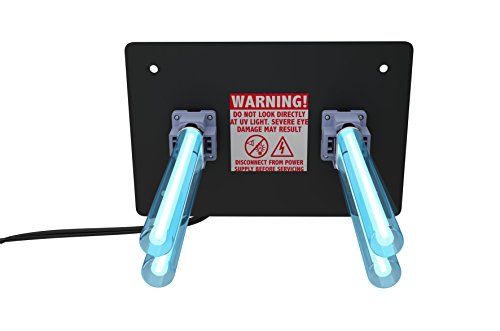
Best for DIY duct installs where UV-C treatment is preferred, the REKO Lighting R2000 uses a UV-C light system designed for HVAC ducts. The bulbs are described as European-made and the system is intended to be installed within the duct path, delivering in-duct disinfection. Best for users who want a dedicated UV-C solution rather than a full in-duct filtration module. Limitation: UV-C effectiveness depends on proper installation and maintenance of bulbs and shielding.
Lnytfee Air Scrubber 9″ Replacement Bulb

Best for users needing reliable replacement bulbs compatible with a range of Activetek inDuct 2000 models, this 9″ bulb and cell combination aims to maintain PCO-based purification without introducing ozone. It emphasizes compatibility with several model variants and straightforward installation. Caution: confirm exact model compatibility before purchase to avoid fit issues.
VEVOR HVAC Air Purifier Whole House

Best for budget-conscious buyers needing a multi-technology purifier, the VEVOR 18W system uses photocatalysis, activated carbon, and UV-based technologies across two bulbs. It emphasizes simple operation and a long bulb life (up to 8,000 hours). Choose this if you want a balance of cost and multiple purification approaches. Limitation: avoid frequent on/off cycling to maximize lamp lifespan.
TrueFit Air Scrubber Plus Replacement Cell

Best for owners of central HVAC systems who need ozone-free, USA-made replacements. TrueFit positions itself as a compatible option for most 9-inch Air Scrubber Plus PCO systems, with a focus on reliable customer support from a veteran-owned business. Choose this if you value local manufacturing and straightforward support. Caution: ensure your system’s connection type matches before purchasing.
Buying Guide
What should I look for in an in-duct air scrubber?
Compatibility with your HVAC system is essential. Confirm duct size, connection type, and whether the unit is designed for in-duct installation or whole-house integration. Consider whether you want ozone-free purification, UV-C exposure, or a multi-technology approach that includes photocatalysis, carbon filtration, and UV.
Ozone-free vs. ozone-generating options
Ozone-free designs are preferred for homes with occupants sensitive to odors or respiratory concerns. If a unit claims to generate ozone, verify regulatory guidance in your area and review installation requirements to prevent indoor ozone accumulation. In most homes, ozone-free options are recommended for safety.
Maintenance and replacement parts
Examine bulb life, replacement availability, and the ease of swapping components. Longer bulb life reduces maintenance frequency, while widely available replacement parts lower ongoing costs. Some models require professional servicing, while others are user-serviceable with simple thumb-screw access.
Performance indicators
Look for a mix of technologies (UV-C, photocatalysis, activated carbon) and documented maintenance requirements. If possible, choose products with data-supported claims about air cleanliness improvements and safer operation. Pair this with a practical installation plan to maximize effectiveness within your home or work environment.
Installation considerations
Assess whether the unit is designed for in-duct mounting, central filtration, or portable installation. Ensure electrical requirements are compatible with your space and that the installation won’t interfere with existing HVAC components. Labeling and safety features, such as shut-off mechanisms, are beneficial for long-term use.
Best-fit buyer profiles
- Homeowners prioritizing safety: ozone-free units with clear safety credentials.
- DIY enthusiasts: in-duct UV-C systems designed for straightforward installation.
- Commercial or multi-room spaces: higher-capacity units with stackable or multi-bulb configurations.
FAQ
- What is an air scrubber for an AC unit?
An air scrubber uses filtration, photocatalysis, and/or UV-C light to reduce airborne contaminants inside ductwork and improve overall air quality. - Are in-duct air scrubbers safe for homes with pets or children?
ozone-free systems are generally safer for homes with pets or children, as they minimize chemical byproducts in occupied spaces. - How long do bulbs or cells last in these systems?
Bulb lifespans vary by model, commonly ranging from several thousand to around 8,000 hours; replacement parts should be readily available. - Can I install an air scrubber myself?
Some units are designed for DIY installation in ducts, while others may require professional servicing or integration with existing HVAC components. - Do these systems require maintenance?
Yes, periodic bulb/cell replacement and filter checks are typical for maintaining effectiveness and safe operation. - Will an air scrubber eliminate all odors?
In-duct systems can reduce odors associated with smoke and volatile compounds, but effectiveness depends on the odor source and proper installation.