Best Oven Temperature Gauges for Accurate Cooking and Baking
Looking for a reliable oven temperature gauge to dial in timing and temperature precision? This guide highlights five top picks that are well-suited for home cooks, grillers, and bakers who want quick, accurate readings without clutter. Each product is chosen for clarity, durability, and ease of use in typical American kitchens. Ideal buyers include hobby bakers needing precise oven temps, busy cooks wanting quick checks, and those who cook with gas or electric ovens, grills, or smokers.
Summary of selected products:
| Product | Best For | Key Benefit |
|---|---|---|
| PECULA Stainless Steel Oven Thermometer | Home cooks and grillers | Battery-free, clear dual-zone dial |
| AcuRite 00620A2 | Leave-in cooking and grilling | Stainless steel, protective glass lens |
| TempPro 2-Pack Oven Thermometer | Color-coded, versatile use | Wide range, durable 431 stainless steel |
| Efeng Large 3.5″ Thermometer | Large, easy-to-read display | NSF-approved, large hanger/base |
| Youtex 2-Pack Oven Thermometer | Budget-aware households | No-holes design, easy-to-clean |
PECULA Stainless Steel Oven Thermometer Large Dial
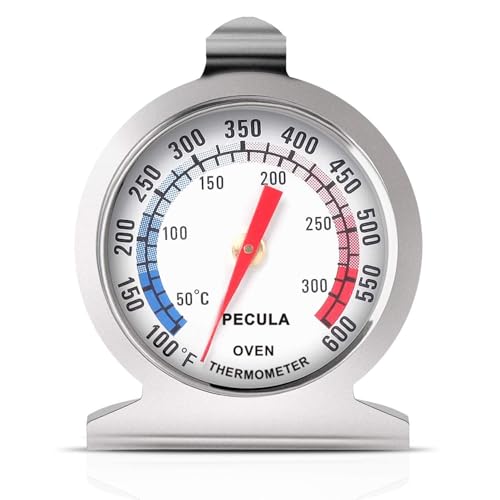
This analog gauge covers 50–300°C / 100–600°F with a large dial and clear red zones for quick at-a-glance monitoring. It is battery-free and mechanical, ensuring readings are immediate when placed in the oven, grill, or smoker. Best for: home cooks who want a simple, reliable dial that doesn’t require battery replacements or calibration. Limitation: analog accuracy can vary slightly with temperature extremes or placement inside non-standard ovens.
AcuRite 00620A2 Stainless Steel Oven Thermometer

This thermometer offers a broad 150–600°F range with stainless steel construction and a protective glass lens. It’s ideal for leave-in use during cooking and grilling. Best for: cooks who want a sturdy, durable device that can stay mounted or stand in place while monitoring baking, roasting, or grilling. Caution: ensure placement avoids direct contact with heating elements to prevent inaccurate readings.
TempPro 2-Pack Oven Thermometer

This two-pack features a 100–600°F / 50–300°C range with 3x3x1.61 inch dials, bold readability, and a 431 stainless steel body. It’s designed for high-heat environments and is battery-free. Best for: households needing multiple gauges for different ovens or cooking stations. Better for: color-coded, quick-reference use. Limitation: 2-pack means extra storage is required for multiple units.
Efeng Large 3.5” Oven Thermometer

Efeng offers a large 3.5″ dial with easy-to-read numbers and an NSF-approved design. It includes a substantial hanger and base plate for stable placement in gas or electric ovens, grills, and smokers. Best for: cooks who value visibility from a distance and want an NSF-compliant option for long sessions. Caution: ensure proper mounting space to avoid accidental dislodging during busy cooking.
Youtex 2-Pack Oven Thermometer
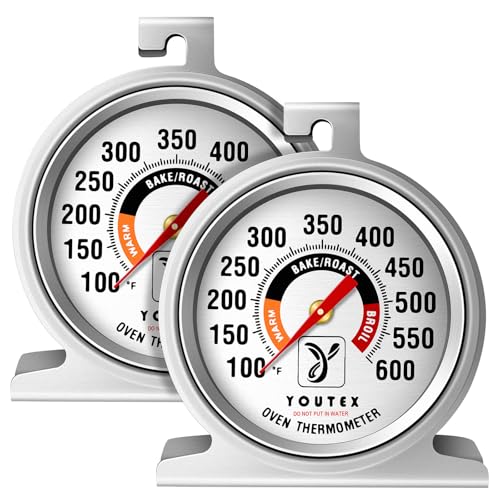
Youtex’s 2-pack features a 100–600°F range with no-holes, no-discoloring design for easy cleaning and longevity. Color-coded sections guide quick reference for warm, bake/roast, and broil zones. Best for: budget-conscious buyers who want a paired option for multiple ovens. Limitation: no battery or electronic components means you rely on mechanical readings only.
Buying Guide
Key purchase considerations help you choose the right oven thermometer for your kitchen setup:
- Temperature range: Most baking and roasting require up to 600°F. Ensure the device covers at least 100–600°F (50–300°C) for versatility.
- Display readability: Large dials, bold numbers, and color zones reduce misreads, especially through oven doors or in poorly lit kitchens.
- Construction and durability: Stainless steel bodies with heat-resistant lenses withstand high oven temps and frequent cleaning.
- Mounting style: Choose between hook-and-stand designs based on whether you want to hang from racks or stand on a shelf.
- Battery-free operation: Mechanical thermometers avoid battery replacements and work reliably at high heat.
- Maintenance: Sealed no-holes designs are easier to clean and reduce contamination risk during cooking.
Frequently Asked Questions
- Do oven thermometers need calibration? Most analog designs do not require regular calibration, but placement inside the oven can affect readings. Check readings against a known reference and adjust placement as needed.
- Is a digital thermometer better than an analog one? Digital thermometers can offer quick readings and alarms, but they require batteries and may be less durable in extreme heat. Analog options are often battery-free and simpler to use in high-heat environments.
- Where should I place an oven thermometer? Place it away from heating elements and vents. A central location on a rack or a stable surface provides a representative temperature for baking or roasting.
- Should I use multiple thermometers? In busy kitchens or with multiple ovens, multiple thermometers help monitor different zones and ensure consistent results across dishes.
- What is the advantage of a large dial thermometer? Larger dials offer quicker readability from a distance, reducing the chance of under- or over-cooking due to misreads.
- Are NSF-listed thermometers better for cooking? NSF certification indicates adherence to certain safety and quality standards, which can be beneficial for both home use and more professional settings.