Best Nail Plates for Wood Studs: Protect Wires and Plumbing Efficiently
Answering the need for reliable protection around studs, these nail plates shield electrical wiring and plumbing from nails and screws during drywall, framing, and renovation. Best for DIY homeowners, general contractors, and skilled trades, these plates vary in size, material, and installation style. The following selections balance durability, ease of use, and value. Use the quick comparison table to decide at a glance, then read why each product fits specific situations.
| Product | Best For | Key Benefit |
|---|---|---|
| FUBEDY Nail Plates (2.5in x 1.5in, 50 pcs) | Standard electrical and plumbing runs | Versatile, galvanized iron protection |
| RACO 2710 Cable Protector Plate (2-9/16 in) | Sites needing corrosion resistance | Pre-galvanized steel, no extra hardware |
| Fyjbnh 200PCS Nail Plates (1.5 x 2.5 in) | Large projects on a budget | High-count steel safety plates |
| Airmont 3” Safety Nail Plate (1.5 x 3 in) | Heavy-duty protection, USA-made | 16-gauge zinc-plated steel |
| Yaocom 150 Pcs (1.5 x 2.5 in & 1.5 x 6 in) | Versatile multi-size protection | Two sizes in one package |
FUBEDY Nail Plates for Wood Studs

Product: Nail Plates for Wood Studs, 1.5 x 2.5 Inch Sharp Pointed Prongs, Cable Wire Protector Plate
Best for: Small- to mid-sized electrical and plumbing runs in residential projects. Suitable for DIYers and remodelers who need reliable protection without heavy hardware requirements.
Why selected: The plates are made of galvanized iron, offering robust protection against nails and screws. Their compact size fits standard stud cavities and helps shield vulnerable wiring and pipes in drywall installations.
Caution: Ensure correct alignment with the protected cable or pipe path to maximize coverage and avoid gaps around the plate edges.
RACO 2710 Cable Protector Plate

Product: Cable Protector Plate for Wood Studs, 2-9/16-Inch Long
Best for: Projects requiring corrosion protection and a simple install with no extra hardware.
Why selected: Pre-galvanized steel construction adds corrosion resistance, and the plate is designed to be positioned and hammered down without additional fasteners. This makes it efficient for rapid drywall or framing work.
Caution: The plate size is relatively long; verify stud spacing to ensure full coverage along the run.
Fyjbnh 200PCS Nail Plates for Studs
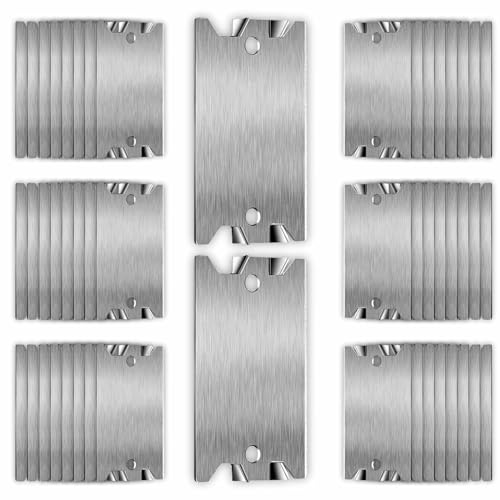
Product: 200PCS Nail Plates for Studs, 1.5 x 2.5 Inches
Best for: Large construction projects or renovations where a high-quantity supply is beneficial.
Why selected: Steel safety plates provide robust protection against nails and screws and are sized for common stud dimensions, offering consistent coverage across many openings.
Caution: Handling a large pack requires organized storage to prevent misplacement of pieces during a busy job site.
Airmont 3” Safety Nail Plate

Product: (50 Pack) Safety Nail Plate, 1.5 x 3 Inch, 16-Gauge Steel
Best for: Pro builders and contractors needing strong, durable protection for plumbing and wiring with a USA-made product.
Why selected: Heavy-duty 16-gauge steel with zinc plating offers excellent strength and resistance to moisture and corrosion, suitable for harsher environments.
Caution: The 3-inch length may cover more area, but ensure it fits the specific stud layout to avoid overkill in tight spaces.
Yaocom 150 Pcs Nail Plates Set

Product: Yaocom 150 Pcs Nail Plates, 2.5 Inch and 6 Inch Sizes
Best for: Mixed-size protection projects where variety is needed for different cable and pipe pathways.
Why selected: Galvanized steel construction with pointed prongs offers strong protection for a range of cable and plumbing configurations, and the two sizes provide flexibility for complex stud layouts.
Caution: Double-check size availability for specific runs to ensure you have adequate coverage across all protected paths.
Buying Guide: Nail Plates For Wood Studs
What material should I choose?
- Galvanized steel is common and durable for most interior applications. It resists corrosion and provides long-term protection against nail punctures.
- Pre-galvanized options offer additional rust resistance, which can be beneficial in damp environments or basements.
What size do I need?
- 1.5 x 2.5 inches is a standard size that fits most wiring and plumbing routes through standard 2×4 studs.
- Wider or longer plates (like 1.5 x 3 inches or longer) provide extra protection for larger runs or where screws may pass through at various angles.
How many plates should I buy?
- Assess the total number of penetrations and the length of runs that pass through studs. For larger remodels, a high-count pack reduces trips to the hardware store and ensures uniform protection.
Where is installation easiest?
- Most plates are hammered flush onto the stud front, with prongs helping to anchor the plate and prevent loosening. Some models include pre-drilled holes for screws to enhance stability.
Are there any installation cautions?
- Align plates to cover vulnerable areas and avoid creating gaps where nails or screws could still pass through unseen.
- Ensure the paint or drywall mud does not seal the plate in a way that restricts its protective function.
FAQ
- What is a nail plate used for?
- Can nail plates be painted over?
- What thickness of steel is typical?
- Do I need special tools to install?
- Are nail plates required by code?
- How do I choose between sizes?
It protects wires and pipes running through studs from nails and screws during drywall installation and remodeling.
Yes, but some professionals prefer leaving them metallic to preserve corrosion resistance and inspection visibility.
Many plates use pre-galvanized steel around 0.0625 inches thick or 16-gauge equivalents for strength and durability.
Most plates install with a hammer or basic screw/driver, depending on the model. Some designs feature pre-drilled screw holes for added stability.
Local building codes often require or recommend nail plates in areas where wiring or plumbing passes through studs, especially in renovations or high-risk constructions.
Consider the diameter of the wires or pipes and the path they take through the stud. Larger or longer plates provide more coverage and protection against incidental penetrations.