Best Foam for Tool Storage: Organize Tools With Cushioned Inserts
The right foam inserts protect tools, organize setups, and speed access. This guide highlights five top foam inserts for tool storage, ideal for professionals, hobbyists, and DIY enthusiasts who transport or store tools often. Each option helps keep tools separated, reduces damage, and adapts to different toolbox sizes. The buyer can compare fit, customization options, and installation requirements to choose the best-performing foam for their needs.
| Product | Best For | Notable Benefit |
|---|---|---|
| ONREVA Tool Box Foam, 4Pack 16x12x1 inch | Compact tool sets, small cases | Easy customization and cutting |
| ONREVA Tool Box Foam, 3Pack 16x12x2 inch | Medium tool kits, larger trays | Moderate thickness with shadow slots |
| ONREVA Tool Box Foam 48x24x1 inch 3Pack | Large tool chests and workstations | Wide sheets for big setups |
| FoamJoy Dual-Thickness Case Foam Insert Kit | Flexible layering in drawers | Two thickness options for modular design |
| FoamJoy 4 PCS 16x12x2 Inch Pick and Pluck | Versatile protection for varied items | Pre-scored grids for quick customization |
ONREVA Tool Box Foam, 4Pack 16x12x1 inch

Best for compact tool sets, this foam insert kit cushions and protects tools during transit and storage. The design provides designated spots to prevent tools from colliding, saving time when retrieving items. It supports quick customization via outlines and cuts for a precise fit, enhancing a professional toolbox appearance. A caution: very thin inserts may be less suitable for heavier tools unless protected by a rigid outer case.
ONREVA Tool Box Foam, 3Pack 16x12x2 inch

Best for medium-sized tool collections, these 2-inch-thick inserts offer a balanced cushion with clear tool pockets. The foam is easy to cut and install, allowing a precise fit for multiple tools in a single case. Choose this if you need a sturdy middle-ground option that is quick to customize. Limitation: mid-thickness may be less suitable for very heavy tools in ultra-light cases.
ONREVA Tool Box Foam 48x24x1 inch 3Pack

Best for large tool setups and expansive toolboxes, these broad sheets cover wide areas while still offering customized compartments. The inserts protect tools from impacts and provide organized storage, contributing to faster access. Caution: large sheets require careful handling and cutting to avoid misfit pockets in smaller cases.
FoamJoy Dual-Thickness Case Foam Insert Kit
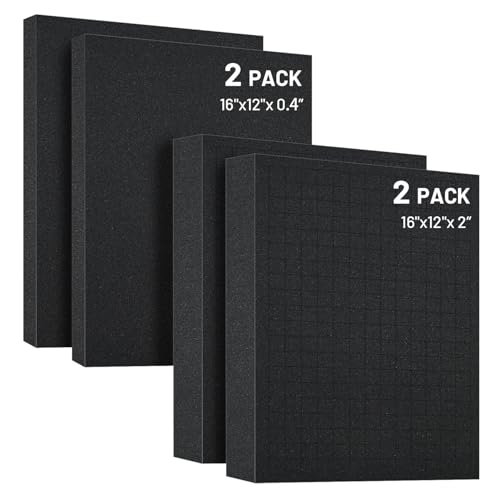
Best for drawers and mixed-use cases, this kit combines two thickness layers for layered customization. Its pre-scored 0.6″ grids enable quick, tool-free cavity creation, and the polyurethane core provides notable shock absorption. Use this for sensitive tools, electronics, or delicate components. Limitation: layering requires careful planning to ensure stability across multiple cavities.
FoamJoy 4 PCS 16x12x2 Inch Pick and Pluck

Best for versatile protection in toolboxes, drawers, or protective cases, this kit uses a dense foam core with pre-scored grids for rapid customization. It supports easy removal and reconfiguration as tool layouts change. A caveat: ensure the case interior tolerances match the foam thickness to avoid loose compartments.
Buying Guide
How to choose the right foam insert for your toolbox
Consider tool count, case interior dimensions, and the desired balance between protection and ease of access. For heavier tools, thicker foam or layered cores provide better cushioning. If you frequently reorganize, pick pluck or pick-and-pluck options for quick reconfiguration.
What thickness matters most
Thinner inserts (1 inch) save space but may compress under heavy tools. Mid-thickness (2 inches) offers a good compromise for most tools. Large tools and impact-prone equipment benefit from thicker or multi-layered foam cores.
Customization and installation
Outlining tools and cutting along marked lines is standard. Tools like hot knives or sharp blades are typical for cutting, while some products offer pre-scored grids that simplify hand-tearing. Ensure you follow instructions to maintain clean edges and proper fit.
Material quality and safety
High-density polyurethane foams provide better shock absorption and resilience. Closed-cell foams resist moisture and maintain shape over time. Avoid lower-density foams for delicate or valuable items that require stronger protection.
Compatibility with different storage setups
Match sheet size to your toolbox dimensions or drawer space. For large chests, multi-pack sheets simplify coverage. For compact cases, choose thinner inserts with precise pockets to maximize space and accessibility.
Summary of recommended choices
- Best for compact kits: ONREVA 4Pack 16x12x1 inch
- Best for mid-size kits: ONREVA 3Pack 16x12x2 inch
- Best for large setups: ONREVA 48x24x1 inch 3Pack
- Best for flexible layouts: FoamJoy Dual-Thickness Kit
- Best for quick customization: FoamJoy Pick and Pluck 4 Pack
Frequently asked questions
- What thickness should I choose for most tools? – A 2-inch thickness offers a balanced combination of protection and space for most tools.
- Are pluck foam inserts easy to customize? – Yes, pluck foam has pre-cut cubes you can remove to shape cavities without tools.
- Can foam inserts fit any toolbox? – Most foam sheets come in standard sizes, but verify interior dimensions and available depth before purchasing.
- Do foam inserts need special maintenance? – Keep them dry and avoid prolonged exposure to direct heat to preserve shape and cushioning.
- Is foam better than a rigid tray for protection? – Foam cushions impact and prevents movement; rigid trays protect shape but may not absorb shocks as well.
- Should I mix foams with other organization systems? – Yes; combine foam inserts with tool shadow inserts or shadow boxes to maximize organization.