Best Primer for Epoxy Resin: Top Picks for DIY Epoxy Projects
Answering the common need for a reliable epoxy project setup, the best primers for epoxy resin provide a strong, uniform bond that prevents de-lamination and enhances shine. This guide highlights top primers ideal for slick or porous surfaces and explains which buyer each product serves best. Whether you’re refinishing countertops, tabletops, or decorative pieces, these primers establish a solid foundation for durable epoxy results.
Summary Table of Selected Products
| Product | Best For | Why Pick It |
|---|---|---|
| Stone Coat Countertops Bonding Primer & Sealer | Slick or non-porous surfaces | Low-odor, low-VOC; strong adhesion for epoxy surfaces like laminate, tile, and granite |
| Stone Coat Countertops Epoxy Undercoat White | Porous or MDF/plywood surfaces | Two coats create a dense foundation; designed for Stone Coat epoxy kits |
| Stone Coat Countertops Epoxy Undercoat Black | Porous or interior surfaces requiring dark base | Two coats; similar benefits as white undercoat with aesthetic compatibility |
| INSL-X Prime All Multi-Surface Primer | Various interior/exterior surfaces | 100% acrylic; strong sealing and adhesion across many substrates |
| NADAMOO All Surface Primer Spray | Challenging substrates; high-coverage needs | Modified epoxy resins; improved adhesion and durability |
Stone Coat Countertops Bonding Primer and Sealer

Best for: epoxy countertop projects and slick surfaces. This bonding primer creates a durable foundation on laminate, tile, granite, quartz, and other solid surfaces. It replaces older primers with an upgraded formulation for reliable epoxy adhesion.
Why selected: The primer is designed to improve adhesion where epoxy resins meet non-porous substrates, reducing the risk of peeling or cloudiness after epoxy application. Its low-odor, low-VOC composition makes it suitable for indoor use in homes and studios.
Limitations: As with any primer, ensure the surface is clean and dry before application; venting helps with odor control. Best results come with two even coats and proper curing between steps.
Stone Coat Countertops Epoxy Undercoat White

Best for: porous surfaces needing a dense, sealed base for epoxy resin. The white undercoat supports a thicker, more uniform appearance when the epoxy is applied over it.
Why selected: This undercoat is designed to be used with Stone Coat epoxy kits, providing a firm, sealed base that contributes to a high-gloss finish and longer surface life. It helps surface density and reduces absorption variability.
Limitations: Requires two coats for optimal performance. Compatible primarily with Stone Coat epoxy systems for guaranteed results.
Stone Coat Countertops Epoxy Undercoat Black

Best for: similarly porous or interior surfaces where a dark base may improve color outcomes for epoxy resin projects.
Why selected: It mirrors the white undercoat in two-coat application, delivering a robust foundation for epoxy resins and creating predictable results with dark or colored finishes.
Limitations: Like other undercoats, apply two coats and ensure proper curing; avoid puddling during application to prevent an uneven finish.
INSL-X Prime All Multi-Surface Primer
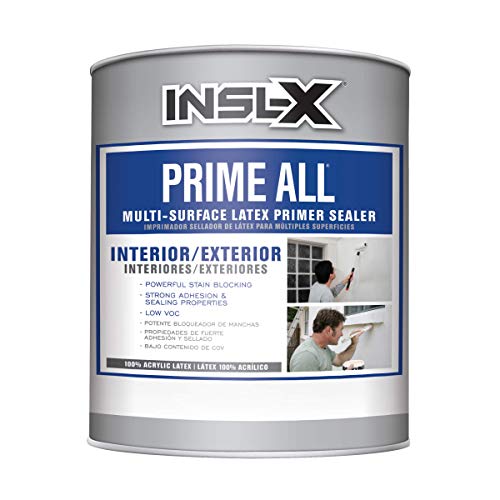
Best for: interior and exterior applications across drywall, concrete, wood, masonry, metal, and glossy surfaces where a reliable seal is needed before epoxy coatings.
Why selected: This 100% acrylic primer provides strong sealing and adhesion, enabling a smooth base for epoxy layers. It’s praised for its ability to stick to difficult surfaces without heavy sanding.
Limitations: It’s a general-purpose primer, so for niche epoxy-specific substrates, pairing with a dedicated epoxy system may yield the most consistent finish.
NADAMOO All Surface Primer Spray

Best for: challenging substrates and projects requiring a quick, even coat on multiple materials, including porcelain, glass, metal, plastic, and wood.
Why selected: The spray primer uses modified epoxy resins for enhanced adhesion and corrosion resistance, helping extend the life of the coated surface. It’s thicker for good coverage and helps neutralize color differences when applying top coats.
Limitations: Aerosol products can require careful handling and ventilation; follow safety guidelines for spray applications in enclosed spaces.
Buying Guide: Primer For Epoxy Resin
What substrate are you coating? Choose a primer matched to the surface: slick non-porous materials benefit from bonding primers, while porous substrates benefit from an undercoat that densifies the surface before epoxy.
- Adhesion strength matters: Look for primers described as bonding primers or epoxy undercoats designed to work with resin systems.
- Odor and VOC considerations: Low-odor, low-VOC formulas are preferable for indoor projects.
- Application method: Sprays work well for complex shapes; rolls or brushes work for larger flat surfaces.
- Two-coat guidance: Many epoxy-friendly primers require two coats for optimal sealing and density.
- Compatibility: If using a specific epoxy kit, prefer primers designed for that kit to maximize compatibility and finish.
Frequently Asked Questions
What is the main purpose of a primer before epoxy resin?
A primer improves adhesion, seals the substrate, and creates a uniform surface, which helps epoxy resin achieve a smooth, durable finish.
Can I use any primer with epoxy resin?
Not all primers are ideal for epoxy; select primers labeled as bonding primers or undercoats compatible with epoxy systems to ensure proper bonding and curing.
Should I sand between primer layers?
Many primers benefit from light sanding between coats to remove imperfections and improve top-coat adhesion, but follow product-specific instructions.
Is a spray primer better for epoxy projects?
Spray primers can provide even coverage on intricate shapes, while roll-on or brush primers are often better for flat surfaces. Choose based on project geometry and user comfort.