Best Sump Pump Backup Power Solutions for Home Protection
When a power outage or severe storm hits, a reliable backup sump pump system is essential to keep a basement dry. This guide highlights five strong options, detailing who each is best for, why it stands out, and a quick caveat to consider. Ideal buyers include homeowners in flood-prone areas, those with finished basements, and property managers seeking uninterrupted water removal during outages.
| Product | Best For | Key Power Notes |
|---|---|---|
| Miumoon 1500W Primary Sump Pump Backup System | Basement protection with auto switch; good for single or tandem pumps | Up to 1500W, 13.6A, automatic charge |
| VEVOR 2000W Sump Pump Battery Backup with LCD | Heavy-duty backup with real-time monitoring | 2000W, 18.2A, LCD display |
| The Basement Watchdog Big Combo CONNECT | Comprehensive primary + battery backup with WiFi | Up to 3,540 GPH primary; 1,850 GPH backup |
| The Cantonape 2000W Sump Pump Backup | Professional-grade backup with clear display | 2000W, LED display, 3 AC outlets |
| SumpJet Water Powered Backup | Water-powered alternative backup | 20–100 psi inlet; fully automatic |
Miumoon 1500W Primary Sump Pump Backup System

The Miumoon system is designed to protect basements with automatic switching between normal power and battery power. It is best for homeowners seeking a straightforward, reliable backup that keeps a single pump running during outages. The unit supports continuous operation and includes a built-in charger for fast charging of deep-cycle AGM or similar batteries.
Who this is best for: homes with moderate flood risk and a single sump pump setup. Why selected: strong 1500W output and automatic transition help prevent basement flooding when the power goes out. Caution: relies on a compatible deep-cycle battery; non-deep-cycle batteries may not deliver optimal performance over time.
VEVOR 2000W Sump Pump Battery Backup with LCD

The VEVOR unit offers higher power and a real-time LCD display for voltage, power, and battery status. It automatically switches to battery power on outages and supports two sump pumps via dual outlets. This makes it a strong choice for basements with higher water risk or areas where continuous operation is critical.
Who this is best for: homeowners needing higher capacity backup with clear status monitoring. Why selected: robust 2000W output and real-time data help you manage emergency plans. Caution: setup may be more complex due to dual outlets and monitoring features; ensure your wiring complies with local codes.
The Basement Watchdog Big Combo CONNECT
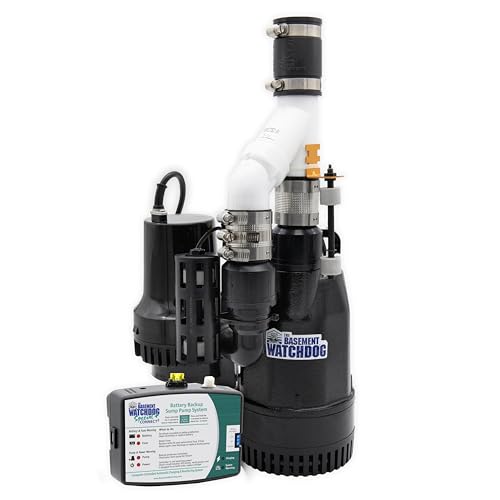
This preassembled system pairs a primary pump with a WiFi-capable battery backup, offering continuous monitoring of pump status, power, and battery condition. It is well-suited for households that want smart alerts and 24/7 visibility, ideal for users who prefer remote monitoring and maintenance planning.
Who this is best for: owners who value smart, ongoing monitoring and remote alerts. Why selected: the WiFi module adds proactive maintenance signals. Caution: higher upfront complexity and required network access for full WiFi benefits.
Cantonape 2000W Sump Pump Backup

The Cantonape backup system emphasizes continuous power with pure sine wave output and a built-in 20A charger for fast battery charging. It includes a clear LED display and three AC outlets, making it convenient for powering multiple devices during outages.
Who this is best for: users needing dependable, clean power for multiple loads during outages. Why selected: professional-grade appearance and clear monitoring. Caution: ensure compatible batteries and be mindful of outlet capacity if running several devices simultaneously.
SumpJet Water Powered Backup

The SumpJet system uses water pressure to operate as a backup, providing automatic response during outages. It is ideal for homes with consistent water supply pressure and limited space for batteries or heavy electronics.
Who this is best for: homes with reliable municipal water pressure and space constraints. Why selected: a different backup approach that does not depend on battery power. Caution: performance depends on adequate inlet pressure; low pressure can reduce effectiveness.
Buying Guide
Key considerations when choosing a sump pump backup system include power source, backup duration, ease of installation, monitoring features, and compatibility with your basement layout.
- Power source and capacity: Higher wattage (2000W) offers stronger backup for multiple pumps but may require larger batteries and careful wiring. Choose based on the number of pumps and expected flood risk.
- Battery type and health: Deep-cycle AGM or LiFePO4 batteries typically provide longer life. Look for smart charging and overcharge protection to extend battery life.
- Automatic transfer and switching: Systems should automatically switch to battery power during outages to prevent basement flooding. Check transfer speed and reliability.
- Monitoring and alerts: LCD displays, LED indicators, or WiFi modules help track voltage, battery health, and pump status. This is valuable for proactive maintenance.
- Installation footprint: Some units are more compact or simpler to wire. Consider space in your utility area and any local electrical codes.
- Environment and climate: For heavily storm-prone areas, prioritize higher-output units and consider dual-pump setups for redundancy.
FAQ
- What is the primary benefit of a sump pump backup system?
It ensures continuous water removal during power outages, protecting basements from flooding. - Do I need a dedicated battery for backup?
Yes, most systems require a deep-cycle battery (not included) to provide reliable power during outages. - Is a Water Powered Backup an option?
Water-powered backups use inlet pressure to operate and do not rely on batteries, suitable for homes with stable water pressure. - Can I monitor backup status remotely?
Some models include WiFi monitoring or LCD displays for real-time status and alerts. - How do I choose between 1500W and 2000W backups?
Higher wattage supports more pumps and higher flow; choose based on your basement size and flood risk. - What maintenance is required?
Regular battery checks, charger function tests, and keeping vents clear are common maintenance steps.