Best Residential Electrical Panel Essentials for Safe, Reliable Power
Choosing the right residential electrical panel and related components is essential for safe, future-ready home electrical systems. The following selections span main lug panels, surge protection, and practical enclosures to support upgrades, maintenance, and outdoor installations. Use this guide to compare key features, durability, and installation convenience to match your home’s electrical needs.
| Product | Brand | Type | Key Benefit |
|---|---|---|---|
| ABB TL812SCUDP Load Center | ABB | 125A Indoor Main Lug Panel | High capacity with flexible space for expansion |
| Leviton R2120-B SPD | Leviton | Residential Surge Protector | Protects sensitive electronics from voltage transients |
| JINDOUZI THQL 12-Space Panel | JINDOUZI | 125A Indoor Main Lug Load Center | Robust enclosure with 12 spaces for safety |
| Square D HOM2175SB | Schneider Electric | HOMeline SurgeBreaker | Phase-balanced surge protection for 120/240V |
| Namunanee Outdoor Junction Box | Namunanee | Outdoor ABS Enclosure | Weather-resistant housing for outdoor wiring connections |
ABB TLM812SCUDP Load Center Overview

The ABB TL812SCUDP Indoor Main Lug Circuit Breaker Panel is a versatile solution for residential and light commercial wiring. With a 125-amp capacity and 12 circuit spaces, it accommodates a range of circuits while allowing for future expansion. The compact 8-space design and robust materials support regular use and long-term performance. Installation is described as user-friendly, helping both professionals and DIY enthusiasts complete wiring configurations efficiently. This panel is suitable for indoor applications, where reliability and clear labeling contribute to safer electrical distribution over time.
Leviton R2120-B SPD: Residential Surge Protection

Leviton’s R2120-B Surge Protective Device is designed for residential applications, with compact sizing that fits easily near the main panel. It provides effective voltage transient protection to safeguard home electronics and appliances. The SPD type classification aligns with current NEC guidance for dwelling unit protection, supporting both Type 1 and Type 2 installation guidance as part of a broader panel protection strategy. Its emphasis on residential practicality makes it a common upgrade for new installations or service upgrades aiming to increase overall resilience against power spikes.
JINDOUZI THQL 12-Space Indoor Panel
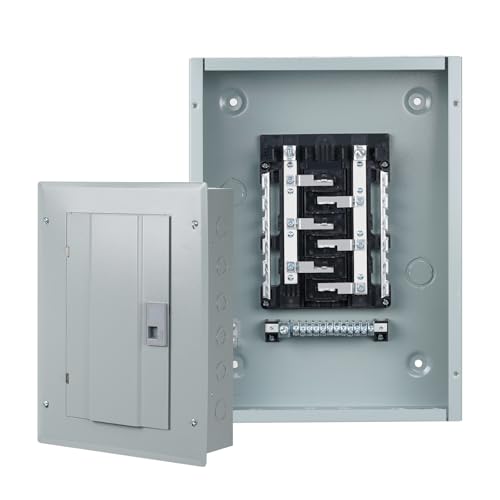
The THQL Circuit Breaker Panels from JINDOUZI offer a 125A load center with 12 spaces for circuit breakers. The NEMA 1 steel enclosure provides indoor protection against dust and other contaminants, boosting durability in home settings. This design supports safe power distribution with a focus on straightforward installation and reliable circuit protection. For residential upgrades or new builds, the panel’s rugged construction and clear space layout contribute to dependable performance over time.
Schneider Electric HOM2175SB SurgeBreaker

The Square D Homeline SurgeBreaker adds 25kA of surge protection and is designed for 120/240V, 1-Phase, 3-Wire systems. It integrates with Homeline load centers to provide balanced protection across circuits and receptacles. Visible LED indicators aid in quick status checks, and compatibility is a key consideration for homeowners using Square D components in an existing Homeline setup. This device helps reduce the risk of damage from voltage surges in common household electronics and appliances.
Namunanee Outdoor Junction Box For Outdoor Installations

This ABS outdoor junction box provides a weather-resistant enclosure for outdoor electrical connections. It features an internal mounting panel and a hinged, easy-to-access cover. The unit’s durable construction, along with heat-dissipation holes, helps prevent overheating in outdoor enclosures and supports reliable operation in varying weather conditions. It is suitable for housing splices, terminating lugs, or feeding external equipment through protected openings.
Buying Guide
When selecting components for a residential electrical panel, consider these factors:
- Load capacity and space: Match panel amperage to service capacity and plan for future expansions. Ensure there are enough spaces for circuit breakers to avoid crowding.
- Indoor vs. outdoor suitability: Decide whether a panel or enclosure will be installed indoors or outdoors. Outdoor installations require weather-resistant materials and IP ratings.
- Safety and code compliance: Look for panels and devices that meet NEC requirements and local codes. Consider main lug vs. main breaker configurations based on service entry and load distribution needs.
- Surge protection: Including SPD devices can protect electronics from voltage transients. Ensure compatibility with existing panel brands and types (e.g., Type 1/Type 2 SPD guidance).
- Durability and ease of installation: Steel enclosures or ABS plastic housings offer different levels of protection and mounting options. User-friendly labeling and clear wiring diagrams save time during installation and maintenance.
- Component compatibility: If incorporating SurgeBreaker devices or specific square-dator line systems, confirm compatibility with existing panels to avoid mismatches and warranty concerns.
Depth and practical considerations:
- Plan for future upgrades by selecting a panel with more spaces than currently needed.
- Consider combined protection strategies (panel, SPD, enclosure) to ensure both safety and longevity of home electrical systems.
- Outdoor installations should prioritize weatherproof enclosures and proper sealing to minimize exposure to moisture and temperature fluctuations.