Best Sealants for Basement Walls: Top Picks for Durable Waterproofing
Liquid Rubber Basement And Foundation Repair Sealant

Liquid Rubber’s waterproofing membrane treats basement walls and foundations with a flexible, durable sealant designed for active leaks and moisture. The product claims an impressive 900% elongation, allowing the coating to flex with temperature changes and settle without cracking. It is positioned as a complete basement waterproofing system, superior to traditional concrete paints or basic sealants, and compatible with self-leveling concrete. The formula claims strong adhesion to concrete, masonry, wood, metal, and foundation surfaces, making it suitable for DIY basement repair projects, shower liners, and planter boxes where moisture protection is critical.
Ames Block & Wall Liquid Rubber Waterproofer
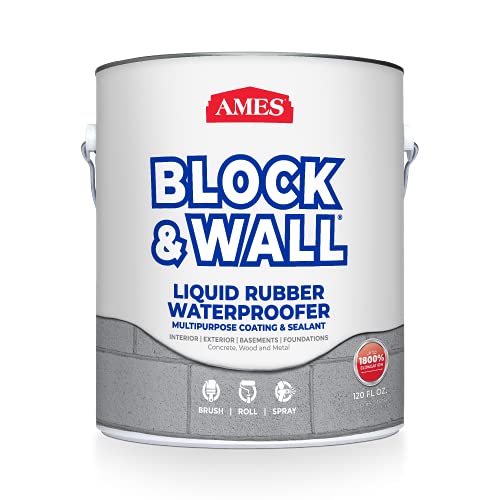
AMES offers a white, 1-gallon liquid rubber waterproof coating intended for use on basements and foundations. While listed with a straightforward weight and origin, the product is positioned as a reliable sealant for masonry surfaces. It’s suitable for homeowners seeking a multi-surface water barrier and is notable for its USA-made emphasis. The listing notes simple handling, with a focus on practical exterior and interior waterproofing in residential projects.
LUVBOATE Liquid Waterproof Sealant 70oz

This clear, water-based sealant forms a dense waterproof membrane after curing to insulate against air, water, and moisture. It’s designed to maintain its effectiveness under UV exposure and temperature changes, offering self-leveling capabilities that cover small gaps and cracks. The product emphasizes long-lasting waterproofing with a transparent finish, making it a suitable option for basements where aesthetics matter and visible coatings must be minimized. It is intended for indoor and outdoor use on multiple surfaces.
RadonSeal Complete DIY Foundation Crack Repair Kit

RadonSeal offers a drill-free injection solution for hairline foundation cracks. The kit uses a two-component urethane that can be applied with a standard caulking gun, enabling DIY homeowners to seal cracks quickly and permanently. It is marketed as a way to stop both water leaks and radon gas intrusion, making it a dual-purpose option for basement and crawlspace repair. The approach emphasizes minimal disruption and straightforward application for small cracks.
Vividye Waterproof Sealant 35oz Clear

This transparent, water-based coating is designed for indoor and outdoor use, applying a clear waterproof layer that resists leaks in roofs, walls, basements, and other surfaces. Its multi-surface compatibility includes wood, concrete, metal, brick, tile, and more, with a focus on preserving surface aesthetics due to its clear finish. It’s positioned for people who want a non-visible sealant option that still delivers reliable waterproofing performance.
Buying Guide
Choosing the right sealant for basement walls involves evaluating moisture sources, crack sizes, surface materials, and environmental exposure. Consider these key factors:
- Material compatibility: Look for sealants that bond well with concrete, masonry, wood, and metal. Some formulas pair better with self-leveling concrete for seamless systems.
- Elasticity and curing: Higher elongation or elasticity helps accommodate basement movement and temperature shifts, reducing crack reoccurrence.
- Water exposure: For active leaks, select products described as waterproofing membranes or high-adhesion sealants designed to seal deep cracks and prevent seepage.
- Delivery method: Drill-free or injection kits are ideal for hairline cracks; caulking-gun formulations work well for larger gaps and ongoing leaks.
- Aesthetics: Transparent or white coatings preserve wall appearance, while colored sealants can be used for visibility in utility areas.
- Ease of use: DIY-friendly products minimize the need for professional installers, though larger or structural issues may still require expert assessment.
Performance comparisons:
- Flexible membrane sealants excel where movement is expected, reducing shadow leaks in basements.
- Water-based, transparent coatings keep surfaces looking unchanged while providing a barrier against moisture.
- Injection kits offer targeted, durable fixes for cracks, often with faster curing and less site disruption.
When evaluating options, match product features to your basement’s condition: active leaks, visible cracks, porous masonry, and the desired finish. Read manufacturer guidelines for cure times, surface prep, and compatible substrates to maximize effectiveness.
Summary Of Chosen Products
| Product | Brand | Type | Main Use |
|---|---|---|---|
| Liquid Rubber Basement And Foundation Repair Sealant | Liquid Rubber | Flexible Membrane Sealant | Basement waterproofing, foundation leaks |
| RadonSeal Complete DIY Foundation Crack Repair Kit | RadonSeal | Urethane Injection Kit | Hairline crack repair |
| LUVBOATE Liquid Waterproof Sealant 70oz | LUVBOATE | Water-based Sealant | Clear, durable waterproof coating |
| Tough Bison Clear Waterproof Sealant 35oz | Tough Bison | Transparent Water-Based Sealant | Interior/Exterior waterproofing |
| Wadities Clear Waterproof Sealant 5 Gallon | Wadities | Water-Based Sealant | Large-area waterproofing |
Additional Considerations For Basement Wall Sealants
Always perform a thorough assessment of the basement condition before selecting a sealant. For active water intrusion, a membrane or injection-based approach may deliver more durable results than surface coatings alone. For visible cracks or minor moisture, a clear, flexible coating can protect the surface while preserving appearance. If radon or other gases are a concern, prioritize products that address both moisture and gas ingress, or consult a professional for an assessment. Consider indoor air quality and environmental safety by choosing low-VOC or VOC-free formulas where available.