Best Acid for Etching Steel: Top Choices for Metalwork and Damascus Steel
Choosing the right acid for etching steel can improve grip, texture, and design precision in metalworking, jewelry, and blades. This article highlights five reliable acids and etchants commonly used for steel etching, including ferric chloride solutions and acid primers. Each product is evaluated for compatibility with steel, ease of use, safety, and reuse potential. The guides below help hobbyists and professionals select an appropriate etchant for damascus blades, jewelry, or decorative steel pieces.
| Product | Brand | Approx. Type | Best For |
|---|---|---|---|
| MG Chemicals 415-1L Ferric Chloride | MG Chemicals | Ferric chloride solution | General steel etching and jewelry designs |
| Jantz USA Ferric Chloride, 16 Oz | Jantz USA | Ferric chloride solution | Damascus steel blades and etching |
| MG Chemicals 415-4L Ferric Chloride Copper Etchant | MG Chemicals | Ferric chloride copper etchant | Copper-containing alloys and reflections on steel |
| Dawn Scientific Ferric Chloride Copper Etchant Solution 500mL | Dawn Scientific | Ferric chloride solution | PCB and metal etching, ready-to-use |
| Caig Labs CL-ETCH-16 Ferric Chloride | CAIG Laboratories | Ferric chloride PCB etchant | Rapid prototyping and board etching on unusual materials |
Below you will find concise product overviews, each within a single product entry that keeps sections focused on essential considerations for steel etching. Safety and handling notes are summarized to support responsible use.
MG Chemicals 415-1L Ferric Chloride

MG Chemicals 415-1L Ferric Chloride is a straightforward etchant designed for metal work, including steel and copper alloys. The formulation supports etching designs onto metal jewelry and can be used for Damascus steel patterns. It’s positioned as a versatile option for hobbyists who need predictable etching results. Consider its 1-liter capacity for larger projects or repeated use. Users should follow safety guidelines for chemical handling and disposal. The product is compatible with copper, brass, and nickel silver in addition to steel, broadening its application scope.
Jantz USA Ferric Chloride, 16 Oz

Jantz USA Ferric Chloride is a 16-ounce etchant commonly used for Damascus steel blades and metal artworks. The bottle is designed to yield enough solution to etch a reasonably sized blade or several components. It is typically diluted with distilled water to create the etching bath, with careful attention to dilution ratios recommended by the manufacturer. This option is favored by knife makers and metalworkers who need manageable quantities without frequent repurchasing. It offers practical compatibility with steel and related alloys while supporting longer etch cycles when needed.
MG Chemicals 415-4L Ferric Chloride Copper Etchant

This 4-liter ferrous chloride solution is marketed for copper etching but is frequently used for related metal etching tasks, including steel projects that benefit from the ferric chloride’s aggressive action. It can be stored and reused, which helps with larger or ongoing project pipelines. For steel etching, practitioners typically perform controlled etches to avoid over-etching. The copper-oriented label does not preclude steel applications, but users should adjust dwell times according to test results on your specific steel grade.
Dawn Scientific Ferric Chloride Copper Etchant Solution 500mL
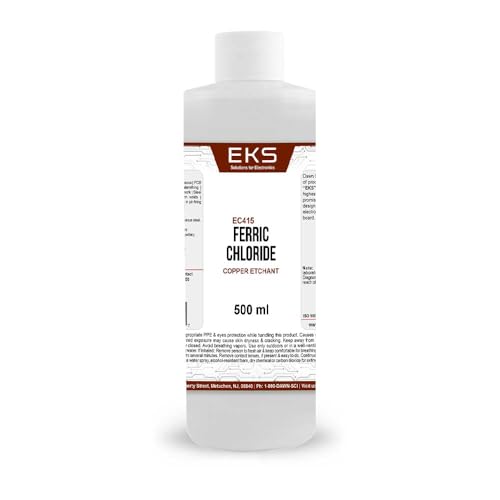
Dawn Scientific offers a 500mL ferric chloride etchant solution suitable for PCB work and metal etching. The package notes a ready-to-use formulation with storage and reuse considerations. This option suits small to mid-sized projects or experiments where quick setup and disposal are important. As with other ferric chloride products, safety precautions should be observed to manage fumes, skin contact, and waste disposal. This product supports precise, repeatable etching for steel and other metals when used with appropriate masking and timing.
Caig Labs CL-ETCH-16 Ferric Chloride

Caig Labs CL-ETCH-16 Ferric Chloride is a popular option for rapid PCB and metal etching. Its simple-to-use formula can appeal to hobbyists who prefer a quick setup and predictable results. While widely used for board etching, it also serves steel etching tasks when balanced with appropriate masking, dwell times, and post-etch cleaning. The product’s design supports iterations during prototyping and experimentation with steel finishes and patterns.
Buying Guide: Key Considerations For Etching Steel
- Material compatibility: Ferric chloride works well on steel and copper alloys, but etchant strength and dwell times vary by alloy. Start with test pieces to calibrate timing and agitation.
- Concentration and dilution: Many ferric chloride products are sold as concentrated solutions. Dilution with distilled water is common, and precise ratios should follow manufacturer guidelines to prevent under- or over-etching.
- Project scale: Choose capacity according to project size. Small jewelry work benefits from 250–500 mL bottles, while larger blades or panels benefit from 1–4 L containers.
- Reusability and storage: Some formulations permit reuse, which reduces material costs for ongoing projects. Store in sealed containers away from metals that could catalyze degradation.
- Safety and disposal: Ferric chloride is corrosive and can stain skin or damage surfaces. Use gloves, eye protection, and work in a ventilated area. Follow local disposal guidelines for spent solution.
- Masking and masking materials: Proper masking ensures clean patterns. Use high-quality masking tape, resist films, or lacquer coatings to prevent unwanted etching on edges and corners.
- Post-etch finishing: After etching, neutralize the bath and thoroughly rinse the piece. Consider protective coatings or sealing to prevent oxidation when finished pieces are exposed to air.
- Alternative formulations: Copper-etching oriented products can also affect steel edges or create different patina. Choose an etchant that aligns with your design goals and steel type.
- Environment and cleanup: Gentle cleaning solutions for tools and containers help maintain consistent results. Avoid cross-contamination between baths when experimenting with alloys.
Notes on Safety and Handling
Always wear appropriate PPE, including gloves and eye protection. Work with ferric chloride in a well-ventilated area and avoid skin contact. Dispose of spent solution per local hazardous waste guidelines, and ensure all tools are thoroughly washed after use to prevent residual etching on unintended surfaces.