Best Attic Solar Fan: Efficient, Solar-Powered Cooling for Your Home
Attic solar fans offer an energy-efficient way to reduce heat buildup and lower cooling costs by exhausting hot air from above your living spaces. This guide highlights five top options, comparing power, airflow, and features to help you choose the right model for your attic, garage, or workshop. Each product below links to its Amazon listing for quick reference, with a snapshot of key specs to aid your decision.
| Product | Brand | CFM | Power | Special Feature |
|---|---|---|---|---|
| iLiving Hybrid Ready Smart | iLiving | 1150 | 40W | Smart thermostat control, adjustable solar panel |
| VEVOR Solar Attic Fan | VEVOR | 2800 | 42W | MPPT regulator, intelligent temp/humidity control |
| DC HOUSE 32W Attic Fan | DC HOUSE | 1600 | 32W | Weatherproof, 100% solar powered |
| Hon&Guan Solar Attic Fan | Hon&Guan | 2000 | 40W | Two modes, adjustable thermostat |
| Remington Solar Builder Series | Remington Solar | 40W | N/A | Night-time auto-run with humidistat/thermostat |
iLiving Hybrid Ready Smart Thermostat Solar Roof Attic Exhaust Fan

The iLiving unit combines a robust 40-watt solar setup with a smart thermostat that operates between 50°F and 122°F. Its IP68 waterproof brushless motor supports deep sun exposure while the adjustable solar panel tilts at 0°, 15°, 30°, or 45°. At 1150 CFM, it can handle up to 2900 square feet of cooling capacity, providing reliable attic ventilation during sunny days and efficient nighttime operation through its smart controls.
VEVOR Solar Attic Fan, 42 W

VEVOR’s 42 W solar attic fan delivers up to 2800 CFM with a brushless DC motor and MPPT regulator to maximize sun exposure and cooling efficiency. It includes a smart temperature and humidity controller, enabling constant comfort year-round. A smart feature set allows auto-switching to electric power at sunset and remote control up to about 10 meters, ensuring continued attic ventilation on cloudy days or at night when sun is low.
DC HOUSE Solar Attic Fan 32W 1600CFM
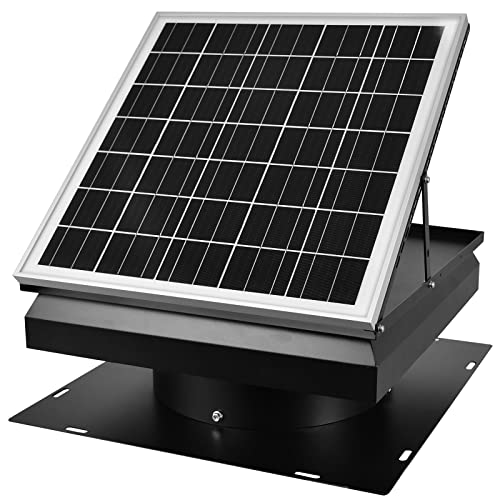
This weatherproof unit operates 100% off-grid with monocrystalline solar panels and requires no wiring. It delivers up to 1600 CFM and supports cooling up to 30°F reduction in attic temperatures. The design emphasizes quiet operation, durable aluminum blades, and hail-resistant housing, with flexible pairing options for existing vents to boost whole-house airflow.
Hon&Guan Solar Attic Fan with Thermostat

Hon&Guan offers a 40W solar attic fan with two operating modes and a built-in thermostat. It provides up to 2000 CFM and supports adjustable 0–70° orientation for optimal solar capture. The unit can also run on AC/DC power, enabling continuous operation at night or during limited sunlight, and includes a control knob for mode selection and auto-start at a set temperature (68–113°F).
Remington Solar Builder Series 40 Watt

Remington Solar Builder Series combines solar power with an auto-run night feature via a hybrid adapter. It includes a humidistat and thermostat to automatically adjust airflow based on attic conditions, helping control moisture and heat when sunlight is not available. This model emphasizes moisture protection and energy efficiency, promoting a cooler attic environment while reducing HVAC strain.
Buying Guide: Key Considerations for Choosing a Solar Attic Fan
Price and energy savings are important, but other factors determine long-term performance and satisfaction. Consider the following perspectives when selecting a unit for your attic:
- Airflow and attic size: Match CFM to the area you want to ventilate. Larger attics benefit from higher CFM (e.g., 1600–2800 CFM) while smaller spaces may suffice with lower CFM models.
- Power source and efficiency: Solar panels with MPPT regulation often yield better performance under variable sunlight. Check whether the fan remains active at dusk or on cloudy days.
- Thermostat and humidity features: Built-in thermostats help automate operation, reducing unnecessary running time. Humidity control adds moisture protection to attic spaces with high condensate risk.
- Durability and weather resistance: Look for IP-rated motors, corrosion-resistant housings, and hail or wind resistance for long-term outdoor use.
- Installation considerations: Roofing material compatibility, mounting type (gable vs. roof), and wiring needs influence ease of installation and efficiency.
- Night-time operation: Some models offer hybrid adapters or AC/DC options to run at night, maintaining attic cooling when solar input is low or absent.
- Remote control and automation: Remote operation or smartphone connectivity can enhance convenience, especially for larger homes or multi-vent systems.
- Warranty and service: A longer warranty reflects build quality and confidence in performance, particularly for outdoor, sun-exposed components.
For optimal results, consider pairing a solar attic fan with existing passive vents or additional exhaust locations to maximize overall attic airflow. A coordinated approach improves heat exchange and can reduce the load on central air systems during peak summer months.