Best Refrigerant Leak Detectors for HVAC Professionals and Homeowners
Choosing a refrigerant leak detector can be challenging with so many options that vary in sensitivity, sensor type, and usability. This guide highlights five top-performing models to help you detect halogenated refrigerants quickly and accurately, whether you’re servicing residential systems or commercial HVAC units. The selections emphasize infrared and heated diode technologies, user-friendly interfaces, and durability for real-world use.
Summary of Selected Products
- Elitech ILD-200 — Infrared, high sensitivity, detects halogen refrigerants, long sensor life
- SENSYX SFD201 — Rechargeable, high sensitivity semiconductor sensor, portable
- Fieldpiece DR58 — Heated diode, ultra-sensitive, broad refrigerant compatibility
- Fieldpiece DR82 — Infrared, ultra-sensitive, long sensor life
- Inficon 705-202-G1 — Heated diode, proven reliability, all common refrigerants
Elitech ILD-200 Refrigerant Leak Detector
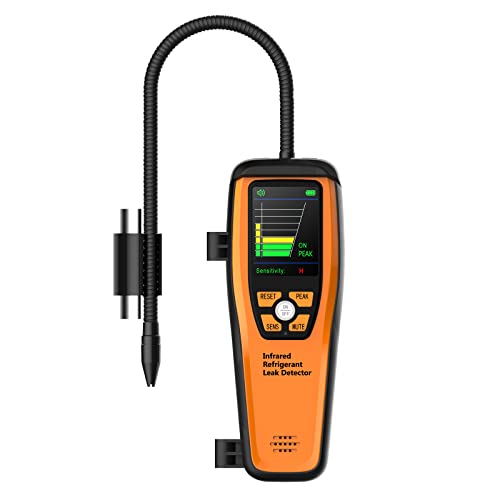
The ILD-200 uses an infrared sensor designed to minimize interference and deliver faster response compared to traditional heated diode detectors. It offers adjustable sensitivity with High/Medium/Low levels and boasts a maximum sensitivity of up to 0.14 oz/yr. Its capability to detect all halogenated refrigerants—including CFCs, HFCs, HCFCs, HCs, HFOs, and blends like R410A or R134A—makes it a versatile choice for varied HVAC jobs. The infrared approach provides robust performance in busy work environments where quick, reliable detection matters.
Key considerations:
- Infrared sensing for strong anti-interference performance
- Adjustable sensitivity to balance speed and accuracy
- Wide refrigerant compatibility for mixed systems
SENSYX SFD201 Refrigerant & Combustible Gas Detector

The SFD201 model emphasizes portability with a rechargeable lithium battery and a USB-C charging option. It uses a Japan-made heat dioxide semiconductor sensor, noted for high sensitivity and reliability in leak detection. Its adjustable sensitivity with High/Low levels helps tailor detection to the task at hand, from tight automotive spaces to larger HVAC installations. This detector is suitable for users who value cordless operation and consistent performance in varying lighting and access conditions.
Key considerations:
- Rechargeable power with USB-C charging
- High-sensitivity semiconductor sensor
- Compact, cordless design for flexible use
Fieldpiece DR58 Heated Diode Refrigerant Leak Detector

The DR58 is a compact, ultra-sensitive heated-diode detector noted for its fast detection of micro leaks. It can identify leaks as small as <0.03 oz/yr and works with all refrigerants, including CFCs, HCFCs, HFCs, HFOs, and blends used in HVACR. A durable IP54 sensor resists moisture and oil, and the 300-hour sensor life supports long-term reliability in service vans and shop environments. This model is well-suited for technicians who need broad refrigerant compatibility and reliable performance in challenging conditions.
Key considerations:
- Very high sensitivity for quick micro-leak detection
- Broad refrigerant compatibility
- Durable sensor with lengthy life
Fieldpiece DR82 Infrared Refrigerant Leak Detector

The DR82 uses infrared sensing for highly sensitive leak detection, with claims of <0.03 oz/yr leakage detection, making it one of Fieldpiece’s most capable handheld units. It is designed to work with all refrigerants, including CFCs, HFCs, HCFCs, HFOs, and blends, and features an IP54-rated sensor for resistance to moisture and oil. With Fieldpiece’s reputation for durable HVAC tools, the DR82 is a reliable choice for technicians who need precise leak localization across different system types and configurations.
Key considerations:
- Ultra-sensitive infrared detection
- Extensive refrigerant compatibility
- Long-lasting, robust build for field use
Inficon 705-202-G1 Refrigerant Leak Detector
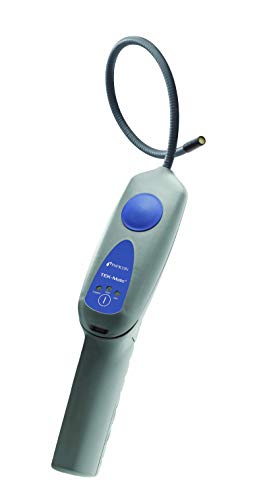
The Inficon 705-202-G1 model features a heated diode sensor with a sensitivity of about 0.25 oz/year (7 g/year) and is certified A2L. It is designed to detect all common CFCs, HCFCs, HFCs, and HFOs with reliable performance that HVAC technicians have trusted for years. As a classic choice, this detector emphasizes proven performance, straightforward operation, and dependable results across a wide range of refrigerants. It’s suitable for technicians who need a trusted, widely compatible detector with consistent results in busy service environments.
Key considerations:
- Proven heated diode technology
- Balanced sensitivity suitable for everyday service
- A2L certification and broad refrigerant support
Buying Guide: Key Purchase Considerations
- Sensing technology: Infrared sensors tend to offer robust interference resistance and quick responses, while heated diode sensors can excel in detecting many halogen refrigerants with reliable sensitivity. Consider which works best for your typical workloads.
- Sensitivity and range: Look for detectors with adjustable sensitivity so you can tailor detection to different system sizes and leak severities. Check the maximum sensitivity rating and whether the unit can detect micro leaks.
- Refrigerant coverage: Ensure the detector supports all refrigerants you service, including blends. Markets vary in the prevalence of R410A, R22, R134A, R600a, and newer HFO blends.
- Durability and form factor: Field use demands rugged builds, IP ratings, and long sensor life. A comfortable grip, a long battery life or replaceable batteries, and a clear display improve workflow in tight spaces.
- Power and portability: If you work off the truck or in tight spaces, rechargeable batteries and USB-C charging, or compact, cordless designs can be decisive.
- Display and alerts: TFT or large backlit displays improve readability in dim basements and bright sun. Multiple alert modes (audible, visual, vibration) with mute options can reduce fatigue on long jobs.
- Maintenance and calibration: Consider models with clear calibration guidance and durable sensors that maintain accuracy over thousands of hours of use.
- Budget vs. total cost of ownership: While initial price matters, factor in sensor life, replacement parts, and warranty when evaluating long-term value.
Why choose multiple detector types?
Having detectors with both infrared and heated-diode sensing enables coverage across diverse job sites. Infrared models often handle interference better in busy mechanical rooms, while heated diode units provide dependable detection for many common halogen refrigerants and long-standing field reliability.
How to use a refrigerant leak detector effectively
Start with a baseline measurement to identify ambient levels, then sweep the suspected area slowly. For automotive or compact spaces, extend the reach with flexible probes to access tight gaps. Use the highest practical sensitivity setting when chasing a suspected small leak, and then fine-tune to Low as needed to avoid over-detection in crowded rooms.
Comparative Overview
| Model | Sensing Type | Max Sensitivity | Typical Use | Durability |
|---|---|---|---|---|
| Elitech ILD-200 | Infrared | 0.14 oz/yr | Residential/commercial HVAC | Good |
| SENSYX SFD201 | Semiconductor, rechargeable | High sensitivity (undisclosed) | Portable, cordless work | Good |
| Fieldpiece DR58 | Heated Diode | <0.03 oz/yr | All refrigerants | Excellent |
| Fieldpiece DR82 | Infrared | <0.03 oz/yr | All refrigerants | Excellent |
| Inficon 705-202-G1 | Heated Diode | 0.25 oz/yr | All common refrigerants | Very Good |
Note: This article presents a comparative view based on the features and technical specifications provided by product listings. Actual performance can vary by environment and calibration status.