Best Flat Roof Coating for Long-Lasting Protection and Efficiency
Flat roofs require coatings that seal, reflect heat, and adapt to movement. This guide highlights five top flat roof coatings from Amazon, based on durability, UV resistance, and ease of application. Each product section provides a quick overview, key features, and practical usage tips to help you choose the right membrane for your roof type and climate.
| Product | Brand | Surface Compatibility | Key Benefit |
|---|---|---|---|
| Liquid Rubber Waterproof Sealant – DIY Leak Repair Coating | Liquid Rubber | Flat, metal, low slope roofs; foundations | High elongation; flexible, durable membrane |
| Liquid Rubber Silicone Roof Coating | Liquid Rubber | Flat, sloped, metal, wood, concrete | UV-reflective; no primer needed; multi-surface |
| Countryman Coatings 100% Silicone Roof Coating | Countryman Coatings | Metal, EPDM, built-up, PVC/TPO, concrete & more | No-primer adhesion; high reflectivity; energy savings |
| AMES RESEARCH MSS1 Maximum Stretch Roof Coating | AMES | Low-slope roofs; RVs; metal and tar surfaces | 650% elongation; high reflectivity reduces cooling load |
| Silicone Roof Coating & Sealant – All Purpose | Roofing4US | Metal, flat, concrete, RVs; multiple substrates | 100% silicone; flexible; UV-resistant; broad compatibility |
Liquid Rubber Waterproof Sealant – 1 Gallon

The Liquid Rubber Waterproof Sealant creates a seamless, flexible membrane suitable for flat, low-slope, and metal roofs, as well as foundations and gutters. The formula emphasizes superior flexibility with elongation exceeding 950%, allowing it to move with the building and resist cracking under temperature shifts. It hardens into a durable, rubberized coating designed to outlast traditional tar and patch products. Coverage depends on surface type and coating thickness: about 15 sq ft per gallon for flat/low-slope roofs with multiple coats; up to 30 sq ft per gallon on vertical surfaces with fewer coats. Application can be brush, roller, or spray, enabling both DIY and professional use.
Key considerations:
- Surface prep is essential: clean and dry surfaces yield the best adhesion.
- Two to four coats may be needed for a robust 60–80 mil membrane on flat surfaces.
- Suitable for preventative maintenance and leak repair; works best on clean, cured substrates.
Liquid Rubber Silicone Roof Coating – 1 Gallon

This silicone roof coating is designed for versatile use across flat, sloped, and metal roofs, including wood and concrete. It’s UV-stable and does not require a primer in many situations, offering a streamlined installation. The coating exhibits over 237% elongation, which helps prevent cracking from thermal expansion and adhesion failure. Coverage is typically around 1 gallon per 50 sq ft, with 1–2 layers recommended for robust protection. The silicone material remains flexible across temperature cycles, making it suitable for varied climates.
Practical tips:
- Ensure the surface is clean, dry, and free of loose materials before applying.
- Apply in moderate temperatures to maximize cure and adhesion.
- Two coats may provide stronger membrane integrity on challenging substrates.
Countryman Coatings 100% Silicone Roof Coating – 4.75 Gallon

Countryman Coatings Silicone Top Coat is formulated to restore and protect a wide range of roof types, including metal, modified-bitumen, EPDM, and single-ply systems. A standout feature is no-primer adhesion in many scenarios, simplifying the application while meeting or exceeding code requirements in most cases. The coating provides high reflectivity, which can reduce energy usage and cooling costs by keeping interior temperatures cooler. It’s suitable for restoration projects where aging roofs remain structurally sound, offering a fast path to leak resistance and extended roof life.
Usage notes:
- Best applied on clean, dry surfaces; ensure proper ventilation during application.
- Evaluate surface compatibility if there’s extensive buildup or unusual substrates.
- Consider color choices that reflect sunlight for energy savings.
AMES RESEARCH MSS1 Maximum Stretch Roof Coating – 1 Gallon
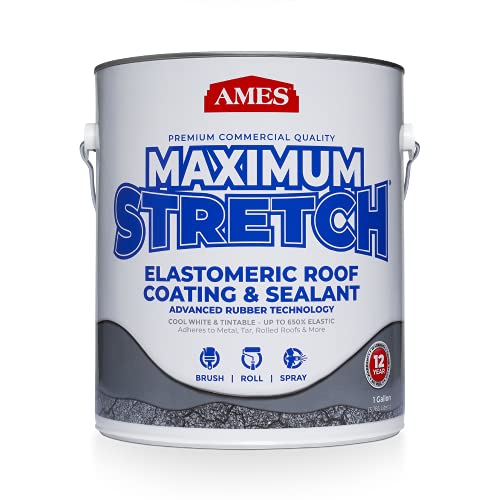
AMES MSS1 Maximum-Stretch Roof Coating is an elastomeric, white coating designed for low-slope roofs. With up to 650% elongation, it tolerates building movement without cracking or peeling, which is a key requirement for aging roof structures. The bright white finish offers about 88% reflectivity, contributing to cooler roof surfaces and potential cooling cost reductions. It adheres to a variety of substrates, including metal and tar-based surfaces, making it versatile for RVs, flat roofs, and other low-slope applications. Brush, roll, or spray applications are supported for flexible installation.
Considerations:
- White color improves reflectivity, but check local regulations on color for UV exposure.
- Follow recommended curing times and environmental conditions for best results.
- Inspect for any residual moisture or debris before coating to ensure adhesion.
Silicone Roof Coating & Sealant – All Purpose (3.5 Gallon)

This all-purpose silicone roof coating is designed for comprehensive waterproofing across flat and sloped roofs, including metal, concrete, and RV applications. The formulation emphasizes 100% silicone strength with high elasticity to resist cracking and UV degradation. It forms a durable, flexible membrane that adheres well to many substrates and maintains performance through temperature fluctuations. It’s an option when seeking a uniform silicone solution across mixed roof surfaces, offering robust leak protection and long-term durability.
Tips for best results:
- Ensure adequate ventilation during application and cure time per product guidelines.
- Pair with compatible primers or surface treatments if required by the substrate.
- Consider multi-coat application for thicker, more resilient membranes on very exposed roofs.
Buying Guide: Key Purchase Considerations For Flat Roof Coatings
When selecting a flat roof coating, consider the following factors to optimize protection, energy savings, and long-term maintenance.
- Surface compatibility: Different coatings suit metal, EPDM, asphalt, or concrete surfaces. Verify substrate compatibility and required prep work.
- Elongation and elasticity: Higher elongation tolerates movement and temperature changes, reducing cracking risk for aging roofs.
- Reflectivity and energy impact: White or light-colored coatings reflect solar heat, potentially lowering cooling costs in hot climates.
- Primer requirements: Some coatings claim no-primer adhesion; confirm for your roof type and existing coatings.
- UV resistance and weather endurance: UV stability extends life in sunny regions; verify resistance to rain, hail, and wind for your area.
- Application method and coverage: Brush, roller, or spray options affect project time and cost. Coverage varies by surface porosity and coat thickness.
- Cure time and climate: Temperature and humidity influence curing; plan installation in favorable weather windows to avoid washouts.
- Maintenance and repairs: Some products allow patching and maintenance without full re-coating, important for large areas.
- Environmental and safety considerations: Check for toxic solvents, odor, and ventilation needs during application and cure.
In evaluating options, align product features with your roof’s material, climate, and maintenance strategy. For mixed substrates or high-movement roofs, prioritize elasticity and adhesion. For energy-conscious buildings, emphasize UV stability and high reflectivity. Always follow manufacturer directions for surface prep, application, and cure to maximize the coating’s protective lifespan.