Best Cordless Leaf Blower Vacuums for Clean Yard Debris
Choosing a cordless leaf blower vacuum combines portability with powerful performance. This guide reviews five top models designed for American lawns, patios, and driveways. Each option offers a blower, vacuum, and often a mulching function, helping you tackle leaves, dirt, and light snow without cords. Read on to compare features, runtimes, and practical use cases to find the right fit for your outdoor maintenance needs.
Summary of Featured Products
| Product | Brand | Key Benefit | Includes Battery/Charger |
|---|---|---|---|
| Greenworks 40V Cordless Blower/Vacuum | Greenworks | High power, lightweight, quiet operation | Yes |
| WORX WG583 40V 3-in-1 | WORX | Blower, vacuum, mulcher with 2 batteries | Yes |
| MAXLANDER 3-in-1 Cordless | MAXLANDER | Large-capacity bag, 3-in-1 functionality | Yes |
| Greenworks 48V Dual-Voltage | Greenworks | Dual-voltage with high airflow | Yes |
| DynaVolt 3-in-1 40V | DynaVolt | Four speeds with turbo, solid performance | Yes |
Greenworks 40V Cordless Blower/Vacuum with Bag

The Greenworks 40V cordless model features a brushless motor for higher torque and longer runtime. With a Turbo Boost option and a cyclonic 505 CFM airflow, it handles dry and wet debris with ease. The unit is designed for comfort with an ergonomic grip and lighter weight compared with gas-powered tools. A 5.0Ah battery and charger are included for ready-to-use performance on backyard cleanup tasks, driveways, and patios.
Key features include brushless motor technology delivering extended motor life, quiet operation, and a 185 mph turbo mode for stubborn debris. The blower and vacuum modes switch quickly to tackle leaves, dirt, and snow residue, while the included bag presents a convenient collection option for easier disposal after yard work.
WORX WG583 40V 3-in-1 Blower, Vacuum & Mulcher

This WORX model combines blower, vacuum, and mulcher into a single 40V system that uses the PowerShare battery platform. It delivers up to 340 CFM air volume and 210 mph air speed, sufficient for most residential tasks. The brushless motor increases efficiency, offering longer life and improved performance, while the 2-battery setup minimizes downtime—use one while charging the other. The unit is well-suited for leaf cleanup, garden debris, and mulching duties across medium to large yards.
MAXLANDER 3-in-1 Cordless Leaf Blower & Vacuum

MAXLANDER offers a 3-in-1 blower, vacuum, and mulcher with a large 45L bag and a 170 mph airflow. The unit operates on a brushless motor and provides five speeds plus a turbo mode for tough debris. A 360CFM suction capacity and a robust design make it practical for heavier yard cleanup, including damp leaves. The included two 4.0Ah batteries with a charger reduce downtime and extend runtime for extended cleanup sessions.
Greenworks 48V Brushless Leaf Blower/Vacuum

This Greenworks 48V model emphasizes power and efficiency with a brushless motor, delivering up to 520 CFM and 240 mph of airspeed. It quickly converts between blower and vacuum modes, enabling users to clean driveways, patios, and landscaping borders. The dual-volt design and included dual batteries and charger support longer run times across larger properties, making it suitable for homeowners with expansive yards.
DynaVolt 3-in-1 Cordless Leaf Blower Vacuum
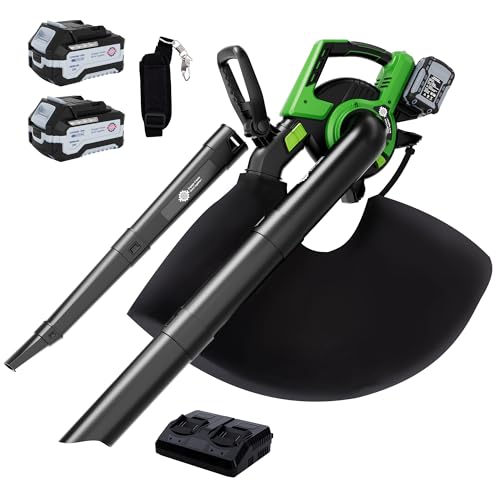
DynaVolt presents a 3-in-1 solution with four speeds and a turbo boost for rapid debris removal. The unit combines blower, vacuum, and mulching functions, and focuses on a balance of air speed and suction to handle dry leaves and light debris efficiently. Included batteries and charger ensure a ready setup for routine yard maintenance, with a compact design that accommodates smaller storage spaces.
Buying Guide: Key Purchase Considerations
Power and Runtime
Cordless leaf blower vacuums rely on battery voltage, motor type, and capacity to determine runtime. Brushes-free motors typically deliver longer life and efficiency. Look for models with at least one high-capacity battery (4.0Ah or more) and a turbo or high-speed setting for heavy debris, while understanding that turbo mode drains the battery quickly.
Airflow and Speed
CFM (cubic feet per minute) and mph (miles per hour) quantify airflow and velocity. For typical residential use, 300–500 CFM and 180–210 mph cover most yard tasks. Wet leaves or compact debris may require higher performance, especially with mulching capabilities.
3-in-1 Functionality
Blower, vacuum, and mulch functions help replace multiple tools. A good 3-in-1 tool should offer an easy switch between modes, a bag or collection system with ample capacity, and a durable mulch ratio (e.g., 10:1 to 18:1) to reduce disposal volume.
Weight and Ergonomics
Weighing less than 8 pounds is typical for many cordless options. Adjustable handles, balanced weight distribution, and comfortable grips reduce fatigue during extended use, especially on larger properties.
Battery Ecosystem
Many brands use interchangeable batteries across tools. If you already own devices from a brand like Greenworks or WORX, choosing a compatible battery platform can reduce overall cost and simplify charging.
Maintenance and Durability
Brushless motors tend to be more durable and quieter than brushed alternatives. Look for models with solid construction, easy dust filtering, and reliable bag systems to minimize downtime after heavy cleanup sessions.
Noise Level
Quiet operation is beneficial for neighborhood use and longer sessions. Many cordless models emphasize lower noise, but turbo or max modes can be loud; plan for realistic usage scenarios in your yard.
When selecting a cordless leaf blower vacuum, balance power, runtime, and convenience. The models reviewed here offer varied strengths—from heavy-duty, all-season performance to compact designs ideal for smaller yards. Consider your property size, typical debris, and whether you prefer a single battery ecosystem to maximize efficiency and minimize downtime.