Best Insulation Options for RV Walls and How to Choose
RVs require versatile insulation that blocks radiant heat, reduces moisture, and keeps interior temperatures stable without adding excessive weight. The following selections from trusted brands offer reflective foam-core insulation, radiant barriers, and vapor control designed for walls, ceilings, and floors in mobile living spaces. Read on to compare features, pros, and best-use scenarios for RVs and trailers.
Summary of Selected Products
| Product | Thickness | Size | |
|---|---|---|---|
| SmartSHIELD -3mm 48inx10ft | 3 mm | 48 in x 10 ft | Excellent radiant barrier with easy handling and vapor protection |
| SmartSHIELD -5mm 24×50 ft | 5 mm | 24 in x 50 ft | All-in-one insulation with radiant, vapor, and sound barriers |
| Houseables Insulation Roll | 3 mm | 48 in x 50 ft | High reflectivity (95%), fire-rated Class 1, versatile for walls and ceilings |
| INSULATION MARKETPLACE – 48″x100ft Bubble Core | 2 or 3 layers (bubble core) | 48 in x 100 ft | Large-scale reflective and vapor barrier solution for walls and sheds |
| ToLanbbt Reflective Roll | 3 mm | 47 in x 10 ft | 3-layer reflective design with adhesive for quick installation |
SmartSHIELD 3mm Reflective Insulation Roll
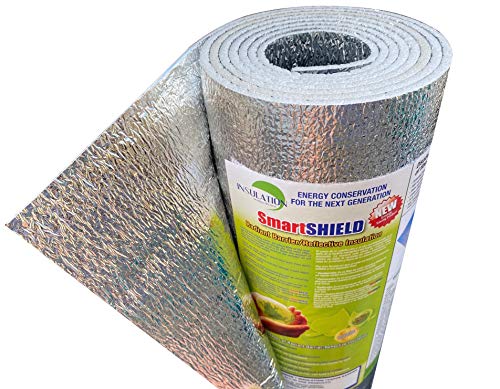
This compact, foam-core roll is designed for RV walls and tight spaces where weight and ease of install matter. The 3 mm closed-cell polyethylene foam provides a sturdy core, sandwiched between highly reflective engineered foil on both sides. It reflects up to 95% of radiant energy, helping to maintain interior temperatures with minimal layering. It also acts as a moisture barrier, resisting humidity and dampness in varied climates. The product is praised for simple cutting and installation, making it a practical choice for quick wall installations in mobile living spaces.
Applications: Use behind interior paneling or within wall cavities to reduce heat gain in summer and heat loss in winter. Consider pairing with existing interior vapor barriers where needed. Its lightweight profile helps preserve RV payload while improving comfort without bulky bulkheads.
SmartSHIELD 5mm Reflective Insulation Roll
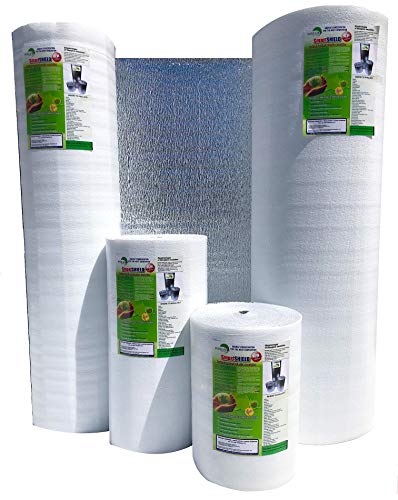
The 5 mm version offers a thicker core for enhanced temperature regulation and a stronger barrier. This roll combines insulation with a radiant barrier, vapor barrier, and, in one layer, a sound barrier. The outer white film provides a clean, paint-free aesthetic and reduces the need for additional finishes. The higher R-value (up to 15.67 with one layer, higher with multiple layers) makes it well-suited for RV walls where moderate framing and space permit multiple layers for improved performance.
Applications: Ideal for RV walls that experience sun exposure or cold nights. Use to line interior walls or attach behind cabinetry where space allows. It provides a streamlined solution for RVs seeking a balance of insulation, noise reduction, and moisture resistance in a single product.
Houseables Insulation Roll, 3mm

This 3 mm reflective foam roll is suited for RV walls, ceilings, and even floors where a compact, high-reflectivity solution is preferred. It features a 95% reflective surface, which helps maintain comfortable interior temperatures by repelling radiant heat. The material is fire-rated Class 1/Class A, or equivalent, and is non-toxic, adding an element of safety for living spaces. The product is described as versatile for multiple applications—from walls to ceilings to attics—providing moisture protection in addition to thermal control.
Applications: Use in interior walls near windows or skylights to cut radiant heat transfer. It’s also fitting for non-structural interior upgrades where a lightweight, easy-to-install barrier is desired. The non-toxic composition makes it a practical option for RVs with health and safety considerations in mind.
INSULATION MARKETPLACE 48x100ft Bubble Core Roll

This large-roll solution features a bubble core construction that helps reduce heat transfer through walls and other surfaces. With a reflective outer foil, it serves as a radiant barrier while the moisture barrier properties help mitigate condensation. The bubble-core design can provide a modest amount of sound dampening and adds a buffer against air leaks in RV walls. The long length makes it suitable for larger RVs or multiple-wall projects where extended coverage is beneficial.
Applications: Best for full-wall installations or long runs in RVs, campers, or mobile spaces where a wide sheet is advantageous. It’s suitable for walls, ceilings, and even floors in some configurations, offering a blended approach to insulation and vapor control.
ToLanbbt Reflective Insulation Roll

The ToLanbbt roll uses a 3-layer design with two aluminum sides and a central bubble layer to reflect up to 95% of radiant heat. It includes adhesive tapes, facilitating quick, tool-free installation on RV walls, ceilings, or windows. The material is designed to be lightweight, tear-resistant, and relatively easy to cut to fit irregular spaces. This makes it a practical option for DIY RV upgrades where speed and ease are priorities.
Applications: Particularly useful for window areas or interior walls where sunlight and radiant heat are concerns. The adhesive tapes help with fast installations in RV interiors, cabins, or trailers, delivering a dependable barrier with reduced labor time.
Buying Guide: Key Considerations For RV Wall Insulation
Selecting the right insulation for RV walls involves balancing thermal performance, moisture control, weight, and ease of installation. Here are the main factors to consider:
- Radiant barrier efficiency: Look for products that reflect 90-95% of radiant heat to reduce cooling loads in hot climates.
- Vapor and moisture protection: Ensure the insulation acts as a vapor barrier if you operate in damp or humid environments to minimize condensation and mold risk.
- R-value and layering: For RV walls, a combination of reflective surface and an air gap can maximize insulation. Thicker foams (5 mm or more) typically offer higher R-values per layer but weigh more.
- Fire safety: Select materials with Class A/1-fire ratings or equivalent certifications relevant to interior use and potential ignition sources.
- Ease of installation: Adhesive-backed rolls and lightweight foams simplify installation in tight spaces and on curved surfaces typical of RV interiors.
- Durability and safety: Non-toxic materials with abrasion resistance help in high-traffic areas of the RV and guard against wear from movement and storage.
- Compatibility with existing interior finishes: Consider how new insulation integrates with paneling, carpeting, or cabinetry, including whether a secondary vapor barrier is needed.
- Cost and coverage: While higher-thickness options may offer stronger protection, assess total coverage needs for your RV’s square footage and weight budget.
Practical mix-and-match approach: For RV walls, combining a radiant barrier with a vapor barrier and a modest R-value can yield durable results without excessive bulk. In smaller RVs, a single 3 mm to 5 mm layer may suffice, while larger rigs or regions with extreme climates may benefit from double layers or larger format rolls. Always verify installation guidelines and safety certifications to ensure long-term performance and safety.