Best Trigger Pull Gauge for Accurate Firearm Adjustments
Choosing a reliable trigger pull gauge is essential for gun safety, consistency, and precision. This guide compares five top options, highlighting accuracy, ease of use, and durability. Whether you’re a hobbyist, shooter, or gunsmith, these gauges help ensure your trigger weights are consistent across sessions and platforms.
Summary of Selected Products
| Product | Brand | Max Weight | Features |
|---|---|---|---|
| Wheeler Professional Digital Trigger Pull Gauge | Wheeler | 12 lbs | Digital display, audible indicator, 9x6x2 in |
| Lyman Electronic Digital Trigger Pull Gauge | Lyman | 12 lbs | Accurate to 0.1 oz, large digital display |
| Lyman Mechanical Trigger Pull Gauge | Lyman | 12 lbs | 0-12 lb range, aluminum/steel construction |
| Wheeler Manual Trigger Pull Scale | Wheeler | 8 lbs | 2 oz increments, sliding indicator |
| Mxmoonfree 12LB Trigger Pull Gauge | Mxmoonfree | 12 lbs | Multi-unit, max/min/avg storage, compact |
Wheeler Professional Digital Trigger Pull Gauge
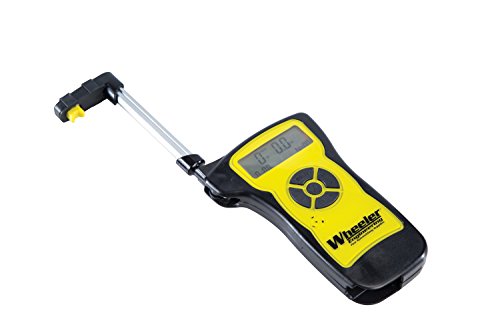
The Wheeler gauge delivers a digital readout for precise trigger weight measurements from 0 to 12 pounds. Its 9x6x2 inch footprint keeps the unit stable during testing, and an audible indicator confirms when a measurement cycle finishes—helpful for consistent readings in busy workspaces. The digital display enhances visibility in dim shops, and the device is designed for straightforward operation, reducing setup time between shots or tests.
Lyman Electronic Digital Trigger Pull Gauge
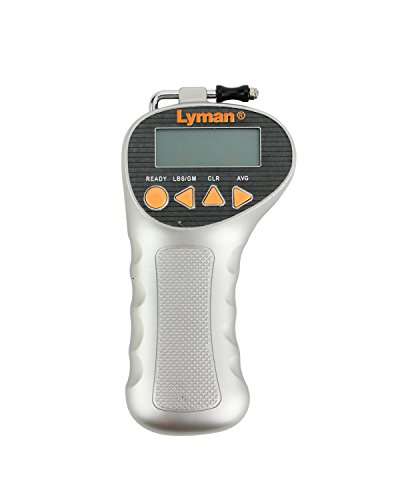
This Lyman model emphasizes precision, offering measurements accurate to 0.1 ounce over its full range with a large, easy-to-read digital display. Its build prioritizes stability and repeatability, making it a solid choice for gunsmithing tasks where exact pull weights matter across multiple firearms and setups.
Lyman Mechanical Trigger Pull Gauge

With a 0–12 pound scale and sturdy aluminum/steel construction, this mechanical gauge provides dependable readings without batteries. The scale increases in 2-ounce increments, offering clear, tactile feedback suitable for range testing, competition prep, and weapons maintenance where electronic gauges aren’t preferred.
Wheeler Manual Trigger Pull Scale
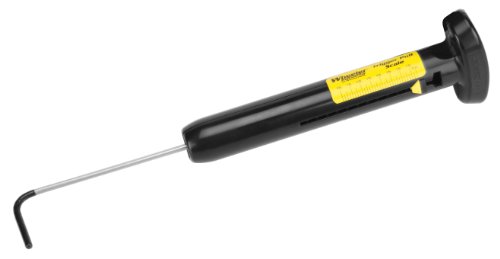
Designed for gunsmithing and shooting competitions, this Wheeler scale ranges from 8 ounces to 8 pounds with a simple, easy-to-read sliding indicator. It provides reliable readings in 2-ounce increments and is compact for portable testing, making it a practical option for field adjustments and bench work alike.
Mxmoonfree 12LB Trigger Pull Gauge

The Mxmoonfree unit offers multiple measurement units (LB, OZ, N, KG) and storage for MAX/MIN/AVG values. It uses a 12 lb max rating with a 0.1 oz precision, suitable for thorough testing and data logging across multiple sessions. Its portable design supports quick checks at the range or on the bench.
Buying Guide
- Measurement range and unit options: Choose a gauge that covers your typical trigger pull range (commonly 0–12 lbs) and supports units you prefer (LB, OZ, KG, N).
- Display and readability: Digital displays offer quick, clear readings; analog/mechanical gauges are durable and battery-free but may be harder to read in dim light.
- Increment granularity: For precision work, 1–2 ounce (0.0625–0.125 lb) increments provide fine control. Some models use 2-ounce steps; others offer 0.1 oz precision.
- Build and durability: Aluminum and steel constructions resist wear and provide stable baselines for repeatable results, especially in gunsmithing work.
- Ease of use and setup: Look for features like audible indicators, sliding indicators, and clear digital displays that reduce test time and improve consistency.
- Data features: Some models offer MAX/MIN/AVG data capture, useful for comparing firearm batches or verifying consistency over time.
- Portability: Compact gauges are ideal for field testing, while larger digital models excel in a fixed workbench setup.
- Maintenance: Consider models with simple calibration checks and fewer fragile components to minimize downtime.
When selecting a trigger pull gauge, balance the need for portability with the desired data features and measurement precision. For routine checks and field work, a mechanical or compact digital gauge may suffice. For gunsmithing and detailed range testing, a digital gauge with an easy-to-read display and data storage can provide more actionable insights over time.