Best Gas Powered Post Drivers for Fencing and Piles
Gas-powered post drivers offer portability, heavy-duty performance, and faster progress for fencing and piling projects. This guide reviews five top options, highlighting engine size, RPM, weight, and key design features to help you choose the right tool for soft soil, remote locations, and demanding tasks. Each product section includes a quick snapshot and practical notes on operation and durability.
Summary of Selected Products
| Product | Brand | Engine | Approx. Weight | Key Benefit |
|---|---|---|---|---|
| 52CC Gas Powered T-Post Driver | JACKCHEN | 52cc two-stroke, 1900W | Not disclosed | High impact energy for faster piling |
| Titan PGD1032 Gas Powered Post Driver | Titan Post Drivers | 140FA 4-stroke | 34.5 lbs | Lightweight, portable, no fuel mix |
| Gas Powered T-Post Driver (Marsyyds) | Marsyyds | 32.7cc two-stroke, 900W | Not disclosed | Efficient operation with strong recoil control |
| Gas Powered T-Post Driver (Marsyyds, 52cc) | Marsyyds | 52cc two-stroke, 1900W | Not disclosed | High power for demanding piling tasks |
| POIOKLJRE Post Driver | POIOKLJRE | 52cc two-stroke, 1900W | Not disclosed | High efficiency with durable construction |
| HENHAIY 32.6CC Post Driver | HENHAIY | 32.6cc two-stroke | Not disclosed | Good heat dissipation and control |
JACKCHEN 52CC Gas Powered T-Post Driver
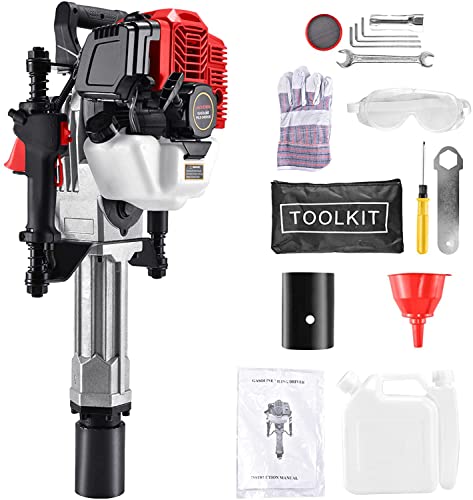
The JACKCHEN gas-powered T-post driver combines a robust 52cc two-stroke engine and a high impact energy profile to tackle soft soil piling, fence posts, and similar installations. It delivers an impact frequency around 6500 RPM and energy of approximately 55 joules per strike, supporting efficient post driving for farm fences and light highway projects. The tool is designed for mobility on job sites, featuring an ergonomic rubber-plastic sponge handle to reduce recoil and improve comfort during extended use. It requires a 25:1 gas-to-oil mix and ships pre-lubricated with high-temperature grease, which minimizes maintenance upon arrival. This model emphasizes versatility across fencing, forestry, and seedlings installations, making it suitable for mid-sized projects where portability matters. Safety considerations include proper fuel handling and protective gear for vibration and exhaust exposure.
Titan PGD1032 Gas Powered Post Driver

The Titan PGD1032 is a portable post driver designed for T-Posts, pipes, and wooden stakes. It uses a 140FA 4-stroke engine, eliminating the need for fuel mixing and offering reliable, steady power for fencing and signpost installations. Weighing around 34.5 pounds, it strikes a balance between mobility and durability, making it well-suited for remote locations and fieldwork. The unit targets operators seeking a straightforward, fuel-mix-free experience with consistent performance, reducing operator fatigue on longer projects. Keep in mind the need for regular engine maintenance and fuel system checks to maintain smooth operation in varying temperatures and soil conditions.
Marsyyds Gas Powered T-Post Driver (32.7cc 900W)

This Marsyyds model uses a 32.7cc two-stroke engine delivering up to 900W with speeds reaching around 8500 RPM. The design emphasizes a light, durable housing with a soft, non-slip rubberized handle to minimize recoil and improve grip during operation. It includes effective cooling and vibration management to support stable performance during extended work on fencing projects. The compact powertrain suits residential farms and smaller installations where lightweight tools reduce fatigue, while still delivering adequate energy for efficient piling in softer soils. As with other gas-driven units, fuel management and regular maintenance are essential to sustain peak performance.
Marsyyds 52CC Gas Powered T-Post Driver

This Marsyyds unit combines a 52cc two-stroke engine with 1900W of power and a 6500 RPM cap for robust post driving performance. The housing remains lightweight, facilitating handling and transport between sites. A soft, non-slip grip helps reduce user fatigue, while cooling vents and shock-absorbent springs contribute to smoother operation during extended use. The high-energy design targets professional tasks like heavy-duty fencing, gate posts, and larger stakes, making it a viable option for contractors who require extra power for thicker posts or tougher soil. Users should ensure proper maintenance routines and stable fueling practices to maximize lifespan and performance.
POIOKLJRE 52cc Gas Powered T Post Driver

The POIOKLJRE model features a 52cc two-stroke engine delivering up to 6500 RPM and 1900W of power for efficient piling work. Its construction emphasizes durability, using ABS, sprayed aluminum, blackened iron, and alloy steel, while a non-slip HDR protective cover helps absorb recoil for steadier operation. Four high-quality shock-absorbing springs and advanced cooling vents contribute to smooth, stable performance, particularly during longer sessions or in warm conditions. Operator safety and comfort are enhanced by the smart layout and materials, making this model suitable for professional use in fencing projects and site builds where consistent drive and reliability are required.
HENHAIY 32.6CC Gas Powered T-Post Driver
The HENHAIY unit relies on a 32.6cc two-stroke engine with an impressive RPM range and energy delivery suitable for mid-range driving tasks. It emphasizes heat dissipation through multiple cooling holes and a large translucent fuel tank designed to minimize refueling interruptions. A double-handle design and soft sponge grip improve operator comfort and control, while the lightweight engineering (approximately 28.66 lbs) enhances portability for field work. This model suits landscapers and contractors who value a balance between power, handling, and ongoing comfort under repetitive use, especially in warmer environments where heat buildup can be an issue.
Buying Guide: Key Purchase Considerations
- Engine size and power: Larger displacement (32cc–52cc) generally delivers higher impact energy, but may add weight. Match the engine to your post size and soil condition.
- Fuel type and mixture: Many two-stroke engines require a gasoline-oil mix (often around 25:1). Four-stroke engines avoid fuel mixing but may be heavier. Check maintenance needs and availability of fuel options on-site.
- Weight and balance: Lighter models are easier to maneuver in tight spaces, but heavier units can deliver more consistent drives on dense soils. Consider long-term fatigue and transport between jobsites.
- Vibration and recoil: Features like rubber grips, anti-recoil designs, and spring dampening reduce operator fatigue and improve accuracy during repeated drives.
- Cooling and performance under heat: Adequate cooling vents prevent overheating during longer sessions. Look for models with efficient cooling and heat dissipation.
- Durability and materials: ABS, aluminum, hardened steel, and reinforced housings extend tool life in harsh outdoor environments. Consider protective covers to minimize wear on recoil areas.
- Post types and soil conditions: T-posts, wooden stakes, pipes, and varying soil types (soft vs. compact) require different drive energy and shaft robustness. Choose a model tuned for your typical project mix.
- Maintenance: Pre-lubrication, ease of servicing, and availability of replacement parts influence total cost of ownership and downtime.
- Portability: For remote sites or multi-location projects, consider size, weight, and whether the unit can be carried or transported in a truck bed or utility vehicle.
- Safety: Always use eye and hearing protection, secure the work area, and follow manufacturer guidelines for fuel handling, recoil management, and maintenance intervals.
Usage Considerations and Comparisons
- Power vs. portability: Higher-power models like 52cc engines enable faster post driving but may require more effort to carry around long distances. Lighter options are easier to handle for beginners or solo operators.
- Soil sensitivity: Softer soils benefit from consistent energy and good recoil control to avoid over-penetration or misalignment. Harder soils may demand higher torque and robust construction.
- Maintenance profile: Units with straightforward fuel mixing and simple carburetor access reduce downtime. Four-stroke engines simplify fuel considerations but may be heavier and more complex to service.
- Accessory compatibility: If you frequently work with different post types, ensure the driver’s head compatibility and the availability of interchangeable driving heads.