Best 10-in Miter Saws for Precise Cuts in Woodworking
Choosing a reliable 10-inch miter saw helps deliver clean, accurate crosscuts and bevels for any project. This guide highlights five top 10-inch models, covering power, precision, portability, and ease of use. Each entry includes a concise feature snapshot to compare performance at a glance and a direct link to Amazon for quick consideration.
| Product | Brand | Key Features |
|---|---|---|
| Metabo HPT C10FCG2 | Metabo HPT | 15-Amp, 0-45° bevel, lightweight (24 lbs), Xact Cut Shadow Line |
| SKIL MS6305-00 | Skil | 15-Amp, dual bevel 0°/45° left/right, four positive stops, LED shadow line |
| Metabo HPT C10FCGS | Metabo HPT | 15-Amp, 0-45° bevel, 24.2 lbs, large 10-inch table, positive stops |
| DEWALT DWS713 | DEWALT | 10-inch, single bevel, 14 positive stops, precise miter system |
| DOVAMAN Sliding Miter Saw | DOVAMAN | Multi-material cutting, ambidextrous design, 5,000/3,200 RPM, laser guide |
Metabo HPT 10-Inch Single Bevel Compound Miter Saw

The Metabo HPT C10FCG2 combines a 15-Amp motor with a no-load speed up to 5,000 RPM to deliver powerful, precise cuts for woodworking tasks. It features an improved miter scale and user-friendly controls, plus a large 10-inch table for solid material support. A compact 24-pound design supports easy transport between job sites, while the single bevel 0-45° range provides essential angles for common crosscuts and bevel cuts. This model emphasizes accuracy with a shadow line system to help align cuts without excessive measuring.
SKIL 10″ Dual Bevel Sliding Compound Miter Saw

The SKIL MS6305-00 offers a robust 15-Amp motor and a dual-bevel design with four positive stop positions at 0°, 45°, and ±left/right 45°. The LED shadow line provides a precise visual cue for crosscuts, improving accuracy in dim workspaces. The dual bevel capability broadens cutting versatility for crown molding, framing, and decorative trim, while the saw’s weight and construction support steady operation on most job sites.
Metabo HPT 10-Inch Compound Miter Saw with Large Table
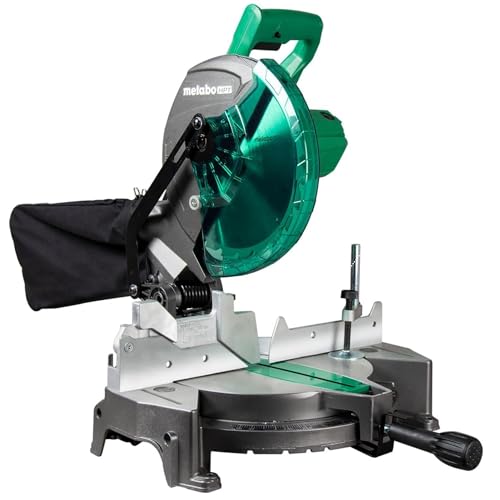
This Metabo HPT model integrates a 15-Amp motor and a 0-45° bevel range with a large 10-inch table, providing enhanced material support for long or wide boards. It features thumb-actuated positive stops for quick miter adjustments and a secure vice clamping system to hold workpieces firmly during cuts. The lightweight design (about 24.2 lbs) adds portability, making the saw practical for mobile use on different job sites.
DEWALT 10-Inch Single Bevel Miter Saw (DWS713)

DEWALT’s DWS713 offers a precise miter system with a stainless-steel detent plate and 14 positive stops, ensuring repeatable angles. Its machined base fence support and tall sliding fence enable accurate and stable cuts, particularly for long boards. The single bevel mechanism simplifies operation, while the robust build quality supports frequent use in professional settings or serious DIY projects.
DOVAMAN Updated 10-Inch Sliding Miter Saw

The DOVAMAN model emphasizes multi-material cutting with a dual-speed setting of 5000 RPM and 3200 RPM. It includes two 40-tooth and one 48-tooth blades for versatility across wood, PVC, and light metals. A 13-inch sliding rail and extendable side tables expand cutting range to accommodate larger materials. Its ambidextrous design aims to improve comfort and ease of use for both left- and right-handed operators, making it a flexible option for mixed tasks.
Buying Guide
Key factors to consider when selecting a 10-inch miter saw include motor power, bevel range, positive stops, and portability. A 15-Amp motor generally provides ample cutting power for common woodworking tasks, while a 0-45° bevel range or dual-bevel capability expands versatility for complex moldings and trim work.
Positive stops and a reliable miter scale help with repeated accuracy, especially on projects requiring precise angles. Laser or shadow line guides can improve visibility when aligning cuts, though some users prefer traditional miter gauges for raw accuracy without brightness or alignment aids.
Material support is essential; look for a wide, stable table and a solid vise or clamps to secure workpieces during cuts. Weight matters if you anticipate moving the saw between sites or storing it in a workshop with limited space. Sliding or dual-bevel designs extend capability for compound coping, crown molding, and picture frames, but add cost and complexity.
Blade choice also impacts results. For most general carpentry, a carbide-tipped 40-60 tooth blade balances speed and finish quality. Some models in this list pair a fine-finish blade with a large-cutting capacity, aligning with projects requiring clean finishes on hardwoods and softwoods alike.
Safety features such as blade guards, stable fences, and secure clamps are essential for reducing kickback and maintaining control during operation. Finally, consider warranty and service support—brands with good dealer networks and parts availability can reduce downtime on busy projects.