Best 10 Saw Blades for Fine Finishing and Precise Cuts
Choosing the right 10-inch saw blade can make a noticeable difference in finish quality, cut accuracy, and overall machine performance. This guide highlights top 5 10-inch blades designed for fine finishes and clean cross-cuts on miter and table saws. Each option emphasizes carbide construction, precise tooth geometry, and durability for professional woodworking. Read on to compare features and find the blade that best fits your project needs.
| Product | Brand | Teeth | Kerf | Arbor | Notes |
|---|---|---|---|---|---|
| WEN BL1080 | WEN | 80 | 0.098″ (2.4 mm) | 5/8″ | Ultra-fine finish; compatible with miter and table saws |
| WEN BL1060 | WEN | 60 | 0.098″ | 5/8″ | Fine finish blade for smooth surfaces |
| DEWALT DWA11080 | DEWALT | 80 | Ultra-thin kerf | 5/8″ | Low vibration; optimized tooth geometry |
| WEN BL1040 | WEN | 40 | 0.098″ | 5/8″ | Fine finish with solid carbide tips |
| FOXBC 80-Tooth Ultra Finish | FOXBC | 80 | 0.098″ | 5/8″ | High-density tungsten carbide; smooth cuts |
Below you’ll find detailed product sections with key features, performance notes, and practical guidance to help you pick the right blade for your setup.
WEN BL1080 80-Tooth Ultra-Fine Finish Blade

The WEN BL1080 features an 10-inch diameter and 5/8-inch arbor, rated up to 6000 RPM. Its ultra-thin 1/10-inch kerf delivers minimal material removal while maximizing finish quality. Designed for fine cross-cuts in both softwoods and hardwoods, this blade balances speed and precision for cabinetmaking and trim work. The 80-tooth configuration provides a smoother cut with fewer chipping tendencies on delicate laminates and plywood edges. Carbide tips ensure durability for repetitive cuts in production scenarios.
WEN BL1060 60-Tooth Fine-Finish Blade
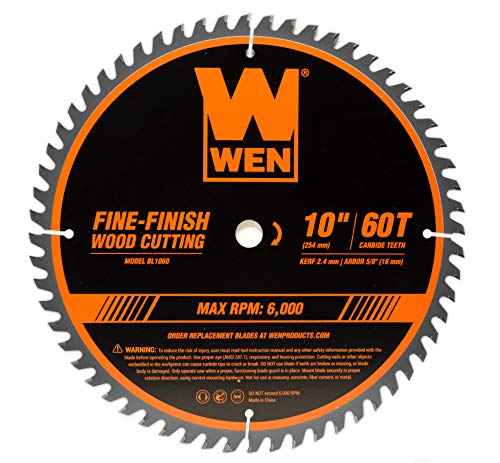
The WEN BL1060 offers a 10-inch blade with a 5/8-inch arbor and a 60-tooth count, optimized for fine finish work. With the same 6,000 RPM rating and ultra-thin 0.098″ kerf, it strikes a balance between edge quality and material removal. This blade is ideal for precise cross-cuts on hardwoods and softwoods, as well as veneers and panels where a smooth face edge matters. Its robust carbide tips are built for repeated scoring of edges without accelerated wear.
DEWALT DWA11080 80-Tooth Fine Finish

DEWALT’s DWA11080 is engineered for extended life and superior finish quality. Its patented body slot design reduces vibration, helping maintain consistent cut lines during long runs. The 80-tooth geometry is tuned for clean cross-cuts in hardwoods and fine-pinish plywood, while the carbide tips provide durability for repetitive cuts. This blade emphasizes accuracy and finish, especially in cabinetmaking, shelving, and fine trim tasks. It’s a reliable option for users who prioritize stable cuts with minimized chatter.
WEN BL1040 40-Tooth Carbide Blade
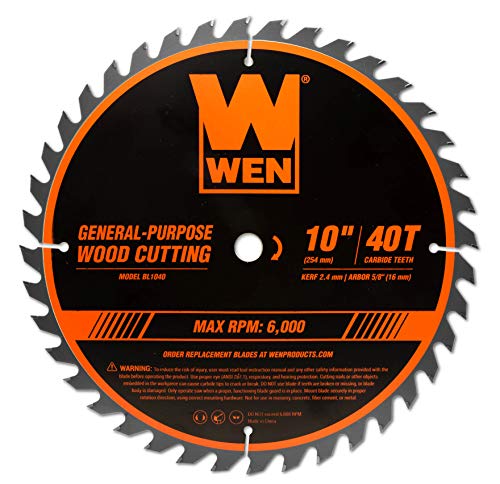
The WEN BL1040 blends a 40-tooth configuration with a fine finish focus. At 10 inches and a 5/8-inch arbor, this blade delivers smooth, straight cuts with less tearing on laminates and veneers. The carbide-tipped teeth provide durability for demanding shop workloads, while the wider tooth spacing compared to higher-tooth blades supports faster material removal in certain wood types. It’s a versatile choice for general-purpose finishing where a crisp edge is essential.
FOXBC 80-Tooth Ultra Finish Blade

This FOXBC blade offers an 80-tooth profile with a 0.098″ kerf and a 5/8″ arbor, designed for ultra-finished edges. Its high-density tungsten carbide construction improves wear resistance and edge life, making it well-suited for precise cross-cuts on hardwoods, veneers, and panels. The blade geometry minimizes vibration and enables smoother operation with less chatter, translating to a consistent, clean finish on cabinetry and furniture projects.
Luckyway 10 Inch General-Purpose Blade Pair

The Luckyway package offers two 10-inch blades, 32T and 60T, for versatile cutting needs. While primarily positioned as a general-purpose option, the set supports cross-cutting and ripping tasks on softwood and plywood with decent edge quality. The carbide-tipped blades provide dependable durability for hobbyists and shop users seeking value and flexibility in one purchase.
Buying Guide: Key Purchase Considerations
Selecting the right saw blade involves balancing finish quality, material type, and cutting speed. Here are essential factors to weigh:
- Tooth count and geometry: Higher tooth blades (60–80T) yield smoother finishes on finish carpentry and cabinetry; lower tooth counts cut faster but leave rougher edges. Alternate or special tooth patterns (ATB, TCG) suit wood, metal, or plastic cutting differently.
- Kerf width: Ultra-thin kerf minimizes waste and reduces motor load, which is important for finish work and smaller stock. Heavier kerfs remove more material but can stay straighter in tough cuts.
- Arbor compatibility: Most 10-inch blades use a 5/8″ arbor. Verify arbor size on your saw to prevent vibration or misalignment.
- Material emphasis: Blades marketed for finish work are optimized to reduce chip-out on laminates and veneers. Consider blades with carbide tips and balanced tooth geometry for consistent results.
- Durability and life: Carbide tips and blade density influence life under repeated cuts. For production environments, blades with specialized slot designs and stabilizers can reduce vibration and extend life.
- Noise and vibration: Some advanced blades incorporate stabilizers or precision-ground teeth to minimize vibration, improving accuracy and comfort during long sessions.
Performance Perspectives
Users should consider the specific task at hand. For cabinetmaking and trim, blades with 80 teeth and refined kerf minimize edge chipping and provide a clean face. For general-purpose tasks, 40–60 teeth blades can offer faster cuts with acceptable finish quality. In metal or plastic cutting applications, dedicated TC G blades are more suitable, though these blades are separate from the wood-focused options above. Always follow manufacturer safety guidelines and ensure proper blade mounting alignment for optimal results.
Additional Considerations
Compatibility with your saw model, feed rate, and protective measures (eye and ear protection, blade guards) are essential for safe operation. When swapping blades, inspect for any signs of wear, misalignment, or missing carbide tips. Store blades properly to prevent edge dulling and corrosion. Regular maintenance of the saw’s drive system also contributes to maintaining true cuts and blade life over time.
This article highlights five 10-inch blades commonly recommended for fine finishing and precise cross-cuts. The listed options emphasize carbide durability, smooth edge quality, and compatibility with miter and table saws used in professional woodworking. For projects that demand high-quality finishes and minimal edge tear, these blades offer solid performance across a range of woods and sheet materials.