Best 10kW Portable Generator for Ready Backup Power
Finding the right 10kW portable generator means balancing power, reliability, and runtime with practical features for storms, outages, or remote work sites. The options below cover a range of fuel types, from portable dual-fuel to standby-grade units, all focused on delivering dependable electricity when you need it most. This guide reviews five top picks with strong performance, clear feature sets, and accessible maintenance, helping American households and small businesses prepare for outages without compromising safety or convenience.
| Product | Fuel Type | Approximate Power | Notable Feature |
|---|---|---|---|
| Generac Guardian 10kW | Natural Gas or Propane | 10,000 W running | Wi‑Fi monitoring, 100 Amp transfer switch |
| Generac 12,500/9,500-W | Gas, Propane or Natural Gas | 9,500 running / 12,500 peak | Tri‑fuel flexibility, electric start |
| Westinghouse 18,000 Peak | Gasoline or Propane | Up to 18,000 peak | Remote/electric start, multiple outlets |
| Westinghouse 12,500 Peak Tri‑Fuel | Gas, Propane or Natural Gas | 12,500 peak / 9,500 running | Tri‑fuel, transfer switch ready |
| WEN 11,000-Watt DF1100T | Gasoline or Propane | 11,000 surge / 8,300 running | Dual fuel, wheel kit, electric start |
Generac Guardian 10kW Home Standby Generator

Generac’s Guardian 10kW system provides automatic whole-house backup via a 100 Amp, 16‑circuit transfer switch. It operates on natural gas or liquid propane, designed for outdoor installation with a durable aluminum enclosure. Features Wi‑Fi enabled Mobile Link monitoring help track performance and maintenance from anywhere, offering visibility when you’re away. A five‑year limited warranty backs the unit, focusing on long-term reliability for storm season and emergencies. This option suits homes seeking seamless power restoration without manual intervention.
Generac 12,500/9,500-Watt Tri-Fuel Portable Generator

This Generac model delivers versatile power with gas, propane, or natural gas options. Its electric start reduces the effort of starting the unit, while the high‑capacity fuel system supports longer runtimes for outages or job sites. The GP9500‑class unit is designed for robust emergency backups and temporary work sites, with weather‑resistant protection that complements outdoor use. The dual fuel capability ensures you aren’t stranded if one fuel source becomes scarce, making it a flexible choice for varied power needs.
Westinghouse 18,000 Peak Watt Dual Fuel Portable

This Westinghouse model delivers substantial peak power with dual‑fuel capability, enabling operation on gasoline or propane. It includes electric and remote start options for quick ignition during outages, and a fuel gauge to monitor remaining energy. A 10‑hour runtime on a full tank helps cover extended outages, while the transfer‑switch readiness and multiple outlets support home backup and RV use. The rugged build and safety features make it a practical option for homeowners who want reliable, scalable power with broad compatibility for tools and appliances.
Westinghouse 12,500 Peak Watt Tri‑Fuel Portable

This tri‑fuel generator provides peak power up to 12,500 watts with running output around 9,500 watts. It supports gas, propane, and natural gas, making it versatile for different fuel availability scenarios. Remote start adds convenience, and the unit includes a transfer switch‑ready design, enabling smooth integration with home backup systems. With durable construction and multiple outlets protected by rubber covers, it’s suitable for home and outdoor job sites where dependable power is essential.
WEN 11,000‑Watt Dual Fuel Portable (DF1100T)
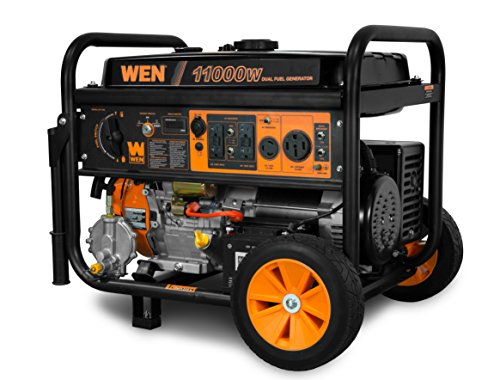
The WEN DF1100T provides 11,000 surge watts with 8,300 running watts on gasoline or propane. It features dual fuel flexibility, a sturdy wheel kit for portability, and electric start for easy operation. This model is well suited for temporary outages or remote sites where quick, reliable power is needed. The dual‑fuel design can help extend runtime in diverse scenarios, and the included wheels and manageable weight improve maneuverability for frequent repositioning when outdoor use is required.
Buying Guide: Key Purchase Considerations
- Power output and peak vs running watts: Assess both running watts (for continuous loads) and peak watts (to handle startup surges for appliances). For essential circuits, ensure the rated running watts meet your needs with some margin for initial spikes.
- Fuel type and availability: Dual‑fuel options offer flexibility during supply shortages. Standby units use natural gas or propane and may require installation considerations, while portable units offer mobility for camping or job sites.
- Transfer switches and interlock kits: A transfer switch simplifies switching from grid to generator power and can improve safety. Ensure compatibility with your home’s electrical panel and local codes.
- Runtime and fuel capacity: Look for larger tanks or efficient engines if long outages are common. Runtimes change with load; plan for typical household loads to estimate real operating hours.
- Portability and maintenance: Portables should include wheels and handles for easy transport. Check service availability, warranty terms, and ease of maintenance, including oil changes and spark plug replacements.
- Noise and emission considerations: Inverter‑based units tend to run quieter and deliver cleaner power suitable for electronics. If operating near living spaces, noise levels may matter as much as continuous power.
- Outlets and compatibility: Ensure outlets match your devices (NEMA configurations, USB ports, RV outlets). Consider a model with transfer switch readiness if you want seamless home backup.
- Warranty and support: A longer warranty reduces ownership risk. Verify what is covered (engine, alternator, electronics) and check local service networks for repair and parts availability.
- Safety features: Automatic low‑oil shutdown, CO sensors, and proper enclosure ratings aid safe operation in outdoor environments and reduce risk during use in enclosed spaces.