Best 4 1/2 Circular Saw Blades for Precise Woodworking and More
Choosing the right 4 1/2 inch circular saw blade can make a big difference in cut quality and project speed. This guide highlights five top 4 1/2″ blades, covering a range of teeth counts and materials to suit wood, plastic, and composite tasks. Each option balances durability, cut accuracy, and value, helping American DIYers and professionals pick blades that fit common 4 1/2″ saws from major brands.
Summary of selected products:
- Revvstark 4 Pack 4 1/2″ Circular Saw Blades, 24T Carbide Tipped
- GRAFF 4 1/2″ Circular Saw Blade, 120T, 3/8″ Arbor
- OA-BRES 3 Pack 4 1/2″ 60T High Speed Steel Blades, 3/8″ Arbor
- GRAFF 4 1/2″ Metal Cutting Blade, 40 Teeth, 7/8″ Arbor
- Revvstark 3 Pack 40T 4 1/2″ Circular Saw Blades, 3/8″ Arbor
Product Details At A Glance
| Product | Teeth / Size | Arbor | Key Benefit |
|---|---|---|---|
| Revvstark 4 Pack 24T | 24T | 3/8″ | Fast, clean cuts for wood and composites |
| GRAFF 120T | 120T | 3/8″ | Very smooth finish for finishing plywood and laminates |
| OA-BRES 60T | 60T | 3/8″ | Budget friendly, good for general wood cutting |
| GRAFF 40T Metal Cutting | 40T | 7/8″ | Aluminium, metal and soft non-metal materials |
| Revvstark 3 Pack 40T | 40T | 3/8″ | Durable carbide teeth for consistent performance |
Revvstark 4 Pack 24T 4 1/2″ Carbide Tipped Blades

These Revvstark blades are designed for speed and precision in non-metal cuts. With a 3/8″ arbor and 24 tungsten carbide teeth, they perform well on wood, plastic, and composite materials. The blades feature a polished chrome surface and a thin kerf to reduce resistance and waste, promoting clean, accurate rip cuts along the grain. The set’s durability helps resist bending under heavy loads, supporting longer blade life in demanding projects.
GRAFF 4 1/2 Inch 120T Wood Cutting Blade

The GRAFF 120T blade is built for smooth, precise finishes on wood and plywood. A high tooth count reduces tear-out on delicate sheets while maintaining efficient cutting speed. The blade’s construction emphasizes durability and a true edge, helping to achieve clean edges on finish-grade work. It’s a solid choice when maximum edge quality is the priority for fine carpentry or cabinetry work.
OA-BRES 3 Pack 60T 4 1/2-Inch Blades
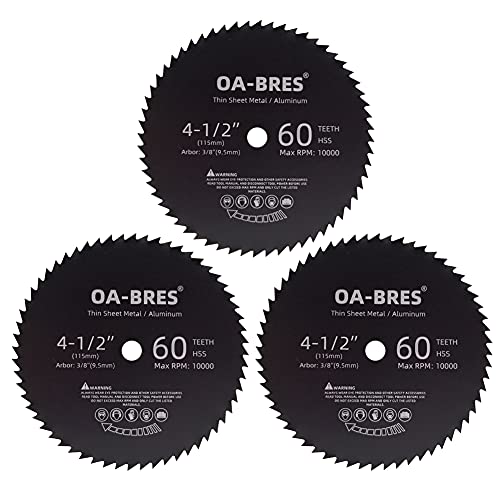
This 3-pack from OA-BRES uses 60T high-speed steel blades meant for efficient wood cutting at a good value. The blades’ thin kerf supports fast cutting with less resistance, useful for general carpentry tasks, plywood, and laminate work. The kit’s price-per-blade is competitive, making it a practical option for homeowners maintaining multiple saw setups.
GRAFF 4 1/2” 40-Teeth Blade with 7/8″ Arbor

This blade targets metal and mixed-material cutting, featuring a 7/8″ arbor and robust tungsten carbide teeth for longer blade life. The 40-tooth configuration is a middle ground for softer metals and wood, offering steady performance with minimal edge scuffing. It suits users who frequently switch between wood and metal tasks on modular shop setups.
Revvstark 3 Pack 40T 4 1/2″ Blades

The Revvstark 40T blades pair carbide teeth with a precise kerf to deliver fast cuts with good finish on wood and composites. The blades’ carbide tips help maintain sharpness longer than standard steel blades, making them a reliable option for frequent wood-cutting tasks in workshops or DIY projects.
Buying Guide: Key Considerations For 4 1/2″ Circular Saw Blades
When selecting a 4 1/2″ blade, consider the following to match your saw and project needs:
- Material compatibility: Choose blades designed for wood, plywood, laminates, plastics, or metal as needed. Some blades target general-purpose wood work, while others are optimized for metal or composite materials.
- Teeth count: Higher teeth (e.g., 120T) yield smoother finishes but cut more slowly; lower teeth (e.g., 24T, 40T) cut faster with rougher edges. For cabinetry or finish work, lean toward finer teeth; for framing or rough cuts, coarser teeth are practical.
- Arbor size: Most 4 1/2″ blades use a 3/8″ arbor, but some specialty blades use a larger arbor (e.g., 7/8″). Confirm your saw’s arbor before purchasing to ensure compatibility.
- Kerf width: A thin kerf reduces material waste and requires less power, improving efficiency on cordless or smaller saws. Heavier loads benefit from a sturdy, thicker kerf blade for durability.
- Blade clarity and coatings: Polished chrome and carbide-tipped teeth improve life and edge retention. Consider coatings that resist corrosion in challenging environments or coatings that reduce friction for smoother cuts.
- Special features: Laser guides, anti-vibration designs, or extra-durable bodies can improve accuracy and reduce fatigue on longer projects.
- Cost vs. value: While premium blades often last longer and cut cleaner, budget blades can be adequate for occasional projects. Compare tooth design, material quality, and expected life to choose.
- Use-case balance: For mixed-material tasks, having a couple of blades with different teeth counts (e.g., 60T for plywood and 24T for framing) can maximize efficiency and results.
All blades listed are designed for 4 1/2″ circular saws and include practical features for common American workshop needs, from DIY home projects to small professional jobs. When in doubt, match your blade choice to your primary material and desired finish, then verify compatibility with your specific saw model.