Best Acoustic Floor Mats for Soundproofing and Vibration Dampening
Answer: For reducing drum and piano noise, interlocking floor mats made from high-density felt or polyester fiber provide effective sound absorption, vibration dampening, and floor protection. They’re best for home studios, rehearsal spaces, and apartments where minimizing neighbor disturbance matters. Below are five top options suited for drummers, pianists, or general practice areas, with quick comparisons to help you choose.
| Product | Brand | Best For |
|---|---|---|
| Aodyow 20 Pcs Interlocking Mats | Aodyow | Drums and piano setups in shared spaces |
| 20 Pieces Interlocking Mats (LITLANDSTAR) | LITLANDSTAR | Customizable floor coverage on hardwood or tile |
| AiVeUao 16Pcs Interlocking Mats | AiVeUao | Compact practice areas needing easy setup |
| TroyStudio 16 Pcs Thick Mats | TroyStudio | Rooms needing high absorption with stable surface |
| Focusound 20Pcs Interlocking Mats | Focusound | Flexible area with strong noise reduction |
Aodyow 20 Pcs Interlocking Mats
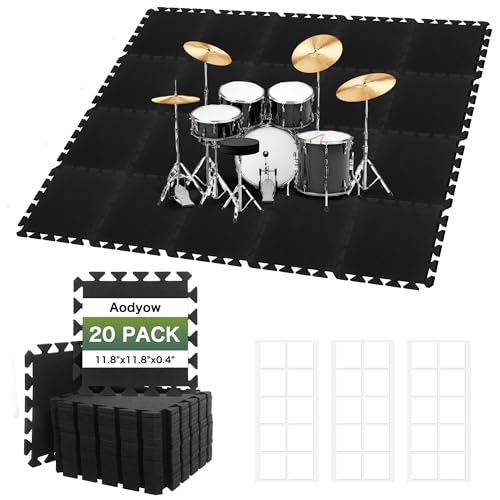
Best for drum setups in small-to-medium studios. The set includes 20 mats measuring 11.8 by 11.8 inches with a 0.4-inch thickness. Made from dense polyester fiber felt, these mats provide sound absorption and vibration dampening to minimize floor transmissions. Non-slip and shock-absorbing design helps keep drums and keyboards stable during energetic play. A caution: mats are single-use in high-traffic public studios where heavy equipment may cause wear over time.
20 Pieces Interlocking Floor Mats (LITLANDSTAR)

Best for creating a larger quiet practice area. Each mat is 11.8″ x 11.8″ x 0.4″ and interlocks to cover up to about 17 square feet. High-density felt provides sound absorption and vibration dampening while the interlocking design reduces gaps. Suitable for hardwood floors to prevent scratches and improve stability. Limitation: assembly requires measuring and fitting to your room, which may take time for larger areas.
AiVeUao 16Pcs Interlocking Mats

Best for compact rooms or beginners needing a simple setup. The 16-piece set locks together for a flat, wrinkle-free surface. Made of high-density felt, these mats absorb shocks and isolate instrument vibrations to improve overall room acoustics. A noted limitation: some users may prefer thicker mats for very loud practice sessions.
TroyStudio Thick Mats (16 Pcs)

Best for studios where high absorption and vibration dampening are priorities. Each 11″ x 11″ tile is 0.4″ thick with a 150 kg/m3 density. NRC around 0.87 indicates strong sound energy reduction and echo control. Interlocks provide a wrinkle-free surface and stable placement. Caution: higher-density mats may feel firmer underfoot than softer alternatives.
Focusound 20Pcs Interlocking Drum Rug
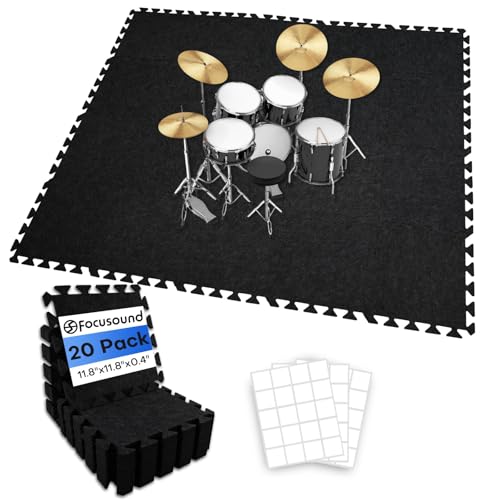
Best for flexible, modular layouts in music studios. Each mat measures 11.8″ x 11.8″ x 0.4″ with a density of 150 kg/m³, delivering solid noise reduction and vibration isolation. The interlocking design ensures a seamless surface, aiding setup in irregular room shapes. Limitation: like other interlocking mats, gaps can appear if not fully aligned in large installations.
Buying Guide: Key Considerations For Acoustic Floor Mats
- Material and density: Higher density materials (felt or polyester) improve absorption and vibration dampening. Look for densities around 150 kg/m³ for stronger performance.
- Thickness and coverage: 0.4 inches is common and effective; plan your layout to cover the needed area, considering potential gaps at room edges.
- Interlocking design: Interlocking puzzle pieces reduce seams and promote a flat surface. Ensure pieces fit well to minimize movement during play.
- Floor protection: Mats should protect hardwood and carpet from impact scratches, dents, and scuffs while reducing direct instrument contact with floors.
- Stability and slip resistance: Non-slip surfaces help prevent shifting during vigorous playing, especially with drum sets.
- Setup and portability: For small spaces or frequent reconfiguration, choose mats that are easy to assemble, detach, and store.
- Best use cases: Drums and pianos benefit most from vibration isolation; singers or guitarists may also gain from added room acoustics.
- Maintenance: Check whether mats are easy to clean and resistant to moisture or fluids in rehearsal spaces.
Frequently Asked Questions
- Do these mats muffle sound effectively in apartments? Yes, high-density interlocking mats reduce floor-borne noise and echo, making them suitable for apartment living where noise transfer is a concern.
- Can I cover an entire room with these mats? Yes, by purchasing multiple sets and interlocking them, you can create a larger, seamless area, though some edge trimming may be required for irregular rooms.
- Are they suitable for all instrument types? They work well for drums, pianos, and other instrument vibrations, but extremely loud sound sources may require heavier or additional treatment.
- Will these mats protect floors from damage? They provide a protective layer between instruments and floors, reducing scratches, dents, and vibration-related wear.
- Are there safety concerns for kids? Interlocking mats add a soft surface to reduce the risk of injury from falls and provide a cushioned area for practice.
- Is installation permanent? No, most sets are designed for temporary or semi-permanent use and can be reconfigured or removed as needed.