Best Bait Traps for Ants: Effective Indoor Ant Control
Ant problems can be persistent, especially indoors where trails lead to food and water sources. Bait traps lure foraging ants with slow-acting poisons that spread to the colony, helping to stop invasions at the source. This article reviews five top bait trap options, highlighting how they work, where to place them, and what to expect in terms of colony control. Use the Buying Guide to compare features like bait type, station design, and coverage to choose the best fit for your home.
| Product | Type | Key Benefit | Indoor Coverage |
|---|---|---|---|
| TERRO Ant Killer Bait Stations T300B | Liquid bait stations | Targets colonies with liquid bait; 12 stations | High |
| Raid Ant Killer Baits | Bait stations | Long-lasting protection up to 3 months | Medium-High |
| Ortho Orthene Ant Killer Ant Bait | Station-based bait | Kills queen and colony; targeted placements | Medium |
| Catchmaster DEFIANT Premium Liquid Ant Killer | Liquid bait in reusable traps | Kills queen and colony; reusable traps | High |
| Combat Max 2 in 1 Ant Bait Station | Dual-formula bait stations | Kills ants you see and those you don’t | Medium |
TERRO Ant Killer Bait Stations T300B

TERRO T300B bait stations use a liquid bait system designed for indoor ant control. The 12-station package provides widespread placement options along baseboards, near entry points, and around occupied areas where ants are most active. Liquid bait appeals to a broad range of common household ants and is formulated to attract foraging ants quickly, with slow-acting effects that promote colony-wide impact as workers share bait with nest mates.
Raid Ant Killer Baits for Indoor Use
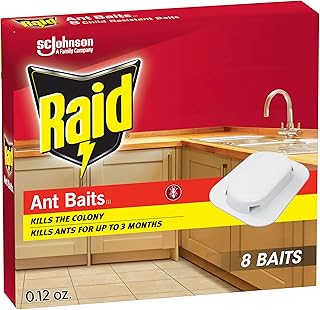
Raid Ant Killer Baits come in convenient traps designed to lure ants into feeding stations that, once ingested, carry the toxin back to the colony. The package supports up to three months of protection, and the design emphasizes placement in areas where ants frequently travel, such as along walls, near pantry edges, and inside cabinets. The bait is intended to disrupt colonies by facilitating the transfer of bait to other ants, including the queen, to curb activity over time.
Ortho Orthene Ant Killer Ant Bait

Ortho Orthene Ant Killer focuses on eliminating ant colonies by killing the queen and the colony. The bait stations are designed for foraging ants to encounter bait locations, encouraging sharing with nest mates. Users typically observe a drop in visible ants within a few days as the colony rewards the bait and declines. Place bait stations along baseboards, corners, cabinets, pipes, pantries, sills, doorways, and near garbage areas for maximum exposure.
Catchmaster DEFIANT Premium Liquid Ant Killer

Catchmaster DEFIANT Premium Liquid Ant Killer comes with a 1-year supply of reusable ant traps designed for interior and exterior use. The product claims to kill the queen and colony and uses a precise bottle format to reduce mess. Reusable traps can be placed in multiple high-traffic areas, including along baseboards, near entryways, and around cabinets. The liquid formulation supports sustained attraction and can help disrupt established colonies over time as the bait is distributed among nest mates.
Combat Max 2 in 1 Ant Bait Station

Combat Max 2 in 1 Ant Bait Station targets 11 types of ants with a dual formula that attacks ants both sugar- and protein-loving species. The bait stations deliver insecticide into spaces where aerosols cannot reach, making them practical for tight spots along walls, cabinets, and around plumbing. This approach focuses on both visible ants and hidden colonies, aiming to reduce activity quickly and prevent new foragers from establishing trails.
Buying Guide
When selecting bait traps for ants, consider bait type (liquid vs. solid), station design, and placement strategy. Liquid baits attract a broad range of species and can be fast-acting in the right environments, but may require more careful handling to avoid spills. Solid bait stations are typically cleaner and can be easier to place in tight spaces. For best results, deploy multiple stations simultaneously in known ant pathways along baseboards, near entry points, and in kitchens or pantries where food residues attract nests.
Durability and reuse are practical considerations. Reusable traps can reduce ongoing costs and waste, while disposable stations might be simpler for households with limited maintenance capacity. Always follow label directions for placement frequency and avoid mixing multiple bait systems in a single area to prevent bait interference. For best colony-wide impact, ensure you cover multiple access points and monitor activity over several days to weeks before evaluating effectiveness.
Environmental concerns and pet safety should guide placement choices. If you have children or pets, select bait stations with child-resistant features and place them in areas inaccessible to curious hands. Consider heat, humidity, and traffic patterns that affect bait efficacy. In severe infestations, combining bait traps with sanitation efforts—such as cleaning food residues and sealing entry points—can improve outcomes and reduce reinfestation risks.