Best Belt Disc Sander Combos for Home Shops
Choosing the right belt and disc sander combo helps tackle shaping, deburring, and finishing with efficiency. This guide highlights five top items that pair a belt sander with a disc sander, focusing on build quality, motor power, versatility, and stability. Each option balances value and performance for hobbyists and small shop setups. The table below summarizes the key specs of the selected models to help you compare at a glance.
| Product |
| |||
|---|---|---|---|---|
| WEN 6502T | 4 x 36 in. | 6 in. | Two-in-One | Cast iron base; belt tilts 0–90° |
| Woodskil 3590 RPM model | 4 x 36 in. | 6 in. | 3/4 HP | Tilting table; beveling option |
| WEN 6515T | 1 x 30 in. | 5 in. | 2.3 A | Stable base; compact footprint |
| Bucktool BD1801DS | 1 x 42 in. | 6 in. | 4.8 A brushless | Direct-drive for efficiency |
| Bucktool BD4603 | 4 x 36 in. | 6 in. | 3/4 HP | Direct-drive, portable base |
WEN Benchtop Belt and Disc Sander With Cast Iron Base
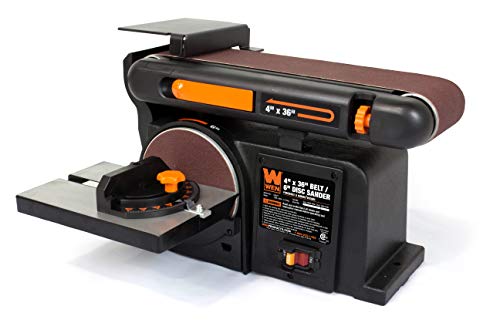
The WEN 6502T combines a 4-by-36 inch sanding belt with a 6-by-6 inch disc, offering a two-in-one solution for shaping and finishing. The belt can tilt from 0 to 90 degrees to accommodate vertical and angled sanding tasks, while the sturdy cast iron base minimizes vibrations for steadier operation. This model emphasizes durability and practical adjustability, suitable for hobbyists and light professional work in small shops.
Woodskil 4.5-Amp Belt & Disc Sander Combo

The Woodskil model employs a 3/4 HP motor delivering 1900 FPM belt speed and 3590 RPM disc speed to support efficient material removal. It features a tilting belt table (0°–90°) for diverse angles and a bevel-capable miter gauge on the table. A robust, heavy base helps reduce movement during operation. The tool is designed to support metalworking and woodworking projects with a focus on precision and stability.
WEN Benchtop Belt and Disc Sander With 1x30in Belt
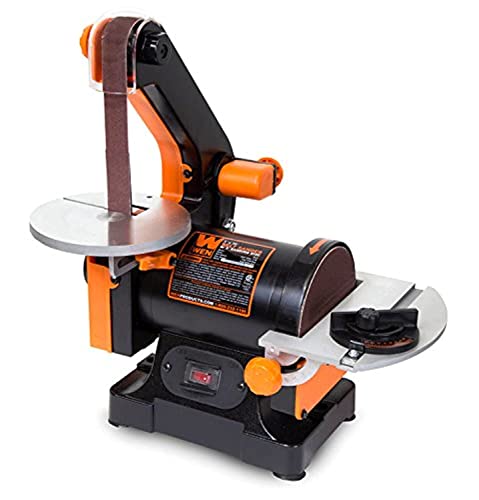
This WEN model offers a compact 1-by-30 inch belt paired with a 5-inch sanding disc. A 2.3-amp motor drives both sanding surfaces, providing up to 3160 FPM on the belt and 3450 RPM on the disc. The heavy-duty base stabilizes the unit during use, making it suitable for small workshops where space is at a premium while still delivering reliable performance on metal and wood projects alike.
BUCKTOOL BD1801DS Dual Speed Sander

The Bucktool BD1801DS features a dual-speed direct-driven motor delivering 1750 and 3450 RPM, with a robust 4.8A capability. Designed with metalworking in mind, it includes a large work table and sturdy construction, making it well-suited for knife making and polishing tasks. The direct-drive system enhances efficiency and reduces maintenance compared to belt-driven configurations.
BUCKTOOL BD4603 Pro Belt Disc Sander
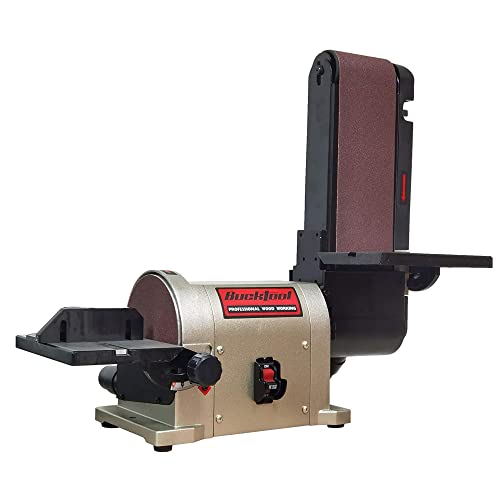
The Bucktool BD4603 upgrades to a 4-by-36 inch belt and a 6-inch disc with a 3/4 HP direct-drive motor. The belt tilts 0 to 90 degrees, and the unit emphasizes a compact, portable aluminum base paired with a robust belt drive. The design aims to maximize efficiency and provide versatility for both metal and wood finishing tasks, with easy belt access and stable operation.
Buying Guide
Key considerations help determine which belt disc sander combo best fits your needs. Below are multiple perspectives to support an informed choice.
- Workpiece size and type: For larger pieces or metalworking, models with longer belts (4 x 36 in.) and heavy bases handle longer runs and reduce vibration. Smaller setups benefit from compact footprints (1 x 30 in. belts) without sacrificing most essential tasks.
- Motor type and speed: Direct-drive brushless motors tend to offer lower maintenance and steadier performance under load. A higher belt speed (FPM) accelerates material removal, while faster disc RPM supports quick finish work.
- Table tilting and bevel capability: A 0°–90° tilt enables both horizontal and vertical sanding, plus beveling angles. A bevel-ready table and a miter gauge enhance accuracy when shaping complex forms.
- Stability and vibration: Cast iron or heavy metal bases reduce movement during operation, improving control and finish quality. Look for baselines with rubber feet or other vibration-damping features for busy workshops.
- Maintenance and belt changes: Direct-drive systems often reduce belt tensioning needs and maintenance. Quick belt release or track control features save time during complex projects.
- Versatility vs. specialty: Some models skew toward metalworking or knife making, while others balance wood and metal tasks. Choose based on your primary projects and whether you need a more robust grinder accessory.
- Space and footprint: For small shops, compact combos with integrated dust ports and efficient layouts help maximize usable workspace without compromising performance.
When evaluating these options, consider your dominant projects, space constraints, and the level of precision required. The listed models cover a range from compact, space-saving designs to more robust, direct-drive configurations suitable for metalworking and finishing tasks. Each model emphasizes solid construction and practical features that support consistent sanding results, whether you’re shaping curves, bevels, or flat surfaces.