Best Belt for Construction Workers: Top Picks for Durability and Comfort
Choosing the right tool belt can reduce fatigue, improve tool access, and boost on-site productivity. This guide highlights five durable options that suit carpenters, electricians, and general construction crews. Each belt emphasizes rugged construction, ample pockets, and practical features like quick-release buckles or magnetic zones. Read on to compare key attributes and find the best fit for your work style and body type.
| Product | Brand | Key Feature | Pocket Count |
|---|---|---|---|
| Dickies 5-Pocket Single Side Tool Belt Pouch | Dickies | Durable canvas with 5 pockets | 5 |
| 19 Pocket Brown and Black Heavy Duty Tool Belt | GlossyEnd | Large pocket set with heavy-duty polyester | 19 |
| COMOWARE Tool Belt for Electricians | COMOWARE | 17 pockets with magnetic zone | 17 |
| Dickies 8-Pocket Padded Tool Belt | Dickies | Padded back liner and multiple pockets | 8 |
| Klein Tools 5425M Tool Belt | KLEIN TOOLS | Quick-release buckle and mildew-resistant webbing | Variable (belt pockets and keeps) |
style=”margin-top: 28px;”> Dickies 5-Pocket Single Side Tool Belt Pouch
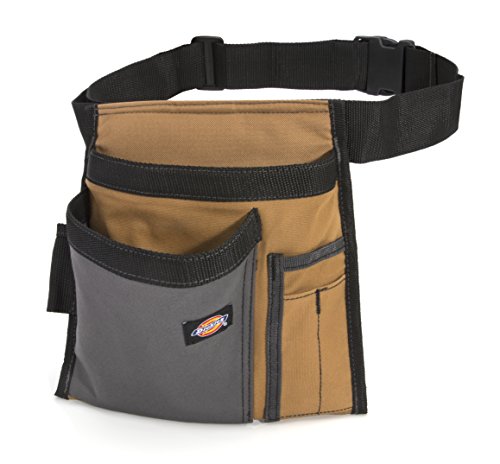
The Dickies 5-Pocket Single Side Tool Belt Pouch combines rugged canvas with organized storage. Its five pockets include two large main compartments, a screwdriver-sized loop, a plier-type pocket, and two smaller pockets, making it suitable for carpentry or general contractor tasks. The belt is adjustable for a custom fit, aiding comfort during long shifts. Ideal for workers who need quick access to hand tools without carrying a full apron.
style=”margin-top: 28px;”> 19 Pocket Heavy Duty Tool Belt With Quick Release Buckle

This 19-pocket design from GlossyEnd adds extensive organization, including five main pockets and a large assortment of smaller slots for pliers, nails, pencils, and gauges. The belt features a poly web belt with a quick-release buckle and a heavy-duty 1,000D polyester construction reinforced with rivets. It’s well-suited for multi-material framing, electrical work, and site tasks where a wide tool assortment is needed at hand.
style=”margin-top: 28px;”> COMOWARE Tool Belt for Electricians & Construction Workers

The COMOWARE belt emphasizes modularity and magnetic organization. Its adjustable waistband spans 31.5” to 49.2” and offers 17 pockets across detachable pouches. A magnetized zone holds small metal items securely, reducing pocket clutter. The 600D polyester construction and padded waist cushion minimize back strain, making it suitable for electricians and carpenters who carry a lot of small tools and fasteners on longer jobs.
style=”margin-top: 28px;”> Dickies 8-Pocket Padded Tool Belt
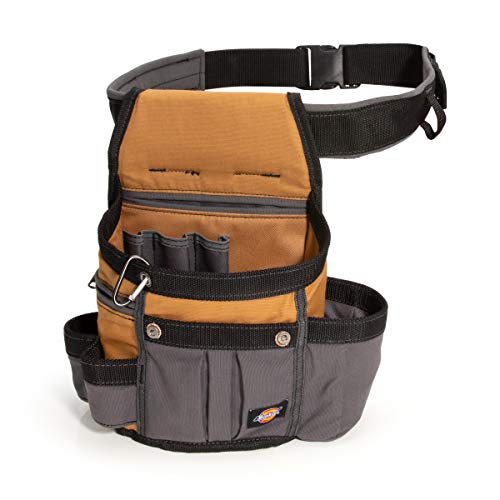
This Dickies model adds padding to the back liner and offers eight pockets for larger items and smaller tools. Its canvas construction is reinforced to handle daily wear, with carabiner-ready exterior points for clip-on storage. Builders who prefer extra security around bulky gear will appreciate the mix of durable materials and versatile storage options in this belt.
style=”margin-top: 28px;”> Klein Tools 5425M Tool Belt

The Klein Tools 5425M focuses on fit and ease of use with a mildew-resistant cotton/polyester blend and a forged quick-release buckle. It is designed for ironworkers, framers, carpenters, and electricians. The belt balances comfort and security, allowing fast disengagement in emergency situations while maintaining sturdy construction for long days on site.
style=”margin-top: 28px;”>Buying Guide: Key Considerations For Choosing A Construction Tool Belt
Material and durability: Look for heavy-duty canvas or high-denier polyester with reinforced stitching and rivets. A rugged belt should withstand daily wear, moisture, and abrasion on rough job sites.
Storage and pocket layout: Assess pocket counts, sizes, and configurations. Pockets should support your primary tools—hammers, screwdrivers, pliers, fasteners, tape measures—and keep items from poking through or jamming other pockets.
Waist and weight distribution: An adjustable waistband or suspenders helps maintain a balanced center of gravity. Padded or ergonomic suspender designs reduce back fatigue during long shifts and heavy lifting.
Safety features: Quick-release buckles are essential for emergencies. Magnetic zones help organize small metal parts, while secure loops and clips keep tools within reach but firmly in place during movement.
Fit and mobility: Ensure the belt accommodates your torso length and can be worn under or over other PPE. For electricians and framers, modular or detachable pouches can tailor weight to the task.
Maintenance and care: Choose materials that resist staining and dirt, with simple cleaning processes. Riveted pockets and reinforced liners extend belt life in dusty or muddy environments.
Price-to-value balance: Higher-pocket configurations can be more versatile but may add weight. Compare belts by how efficiently they organize essential tools for your typical workflow.