Best Bentonite for Pond Sealing: Safe, Natural Solutions for Leakproof Ponds
Crucial answer: bentonite clay is a natural, cost-effective option for sealing pond leaks and stabilizing pond edges. This guide highlights five top products ideal for different pond types and use-cases, from small backyard ponds to larger water features. Best suited for homeowners, small farm ponds, and DIY enthusiasts seeking a chemical-free sealant, these selections prioritize expansion on contact with water, soil compatibility, and ease of use. See the quick product table below for a rapid comparison, then explore detailed sections to match your needs.
| Product | Brand | Size | Best For |
|---|---|---|---|
| Granular Sodium Bentonite Clay for Pond Sealing | Natural Waterscapes | 25 lb | Medium to large ponds, flexible seal |
| Unearthed Sodium Bentonite Clay – Premium Pond Sealer | Unearthed | 50 lb | Larger ponds, odor control |
| Nuanchu 50lb Granular Bentonite Clay for Pond Sealing | Nuanchu | 50 lb | High-coverage pond sealing |
| Natural Waterscapes Granular Sodium Bentonite Clay for Pond Sealing | Natural Waterscapes | 45 lb | Expanding clay sealant, soil amendment |
| Nuanchu 30lb Granular Bentonite Clay for Pond Sealing | Nuanchu | 30 lb | Compact projects, budget-friendly |
Granular Sodium Bentonite Clay for Pond Sealing

The Natural Waterscapes product combines bentonite chips and powder to create a flexible, water-activated seal. It expands when in contact with water to block pond leaks and is designed for use in large ponds, lakes, and edging around waterfalls or farm ponds. Best for a medium to large project where a natural, soil-friendly seal is desired. A practical choice for property owners needing a robust, all-natural pond liner alternative. Caution: ensure even distribution to avoid gaps in the seal.
Unearthed Sodium Bentonite Clay – Premium Pond Sealer

Unearthed offers a premium bentonite option that expands on contact with water to form a strong natural barrier. It’s suitable for lining ponds, lagoons, and water retention projects where a durable seal is essential. Also marketed for natural odor and moisture control in other uses, which may appeal to buyers seeking a multipurpose material. Best for larger aquatic projects and for buyers prioritizing a natural seal without synthetic additives. Caution: verify that soil type is compatible to achieve optimal expansion.
Nuanchu 20lb Granular Bentonite Clay for Pond Sealing
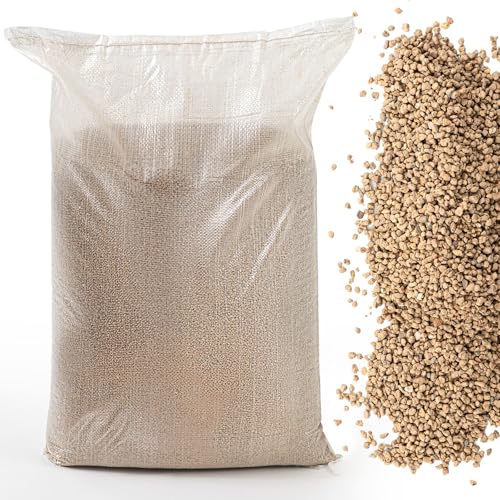
Nuanchu’s 20-pound option provides a granular, all-natural pond sealant that expands up to 15 times when exposed to moisture. It helps create a waterproof isolation layer around pond edges and can improve soil stability. Best for small to mid-sized projects or for homeowners wanting a lighter, easier-to-handle batch. Limitation: smaller quantity may require multiple applications for larger ponds.
Sodium Bentonite Clay 4LB – Granular All Natural Pond Sealant

This smaller 4-pound option offers a granular, all-natural sealant with high absorption and swelling capacity. It’s versatile for sealing liquids, clumping in cat litter, and various DIY applications. Best for budget-conscious buyers or for testing bentonite performance on a small pond edge. Caution: may require more frequent applications for larger leakage areas.
Buying Guide: Key Considerations For Bentonite Pond Sealing
What size pond are you sealing?
Smaller ponds may respond well to 20–30 pound batches, while larger or highly leaky ponds typically require 45–50 pounds per project. Plan for some extra material to cover edges and outlets evenly.
What expansion rate matters most?
Most pond sealants rely on water-activated expansion. Look for products with documented expansion characteristics (often labeled as 10x–15x or higher). Higher expansion improves the seal but requires proper application to avoid gaps.
Is soil type a factor?
Clay-rich soils accept bentonite sealing better than sandy substrates. If your pond has a high sand content, you may need larger quantities or additional compaction steps to ensure a continuous barrier.
Is the product safe for pets, wildlife, and plants?
Choose all-natural bentonite blends without synthetic binders to minimize potential environmental impact. Avoid products with added chemicals or fragrances that could affect aquatic life or water quality.
What is the intended use scope?
Some bentonite products are marketed for odor control or cat litter clumping, but their core sealing capability remains relevant. For ponds, prioritize products explicitly described as pond sealants with water-activation and expansion properties.
Application workflow: preparation to seal
Clear the area of obstacles, dampen the soil surface, and uniformly spread the bentonite mixture along suspected leak lines and edges. Lightly rake to integrate into the soil. Re-wet to activate expansion and monitor signs of continued seepage after initial sealing.
FAQ: Bentonite Pond Sealing
- Q: How long does bentonite take to seal a pond leak?
- A: Sealing time varies with soil type and moisture. Activation occurs upon contact with water, but achieving a uniform seal may require days of monitoring and possibly re-application.
- Q: Can bentonite replace a pond liner entirely?
- A: Bentonite can reduce seepage and reinforce edges but is typically not a full replacement for a lined pond; consider it as a natural sealant or supplement in conjunction with liners for best results.
- Q: Is bentonite safe for livestock drinking water?
- Q: How should I choose between 25 lb and 50 lb bags?
- A: For larger or multiple edges, start with a 50 lb batch; for small patches or tight budgets, a 25 lb option can be sufficient to test results before committing to more material.
A: When used as a soil sealant, bentonite itself is generally inert, but avoid introducing large quantities directly into water used for drinking without product guidance.