Best Bladder Tanks for Wells: Reliable Water Pressure Solutions
Finding a dependable bladder tank is essential for maintaining consistent well water pressure and reducing pump cycling. This guide highlights top options designed to work with residential well systems, focusing on durability, NSF certifications, and ease of setup. Each product below includes a quick overview of features, so you can compare capacity, connections, and materials at a glance. Whether you need a compact 20-gallon model or a larger 44-gallon tank, these picks balance performance with long-term reliability for American homes.
Summary of chosen products:
| Product | Brand | Capacity | Connection |
|---|---|---|---|
| RL34A 34-Gallon Vertical | Red Lion | 34 gal | 1 inch FNPT |
| RL20A 20-Gallon Vertical | Red Lion | 20 gal | 1 inch FNPT elbow |
| WaterWorker 25009 | Water Worker | 20 gal | Standard connections |
| Amtrol WX-202 | Amtrol | 20 gal | Various |
| Red Lion RL44A 44-Gallon | Red Lion | 44 gal | 1.25 inch FNPT elbow |
Red Lion RL34A 34-Gallon Vertical Tank

The RL34A is designed to work with well pump systems to stabilize water pressure when the pump is off. It features a heavy-duty 20-gauge steel tank and a 304 stainless steel water connection with leak-safe technology, plus a high-performance butyl rubber diaphragm and a propylene liner. Pre-charged to 20 PSI for transport, field adjustments require topping off with a bicycle pump to 2 PSI below the pressure switch cut-in setting. It is NSF/ANSI/CAN 61 and 372 approved, making it suitable for drinking water applications. This model is well-suited for mid-size residential systems seeking durable construction and reliable performance.
Red Lion RL20A 20-Gallon Vertical Tank

This 20-gallon model mirrors the RL34A with a compact footprint designed for smaller wells or constrained spaces. It uses a heavy-duty 20-gauge steel shell, 304 stainless water connections with leak-safe technology, and a butyl rubber diaphragm with a polypropylene liner. Pre-charged to 20 PSI for transport, field setup requires adjustments to reach two PSI below the switch’s cut-in. NSF/ANSI/CAN 61 and 372 certifications ensure suitability for drinking water. Ideal for homeowners seeking a balance between size, pressure stability, and mountability.
WaterWorker 25009 20-Gallon Vertical Well Tank
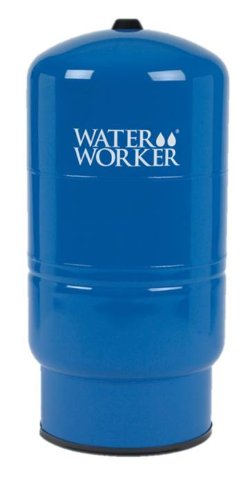
The WaterWorker 25009 focuses on NSF alignment and water quality. It uses a seamless butyl diaphragm designed to flex rather than crease, and a polypropylene liner that resists flaking and odor transfer, preserving taste. This model is NSF-listed under ANSI/NSF Std 61, aligning with safety and sanitation standards for drinking water systems. The compact design makes it a practical choice for smaller properties or replacement installations where water quality is a priority.
Amtrol WX-202 Well Pressure Tank
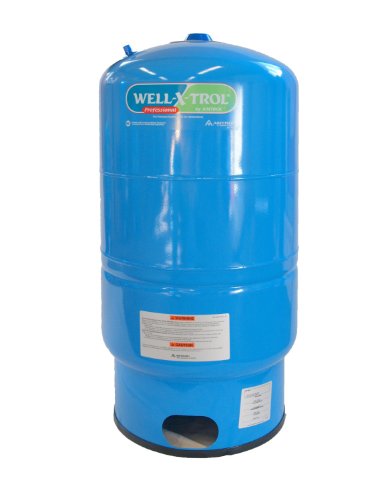
The Amtrol WX-202 emphasizes structural strength with a high-strength steel shell and a virgin polypropylene inner liner that resists cracking, chipping, peeling, or flaking. A unique positive hoop ring seal helps secure the diaphragm and liner, earning added reliability for longer service life. This tank is designed for consistent water pressure and reduced pump cycling, making it a solid option for standard well configurations requiring dependable diaphragm performance.
Red Lion RL44A 44-Gallon Vertical Tank

For higher-demand homes, the RL44A provides a 44-gallon capacity with similar construction features as smaller Red Lion models. It includes a 304 stainless steel water connection, leak-safe technology, and a durable butyl rubber diaphragm with a polypropylene liner. Pre-charged to 20 PSI for transport, it requires field adjustment to reach the appropriate two PSI below the switch cut-in. It is NSF/ANSI/CAN 61 and 372 approved, ensuring suitability for drinking water circuits and prolonged performance in larger well systems.
Buying Guide: Key Purchase Considerations
When selecting a bladder tank for a well system, consider capacity, system pressure, and installation space. Larger tanks reduce pump cycling and improve water pressure stability in homes with higher water demand, while smaller tanks fit compact setups or limited basements. Look for:
- Capacity vs. household needs: 20–44 gallons covers typical residential demands; larger homes may benefit from 34–44 gallon models.
- Connection type and size: match existing fittings (FNPT vs. elbow connections) to simplify installation.
- Diaphragm and liner materials: butyl diaphragms with polypropylene liners resist chemical wear and flavor transfer into water; ensure NSF/ANSI certification if drinking water is involved.
- Pre-charge pressure: tanks ship pre-charged; conversion to the system’s cut-in/cut-out pressures requires a precise adjustment using a bicycle pump or compressor.
- Tank material and build: steel shells with stainless connections offer durability; look for leak-safe technologies to reduce corrosion risk.
- Certifications: NSF/ANSI/CAN 61 and 372 approvals indicate suitability for drinking water and reduced health risk.
- Maintenance and service life: diaphragms and liners may require replacement over time; check warranty and availability of replacement parts.
Comparative perspectives help: smaller tanks minimize footprint and cost but may require more frequent pump cycling; larger tanks improve pressure stability but demand more space and investment. Consider existing well pump characteristics, pressure switch settings, and household water usage to determine the best fit. For homes with variable demand or higher flow rates, a larger diameter tank with robust diaphragm design can provide smoother pressure and longer pump life. For basic setups, a reliable 20-gallon model often suffices, while larger households or multi-story homes benefit from a 34–44 gallon option.
In selecting a brand, note that Red Lion models emphasize durable construction and leak-safe connections, while Water Worker offerings highlight NSF-friendly design and water-quality-conscious diaphragms. Amtrol provides a balanced approach with strong shells and secure liners. Evaluate the combination of capacity, compatibility with your existing system, and long-term maintainability when choosing the best bladder tank for your well.