Best Bonding Sand for Pavers to Improve Joint Stability and Aesthetics
Bonding sand for pavers helps lock in place joints, resist washout, and keep your hardscape looking pristine. This guide compares five top polymeric sands that work across common patio, driveway, and walkway projects. It’s ideal for DIY homeowners and professionals who want easy installation, durable joints, and maintenance-friendly results. The top picks are selected for joint compatibility (1/8″ to 2″ or 4″ setups where noted), color variety, and reliable performance under typical American weather conditions.
| Product | Color / Brand | Best For |
|---|---|---|
| 10 Pound Camel Brown DOMINATOR Polymeric Sand | Camel Brown, DOMINATOR | Joints 1/8″ up to 4″; curb appeal with warm tones |
| 10 Pound Titanium Gray DOMINATOR Polymeric Sand | Titanium Gray, DOMINATOR | Neutral gray color for contemporary pavers |
| 10 Pound Midnight Black DOMINATOR Polymeric Sand | Midnight Black, DOMINATOR | Bold contrast for dark paver colors |
| Rhino Power Bond Plus Black Diamond 10 Pound | Black Diamond, RHINO POLYMERIC SAND | Joints up to 2 inches; strong washout resistance |
| Alliance Gator G2 Maxx Polymeric Sand Slate Gray 50 lb | Slate Gray, Home and Country USA | Rain-safe, fast-setting for varied patio or walkway projects |
Camel Brown DOMINATOR Polymeric Sand

Best for warm-toned paver layouts, this sand uses Ceramic Flex technology to combine flexibility and strength in joints from 1/8″ to 4″. The Cement-free formulation sweeps easily into joints and rinses clear, reducing installation time. The bag design includes an Easy Pour Handle for controlled, precise spreading. This product is not a substitute for grout or mortar edging, so use it where paver edging and structural components are in place.
Titanium Gray DOMINATOR Polymeric Sand

This gray shade offers a modern look that blends well with various gray-toned pavers. It shares Ceramic Flex technology to balance flexibility and surface stability, with an easy-to-use packaging system and a cement-free formula for straightforward installation. Suitable for joints 1/8″ up to 4″. Note that it’s not intended to replace grout or mortar edge work.
Midnight Black DOMINATOR Polymeric Sand

Best for creating bold, high-contrast paver patterns, this black sand provides deep color that can make lighter pavers stand out. Ceramic Flex technology contributes to joint resilience from 1/8″ up to 4″. The product’s packaging supports easy handling and controlled installation. Remember: do not consider it a substitute for grout or edging components where required for structural integrity.
Rhino Power Bond Plus Black Diamond
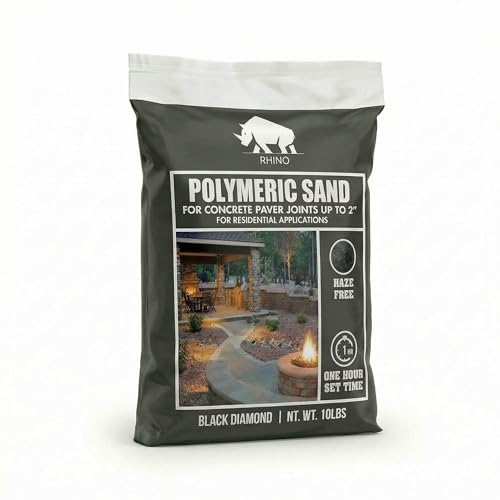
Designed for pavers and stones up to 2 inches, this product emphasizes strong interlocking and erosion resistance. It’s suitable for patios, driveways, walkways, and other outdoor hardscapes. Best for projects where long-term joint stabilization is a priority and where joints may experience wider spacing and higher traffic. A potential limitation is the 2-inch joint maximum, which can be a constraint on larger stones or thicker installations.
Alliance Gator G2 Maxx Polymeric Sand Slate Gray

Slate Gray offers a sleek option for various outdoor projects with rain-safe performance and fast-setting joint stabilization. It aims to lock pavers in place and resist washout, helping maintain clean lines and reduced maintenance over time. It’s well-suited for patios, driveways, and walkways where consistent color matching is desired. A potential limitation is that performance can depend on proper surface preparation and edge restraint requirements.
Buying Guide: Key Purchase Considerations
What joint width do you need to fill? Polymeric sands commonly handle joints from 1/8″ to 4″ or up to 2″ in some products. Choosing a product with a suitable joint range ensures you don’t encounter gaps or pinch points during installation.
What color complements your pavers? Color choices like Camel Brown, Titanium Gray, Midnight Black, Slate Gray, and Black Diamond affect aesthetic appeal and maintenance visibility. Consider how your chosen color hides stains and matches existing hardscape tones.
Will you need rain resistance? Look for “Rain Safe” or similar features that reduce washout after rainfall or irrigation cycles. Fast-setting formulations can shorten project downtime but may require careful timing during installation.
Is ease-of-use important? Features like Easy Pour Handle packaging and fine, cement-free sand help homeowners install more quickly with less effort. Verify that the product’s claims align with your level of DIY experience or contractor expectations.
What is the joint depth and edge restraint requirement? Some polymeric sands require edging or base stabilization to prevent lateral movement. Check product guidelines to ensure compatibility with your existing edging and base materials.
What are a product’s limitations? Many polymeric sands are not substitutes for grout or mortar where structural bonds are needed. Acknowledging these limits helps prevent performance shortfalls on larger or heavily loaded projects.
FAQ
- What is polymeric sand’s primary function for pavers? It fills joints to lock pavers in place, resist erosion, and reduce weed growth while allowing for drainage.
- Which sand color is best for light-colored pavers? Lighter colors like Titanium Gray or Slate Gray generally minimize contrast and maintain a cohesive look.
- Can polymeric sand be used for every joint width? Most products support 1/8″ to 4″ joints; verify the exact range for your chosen product before installation.
- Is rain-safe performance guaranteed? Many products advertise rain-safe performance, but proper curing time and surface preparation influence effectiveness after rainfall.
- Should I use edging along paver borders with polymeric sand? In many cases yes; polymeric sand can wash out without edging or proper restraint, especially on larger surfaces.
- What preparation steps improve results? Sweep sand into clean, dry joints, compact lightly, and rinse as directed after installation to activate the polymer coating correctly.